MinuteRead
5 min
Book summary
Premium summary · Opens in the app · 5 min read
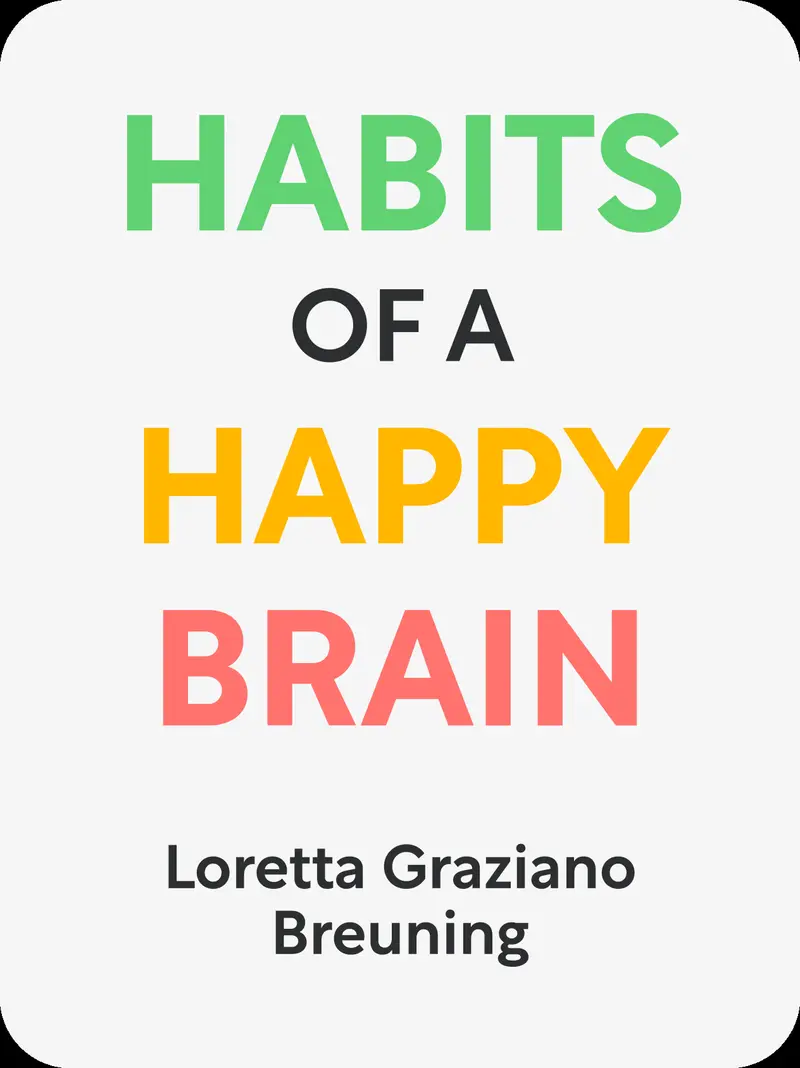
Habits Of A Happy Brain explains the four neurotransmitters in your brain that create happiness, why you can’t be happy all the time, and how you can rewire your brain by taking responsibility for your own hormones and thus, happiness.
Habits Of A Happy Brain explains the four neurotransmitters in your brain that create happiness, why you can’t be happy all the time, and how you can rewire your brain by taking responsibility for your own hormones and thus, happiness.
The four chemicals of happiness serve different purposes, like rewarding you for being social (oxytocin), going after a reward (dopamine) or pushing through physical pain (endorphins) at different times. Naturally, we spend a lot of our waking lives chasing after them in one way or another, whether we’re aware of it or not.
However, in our quest for happiness, we tend to forget that the other side of the coin is equally as important: unhappy chemicals protect us from harm by warning us of potential threats.
For example, when you’re hungry, cortisol is released, a stress hormone which makes you feel uncomfortable and gets you to find food. The reason we often think of these unhappy chemicals as problematic lies not in the basic system that they’re a part of, but in the way our modern brain, the neocortex, breaks that system.
Cortisol is what gives you that “do something” feeling when you feel threatened, but since your neocortex constantly analyzes your surroundings rationally and sees risk around every corner (because true, life-threatening risks have become so rare), you’re in “do something” mode a lot more than is good for you – and that’s why we eat out of boredom, for example.
But even if we could get our hormone system to work perfectly in sync with our rational thinking, that wouldn’t make us permanently happy. Permanent happiness, a continuous state of bliss, is nothing more than a myth. That’s why constantly chasing happiness is a useless game – even if you won $10 million, that would not be the end of your happiness journey. Why? Because of a process called habituation. Every time your happiness chemicals are released, your brain makes a note about the strategy that led you there and files it away under “this makes me happy.” This way, your brain can default to the same strategy next time, but sadly, it won’t bring the same result, due to habituation. An experience makes you most happy when it’s new, so when you go to the same, awesome restaurant the second time, it won’t live up to your high expectations and not be as much fun. We get used to everything, which is the reason someone who’s paralyzed is as happy as someone who wins the lottery, one year later. You might think habituation sucks, but it’s what helped us survive. Sitting around and enjoying the stuff we have doesn’t help us grow or get better, and habituation…
Continue reading in the MinuteRead app
Get the complete 5-minute summary of Habits Of A Happy Brain
Get the complete summary in the appThe chemicals that make you unhappy are equally as important as the happy ones.
There is nothing in this world that will keep making you happy forever.
Life is a series of constant choices, so it’s important to not let others choose for you.
"Habits Of A Happy Brain" is a strong fit if you want practical ideas around happiness, health & fitness, mental health, especially themes like the chemicals that make you unhappy are equally as important as the happy ones; there is nothing in this world that will keep making you happy forever. The MinuteRead summary distills these concepts into a focused read, whether you're deciding whether to buy the book or applying its lessons at work.
Loretta Graziano Breuning, PhD is Founder of the Inner Mammal Institute and Professor Emerita of Management at California State University, East Bay. She's the author of many books on happiness, including: Habits of a Happy Brain: Retrain your brain to boost your serotonin, dopamine, oxytocin and endorphin levels. As a teacher and mom, Loretta was not convinced by prevailing theories of human motivation. Then she learned about the brain chemistry we share with earlier mammals, and everything ma…
View all summaries by Loretta Graziano BreuningContinue Reading
Access the complete 5-minute summary and thousands more nonfiction books in the MinuteRead app.

Continue reading the complete summary in the MinuteRead app.