MinuteRead
30 min
Book summary
by Paul Graham
Premium summary · Opens in the app · 5 min read
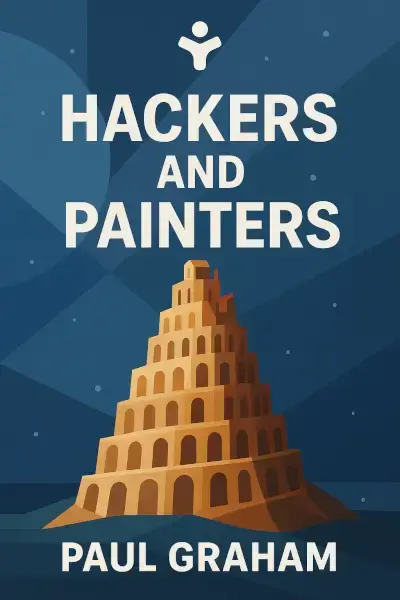
Hackers and Painters is a collection of essays by Y Combinator founder Paul Graham about what makes a good computer programmer and how you can code the future if you are one, making a fortune in the process.
Hackers and Painters is a collection of essays by Y Combinator founder Paul Graham about what makes a good computer programmer and how you can code the future if you are one, making a fortune in the process.
I never thought to connect these two, so this is interesting.
If you look at pictures of yourself from the 90s (if those exist) you’ll likely go “Oh my god, what the hell was I thinking when wearing this?!” That’s because fashion trends change fast and every decade has its own unique, characteristic style. Plus, there are huge differences in cultural fashion, for example Japanese fashion differs vastly from trends in the US or European clothing.
What else is highly location-dependent, seasonal and fluctuates a lot? Morals. A faithful husband or wife might be tempted to cheat during a trip to Vegas, church services always see a surge in faithful attendants around Christmas and the short skirt that was irresponsible and amoral to wear 15 years ago has become a household item at Forever 21.
Because both morals and fashion swing from one extreme to the next as much as the weather, nerds don’t care about either of them.
This is because nerds, according to Graham, are smart people, who don’t bother with conforming to social conventions. They know fashion comes and goes, so they don’t even waste their energy trying. As for morals, they do sure have their own set of them, but they don’t change them every quarter to do what the prom king and queen think is right. Instead, they hold on to their values.
Nerds therefore have an advantage in the real world, because after school and college, neither fashion nor morals will get you very far.
Most people imagine hackers as very calculated people, meticulous planners, who are very analytical. At least for good hackers, the opposite is true. The very definition of a hacker gets this wrong quite often. For example, here’s what Google says: Now look at the definition in the Urban Dictionary, a dictionary for colloquial usage of words, which is a collaboration of millions of users: You see, hacking isn’t about doing illegal things at all. It can be. But it doesn’t have to. In order to gain knowledge through programming and get even smarter, coders have to try and create their own concepts, not just implement what others tell them to – just like any great painter comes up with his own artwork and doesn’t just try to re-create famous paintings, like the Mona Lisa. For example, in college Paul Graham was taught to write his code on paper, perfect it, and only then transfer it to a computer. But Paul found…
Continue reading in the MinuteRead app
Get the complete 5-minute summary of Hackers and Painters
Get the complete summary in the appNerds are neither interested in fashion, nor morals, because both are seasonal.
Hackers are much more similar to painters, rather than mathematicians.
The ultimate test of your coding skills is user feedback, so try to get it fast!
"Hackers and Painters" is a strong fit if you want practical ideas around business, creativity, entrepreneurship, especially themes like nerds are neither interested in fashion, nor morals, because both are seasonal; hackers are much more similar to painters, rather than mathematicians. The MinuteRead summary distills these concepts into a focused read, whether you're deciding whether to buy the book or applying its lessons at work.
Paul Graham (born 13 November 1964) is an English computer scientist, venture capitalist, and essayist. He is known for his work on Lisp, for co-founding Viaweb (which eventually became Yahoo! Store), and for co-founding the Y Combinator seed capital firm. He is the author of some programming books, such as: On Lisp (1993), ANSI Common Lisp (1995), and Hackers & Painters (2004). Bio from Wikipedia, the free encyclopedia. Photo by Crédit photo: Sarah Harlin [Public domain], via Wikimedia Commons…
View all summaries by Paul GrahamContinue Reading
Access the complete 5-minute summary and thousands more nonfiction books in the MinuteRead app.

Continue reading the complete summary in the MinuteRead app.