MinuteRead
30 min
Book summary
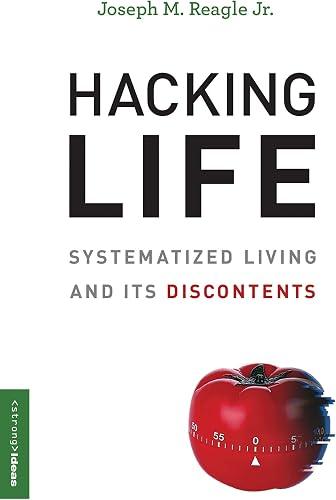
by Joseph M. Reagle Jr.
Premium summary · Opens in the app · 30 min read
A curious thing happened in the early years of the twenty-first century. People began talking about their lives the way programmers talk about software. They spoke of "hacking" their mornings, "optimizing" their sleep, "debugging" their habits, and "upgrading" their diets. They treated their daily routines as systems to be reverse-engineered, their bodies as platforms to be modified, and their attention as a scarce resource to be allocated with ruthless efficiency. This was not merely a new voca
**Author:** Joseph M. Reagle Jr. **Estimated Reading Time:** 45 minutes
**What You'll Learn:**
- The origins and evolution of life hacking as a cultural movement - The core principles of the hacker ethos and how they apply to daily life - How productivity systems, minimalism, and self-tracking shape modern living - The promises and perils of optimizing health, relationships, and meaning - The ethical gray areas and unintended consequences of relentless self-improvement - How to apply useful life hacking insights while avoiding its traps
**Who This Book Is For:**
This book is for anyone who has ever felt the pull of productivity apps, decluttering trends, fitness trackers, or the promise of a perfectly optimized morning routine. It is for knowledge workers, students, entrepreneurs, and the perpetually curious who want to understand why we feel compelled to hack our lives, what we gain from it, and what we might be losing. If you have ever wondered whether there is a better way to manage your time, your health, your relationships, or your attention, this book offers a thoughtful and critical guide to the promises and limitations of the life hacking movement.
A curious thing happened in the early years of the twenty-first century. People began talking about their lives the way programmers talk about software. They spoke of "hacking" their mornings, "optimizing" their sleep, "debugging" their habits, and "upgrading" their diets. They treated their daily routines as systems to be reverse-engineered, their bodies as platforms to be modified, and their attention as a scarce resource to be allocated with ruthless efficiency. This was not merely a new vocabulary. It was a new way of seeing the world. The term "life hack" first appeared in the technology press around 2004, coined by the journalist Danny O'Brien to describe the clever shortcuts that programmers used to manage their overflowing inboxes and chaotic schedules. O'Brien noticed that highly productive technologists had developed idiosyncratic scripts, filters, and rules to keep their digital lives under control. These were not grand philosophical systems. They were small, practical tricks: a keyboard shortcut here, an email filter there, a text file that served as a universal to-do list. But beneath these modest techniques lay a distinctive mindset, one that treated life itself as a system amenable to rational analysis and improvement. Within a few years, life hacking had exploded into a cultural phenomenon. Websites like Lifehacker and 43 Folders attracted millions of readers. Books like Tim Ferriss's *The 4-Hour Workweek* became international bestsellers. The Quantified Self movement encouraged people to track their sleep, steps, heart rate, and mood with the same rigor that scientists apply to laboratory experiments. Biohackers experimented with nootropics, intermittent fasting, and cold exposure. Minimalists decluttered…
Continue reading in the MinuteRead app
Get the complete 30-minute summary of Hacking Life
Get the complete summary in the appLife hacking is the hacker ethos applied to everyday life: a rational, systematic, experimental approach to personal opt
The hacker ethos values rationality, systems thinking, experimentation, and individualism.
Efficiency is doing things quickly; effectiveness is doing the right things. Focus on effectiveness.
Getting everything out of your head and into a trusted system reduces cognitive load and anxiety.
Minimalism is not about owning less; it is about eliminating what does not add value to make room for what does.
Self-tracking can provide valuable insights, but not everything that matters can be measured.
"Hacking Life" is a strong fit if you want practical ideas around self help, sociology, technology, especially themes like life hacking is the hacker ethos applied to everyday life: a rational, systematic, experimental approach to personal opt; the hacker ethos values rationality, systems thinking, experimentation, and individualism. The MinuteRead summary distills these concepts into a focused read, whether you're deciding whether to buy the book or applying its lessons at work.
Motivated to help readers with life hacking is the manifestation of the hacker ethos, Joseph M. Reagle Jr. wrote “Hacking Life” to package those ideas for a fast, focused read. In “Hacking Life”, Joseph M. Reagle Jr. focuses on life hacking is the manifestation of the hacker ethos. Through “Hacking Life”, Joseph M. Reagle Jr. distills the core ideas on self help into lessons readers can absorb in a single short sitting. Readers turn to this work when they want Joseph M. Reagle Jr.'s perspective …
Continue Reading
Access the complete 30-minute summary and thousands more nonfiction books in the MinuteRead app.

Continue reading the complete summary in the MinuteRead app.