 MinuteRead
30 min
Book summary
by Harvard Business Publishing
Premium summary · Opens in the app · 30 min read
Most managers believe they are already coaching. They have regular one-on-one meetings. They give feedback. They offer advice when employees face challenges. They care about their people and want them to succeed.
**Author:** Harvard Business Publishing
**Estimated Reading Time:** 45 minutes
**What You'll Learn:**
* How to shift from managing performance to developing people * The core skills that make coaching conversations transformative * How to build trust that enables honest dialogue * Ways to tailor your coaching to different personalities and learning styles * How to coach teams, not just individuals * A practical framework for making coaching a daily habit
**Who This Book Is For:**
This book is for managers who want to move beyond supervising tasks and start developing people. It is for leaders who suspect that telling employees what to do has limited returns, and who want to unlock the potential that already exists on their teams. It is for anyone who has ever struggled to give feedback that actually changes behavior, or wondered why some employees flourish while others stagnate under the same management approach.
Most managers believe they are already coaching. They have regular one-on-one meetings. They give feedback. They offer advice when employees face challenges. They care about their people and want them to succeed. Yet something is not working. Employees report feeling undervalued and underdeveloped. High performers leave organizations not because of pay, but because they see no path for growth. Managers feel frustrated that their efforts to help are met with defensiveness or indifference. And organizations spend billions on training programs that produce little lasting change. The problem is not a lack of effort. The problem is a fundamental misunderstanding of what coaching actually is. Coaching is not the same as mentoring, where a more experienced person shares wisdom and guidance. It is not the same as training, where specific skills are taught through instruction and practice. It is not the same as performance management, where goals are set and progress is evaluated. Coaching is something else entirely. It is a way of being with another person that unlocks their capacity to solve their own problems, develop their own insights, and take ownership of their own growth. The coach does not provide answers. The coach provides the conditions under which answers can emerge. This distinction matters more than most managers realize. When you tell an employee what to do, you solve their immediate problem but you do not develop their capability. The next time a similar challenge arises, they will need you again. You become a bottleneck, and they become dependent. The relationship feels efficient in the moment but produces stagnation over time. When you coach instead, you ask questions that help the employee see the situation more clearly. You help them examine their own assumptions. You encourage them to generate options and evaluate trade-offs. You support them as they commit to action…
Continue reading in the MinuteRead app
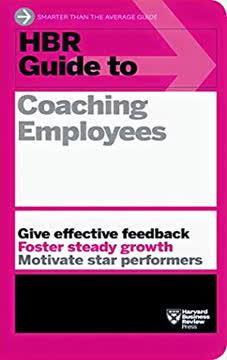
Get the complete 30-minute summary of HBR Guide to Coaching Employees
Get the complete summary in the appCoaching is about helping people find their own answers, not providing yours.
Your expectations shape your employees' performance. Believe in their potential.
Trust is the foundation. Build it through transparency, reliability, and listening.
Ask open-ended questions and allow silence. The best insights emerge after a pause.
Structure coaching conversations to produce insight, commitment, and action.
Give specific, behavior-focused feedback. Manage emotions to create receptivity.
"HBR Guide to Coaching Employees" is a strong fit if you want practical ideas around business, leadership, management, especially themes like coaching is about helping people find their own answers, not providing yours; your expectations shape your employees' performance. believe in their potential. The MinuteRead summary distills these concepts into a focused read, whether you're deciding whether to buy the book or applying its lessons at work.
Harvard Business Review is a prestigious publication focused on management and business practices. While not an individual author, it represents a collective of experts and thought leaders in various fields. Known for its rigorous research and practical insights, Harvard Business Review has been a trusted source for business professionals and academics since 1922. The organization publishes a wide range of books, articles, and guides, including the HBR Guide series, which offers concise, actiona…
View all summaries by Harvard Business PublishingContinue Reading
Access the complete 30-minute summary and thousands more nonfiction books in the MinuteRead app.

Continue reading the complete summary in the MinuteRead app.






