 MinuteRead
30 min
Book summary
Premium summary · Opens in the app · 30 min read
Most people believe that productivity is about time. They think that if they could just find more hours in the day, they would finally get everything done. They wake up earlier, stay at the office later, work through lunch, and check email from bed. They treat time as the scarce resource and try to squeeze more activity into every available minute.
**Author:** Harvard Business Review
**Estimated Reading Time:** 45 minutes
**What You'll Learn:**
- Why working harder is not the answer to feeling overwhelmed - How to identify the work that truly matters and eliminate the rest - The science of energy management and why it matters more than time management - Practical systems for managing email, delegation, and daily priorities - How to build sustainable productivity habits that last
**Who This Book Is For:**
This book is for anyone who feels busy but not productive. It is for professionals who end their days exhausted yet uncertain whether they accomplished anything meaningful. It is for managers who want to focus on high-value work while developing their teams. It is for anyone who suspects that the secret to getting more done is not working longer hours but working differently.
Most people believe that productivity is about time. They think that if they could just find more hours in the day, they would finally get everything done. They wake up earlier, stay at the office later, work through lunch, and check email from bed. They treat time as the scarce resource and try to squeeze more activity into every available minute. This approach fails for a simple reason: time is finite. No matter how efficiently you manage it, there are only twenty-four hours in a day. You cannot create more time. You can only choose how to spend it. The real problem is not that you have too little time. The real problem is that you are trying to do too many things, and many of those things do not matter. You are spending your limited energy on low-value tasks while the work that would truly make a difference sits untouched on your to-do list. This book offers a different approach. Instead of asking how to get more done, it asks a better question: how do you get the right work done? The distinction matters. Getting more done is easy. You can always add more tasks to your day, answer more emails, attend more meetings, and respond to more requests. But getting the right work done requires something harder. It requires discernment. It requires the willingness to say no. It requires building systems that protect your attention and energy for the work that truly matters. The ideas in this book come from decades of research into how high performers actually work. The findings are often counterintuitive. The most productive people do not work longer hours. They do not multitask. They do not respond to every email immediately. Instead, they focus intensely on a small number of priorities, they build rituals that make good behavior automatic, and they manage their energy with the same…
Continue reading in the MinuteRead app
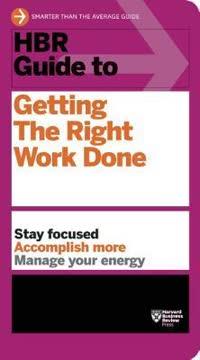
Get the complete 30-minute summary of HBR Guide to Getting the Right Work Done
Get the complete summary in the appPrioritize ruthlessly. Focus on the work that creates the most value.
Use the Eisenhower Matrix to distinguish between urgent and important tasks.
Create rituals that make productivity automatic. Do not rely on willpower.
Manage your energy, not just your time. Rest is essential for performance.
Work in focused 90-minute cycles followed by real breaks.
Check email at scheduled times, not constantly throughout the day.
"HBR Guide to Getting the Right Work Done" is a strong fit if you want practical ideas around business, self help, productivity, especially themes like prioritize ruthlessly. focus on the work that creates the most value; use the eisenhower matrix to distinguish between urgent and important tasks. The MinuteRead summary distills these concepts into a focused read, whether you're deciding whether to buy the book or applying its lessons at work.
Harvard Business Review is a renowned management magazine published by Harvard Business Publishing, a wholly-owned subsidiary of Harvard University. It features articles on various business and management topics, written by leading academics, executives, and management experts. The publication is known for its rigorous editorial process and influential ideas that shape business practices worldwide. HBR often compiles its articles into themed guidebooks, such as the one reviewed here, to provide …
View all summaries by Harvard Business ReviewContinue Reading
Access the complete 30-minute summary and thousands more nonfiction books in the MinuteRead app.

Continue reading the complete summary in the MinuteRead app.






