 MinuteRead
30 min
Book summary
by Harvard Business Publishing
Premium summary · Opens in the app · 30 min read
Walk through the halls of almost any modern organization and you will hear the same refrain. We need more collaboration. We need to break down silos. We need people to work across boundaries, share knowledge, and solve problems together. The assumption is so deeply embedded in corporate life that questioning it feels almost heretical.
**Author:** Harvard Business Publishing
**Estimated Reading Time:** 45 minutes
**What You'll Learn:**
- Why more collaboration is often the wrong goal - How to calculate whether a collaborative project will create or destroy value - The four modes of collaboration and when to use each - How to manage conflict at the point of disagreement - How to build a culture where the right collaboration thrives
**Who This Book Is For:**
Leaders who suspect their organization is collaborating too much, too little, or in the wrong ways. Managers who want a disciplined framework for deciding when teamwork makes sense and when it does not. Anyone who has watched a promising cross-functional project collapse under the weight of coordination costs, unresolved conflict, and unclear decision rights.
Walk through the halls of almost any modern organization and you will hear the same refrain. We need more collaboration. We need to break down silos. We need people to work across boundaries, share knowledge, and solve problems together. The assumption is so deeply embedded in corporate life that questioning it feels almost heretical. Yet the evidence tells a more complicated story. Some of the most expensive failures in business history have been collaborative projects. Cross-functional teams that burned through millions of dollars and produced nothing. Partnerships between business units that generated more conflict than revenue. Innovation initiatives that brought together brilliant people from across the organization and somehow produced results worse than what any single team could have achieved alone. The problem is not that collaboration is bad. The problem is that most organizations treat collaboration as an end in itself. They measure it by the number of cross-functional meetings on the calendar. They reward it by how many people get copied on an email. They celebrate it whenever two departments that used to ignore each other start talking, regardless of whether that conversation produces anything of value. This book offers a different perspective. The central argument is simple but profound: collaboration is a tool, not a goal. Like any tool, it is useful in some situations and harmful in others. The question leaders should ask is not "How can we get people to collaborate more?" but rather "Will collaboration on this project create or destroy value?" Answering that question requires discipline. It requires looking beyond the warm feelings that collaboration often generates and examining the cold numbers underneath. It requires understanding that every collaborative project carries hidden costs: the time spent coordinating, the opportunities forgone, the conflicts that arise when people with different goals and incentives are forced to work together. This book brings together some of the most important thinking on collaboration from the Harvard Business Review. The articles collected here were…
Continue reading in the MinuteRead app
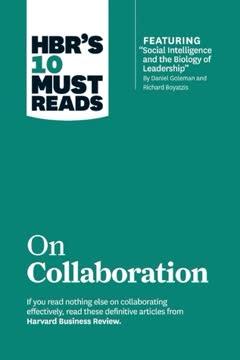
Get the complete 30-minute summary of HBR's 10 Must Reads on Collaboration
Get the complete summary in the appCollaboration is a tool, not a goal. It creates value only when its benefits exceed its costs.
The collaboration premium equals projected return minus opportunity cost minus collaboration cost.
Overestimating returns, ignoring opportunity costs, and underestimating collaboration costs are the three most common ev
The goal of collaboration is business results that would be impossible without it.
Conflict is inevitable in collaboration and can be valuable if managed well.
A common method for resolving conflicts reduces wasted time and damaged relationships.
"HBR's 10 Must Reads on Collaboration" is a strong fit if you want practical ideas around business, leadership, management, especially themes like collaboration is a tool, not a goal. it creates value only when its benefits exceed its costs; the collaboration premium equals projected return minus opportunity cost minus collaboration cost. The MinuteRead summary distills these concepts into a focused read, whether you're deciding whether to buy the book or applying its lessons at work.
Harvard Business School Press is renowned for its high-quality publications in business and management. As the publishing arm of Harvard Business School, it produces a wide range of books, articles, and case studies that are widely respected in the academic and business communities. The press is known for its rigorous editorial standards and for featuring work from leading business thinkers and practitioners. HBR's 10 Must Reads series, including this collaboration-focused volume, exemplifies th…
View all summaries by Harvard Business PublishingContinue Reading
Access the complete 30-minute summary and thousands more nonfiction books in the MinuteRead app.

Continue reading the complete summary in the MinuteRead app.






