 MinuteRead
30 min
Book summary
by Harvard Business Publishing
Premium summary · Opens in the app · 30 min read
Every organization eventually faces the same uncomfortable question: what comes next?
**Author:** Harvard Business Publishing **Estimated Reading Time:** 45 minutes
**What You'll Learn:** - Why innovation is a disciplined practice, not a mysterious gift - The seven sources of innovative opportunity and how to spot them - How to overcome the financial and organizational barriers that kill new ideas - Practical frameworks for managing innovation in established companies - How to build teams and cultures that sustain innovation over time
**Who This Book Is For:** This book is for managers, executives, entrepreneurs, and anyone responsible for creating growth inside an organization. If you have ever wondered why some companies innovate consistently while others stagnate, or if you have struggled to turn a promising idea into a successful venture, these chapters will give you the mental models and practical tools to change that.
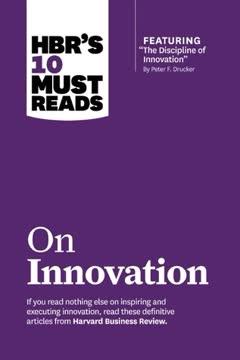
Every organization eventually faces the same uncomfortable question: what comes next? The product that built the company matures. The market that seemed infinite becomes crowded. The technology that once seemed revolutionary becomes table stakes. And somewhere in the building, someone whispers the word that makes executives both hopeful and nervous: innovation. Most companies respond to this challenge the same way. They hire creative consultants. They build innovation labs with beanbag chairs and whiteboard walls. They hold brainstorming sessions where people shout ideas and someone writes them on sticky notes. They wait for lightning to strike. And then, more often than not, nothing happens. The reason is simple. Most organizations misunderstand what innovation actually is. They treat it as a mysterious creative act, something that happens when the right genius walks into the room at the right moment. They believe that if they can just find enough creative people, or create enough unstructured time, or generate enough ideas, innovation will follow. This book argues something different. Innovation is not a gift. It is a discipline. The chapters in this collection, drawn from decades of research and practice published in Harvard Business Review, make a compelling case that innovation can be systematic, predictable, and manageable. The authors include Peter Drucker, the father of modern management, who spent years studying successful innovators and concluded that innovation is work rather than genius. They include Clayton Christensen, whose research on disruptive innovation changed how entire industries think about competition. They include practitioners who have launched new ventures inside large companies and lived to tell the tale. Together, they dismantle the myths that hold organizations back. The first myth is that innovation requires a special personality. Drucker studied successful entrepreneurs and found that they came in every personality type imaginable. Some were introverts, some extroverts. Some were cautious, some were risk-takers. What they shared was not a personality trait but a practice. They systematically looked…
Continue reading in the MinuteRead app
Get the complete 30-minute summary of HBR's 10 Must Reads on Innovation
Get the complete summary in the appInnovation is a discipline, not a mystery. It can be learned, practiced, and managed.
Opportunities cluster in seven predictable places. Scan them systematically.
Innovation requires both analysis and empathy. Use both sides of your brain.
Start small. Solve one problem well, then scale.
Innovation is work. It requires knowledge, persistence, and focus.
Traditional financial tools undervalue innovation. Supplement them with strategic thinking.
"HBR's 10 Must Reads on Innovation" is a strong fit if you want practical ideas around business, management, leadership, especially themes like innovation is a discipline, not a mystery. it can be learned, practiced, and managed; opportunities cluster in seven predictable places. scan them systematically. The MinuteRead summary distills these concepts into a focused read, whether you're deciding whether to buy the book or applying its lessons at work.
Harvard Business Review is a prestigious management magazine published by Harvard University Press since 1922. It features articles from influential thinkers and practitioners in business and management, including Peter Drucker, Clayton M. Christensen, and Robert Kaplan. The magazine is known for its rigorous, research-based approach to business topics and its ability to bridge academic theories with practical applications. HBR has a long-standing reputation for publishing groundbreaking ideas t…
View all summaries by Harvard Business PublishingContinue Reading
Access the complete 30-minute summary and thousands more nonfiction books in the MinuteRead app.

Continue reading the complete summary in the MinuteRead app.






