Loading…

Book summary
Premium summary · Opens in the app · 18 min read
It's time to end the myth of the complete leader: the flawless person at the top who's got it all figured out.
It's time to end the myth of the complete leader: the flawless person at the top who's got it all figured out. Embracing incompleteness. Leaders who recognize their limitations and work to complement their weaknesses are more effective than those striving for perfection. This approach allows leaders to: Leverage the strengths of others in the organization Foster a culture of collaboration and shared responsibility Adapt more easily to complex and rapidly changing environments By acknowledging their incompleteness, leaders create opportunities for growth, both for themselves and their teams. This mindset shift from individual heroics to collective leadership is crucial in today's interconnected and dynamic business landscape.
Corporations have been becoming less hierarchical and more collaborative for decades, of course, as globalization and the growing importance of knowledge work have required that responsibility and initiative be distributed more widely. Four key capabilities. Successful leaders develop and balance these essential skills: Sensemaking: Understanding the context Relating: Building relationships Visioning: Creating a compelling future Inventing: Developing new approaches These capabilities span intellectual, interpersonal, rational, intuitive, conceptual, and creative domains. Leaders rarely excel in all four areas, making it crucial to: Identify personal strengths and weaknesses Seek complementary skills in team members Continuously develop and refine these capabilities By focusing on these four areas, leaders can navigate complexity, inspire others, and drive organizational success.
Sensemaking involves figuring out what is going on in a changing environment and deciding how to respond. Contextual understanding. Sensemaking is the ability to interpret complex environments and communicate that understanding to others. Leaders skilled in sensemaking: Gather data from multiple sources Involve others in the interpretation process Test observations through small experiments Remain open to new possibilities and perspectives Effective sensemaking enables leaders to: Create shared understanding within the organization Identify emerging trends and opportunities Make informed decisions in ambiguous situations Adapt strategies to changing circumstances By developing strong sensemaking skills, leaders can guide their organizations through uncertainty and complexity with greater confidence and clarity.
Relating involves developing trusted relationships within and across organizations. Building connections. Effective relating is crucial for creating a collaborative and high-trust environment. Leaders who excel in relating: Balance inquiry and advocacy in conversations Actively listen to understand others' perspectives Clearly articulate their own viewpoints Cultivate a network of confidants and advisors Key aspects of relating include: Inquiring: Listening with genuine intent to understand Advocating: Clearly explaining one's own point of view Connecting: Building a diverse network of relationships By fostering strong relationships, leaders can: Enhance team cohesion and collaboration Facilitate the exchange of ideas and information Navigate conflicts more effectively Create a…
Continue reading in the MinuteRead app
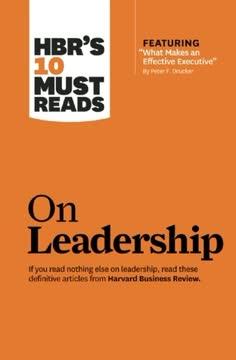
Get the complete 18-minute summary of HBR's 10 Must Reads on Leadership
Get the complete summary in the appLeadership is not about being complete, but about embracing incompleteness
Effective leaders possess four essential capabilities: sensemaking, relating, visioning, and inventing
Sensemaking: Understanding and interpreting the context of the organization
Relating: Building relationships and trust within and across organizations
Visioning: Creating a compelling picture of the future
Inventing: Developing new ways to achieve the vision
"HBR's 10 Must Reads on Leadership" is a strong fit if you want practical ideas around leadership, business, management—especially themes like leadership is not about being complete, but about embracing incompleteness; effective leaders possess four essential capabilities: sensemaking, relating, visioning, and inventing. The MinuteRead summary distills these concepts into a focused read, whether you're deciding whether to buy the book or applying its lessons at work.
Harvard Business Review is a prestigious management magazine published by Harvard Business School Publishing, a wholly-owned subsidiary of Harvard University . Founded in 1922, it is known for its influential articles on business strategy, leadership, and management. The publication features work from both academic researchers and industry practitioners, offering a unique blend of rigorous research and practical insights. HBR is respected for its ability to bridge the gap between academic theory…
View all summaries by Harvard Business ReviewContinue Reading
Access the complete 18-minute summary and thousands more nonfiction books in the MinuteRead app.
Continue reading the complete summary in the MinuteRead app.