 MinuteRead
30 min
Book summary
Premium summary · Opens in the app · 30 min read
The handshake happens. The contract is signed. The champagne is poured. Everyone congratulates each other on a deal well done. And then, quietly, over the following months, the value everyone celebrated begins to erode. Implementation stalls. Stakeholders who were never consulted resist. Hidden costs surface. Relationships sour. The brilliant agreement that looked so good on paper produces nothing but frustration and lost capital.
**Author:** Harvard Business Review (Curated Collection) **Estimated Reading Time:** 45 Minutes
**What You'll Learn**
Why most deals fail after the handshake. How to negotiate with implementation in mind, build trust that survives conflict, map the hidden interests of every stakeholder, and use strategic moves that create value instead of destroying it. You will learn to manage emotions under pressure, conduct due diligence that actually works, know exactly when to walk away, and adapt your approach across cultures. This book will change how you prepare, how you listen, and how you close.
**Who This Book Is For**
Anyone who negotiates under complexity. Executives managing mergers and acquisitions. Entrepreneurs structuring partnerships. Managers resolving internal conflicts. Professionals working across cultures. Anyone who suspects that getting to yes is only the beginning of the real work.
The handshake happens. The contract is signed. The champagne is poured. Everyone congratulates each other on a deal well done. And then, quietly, over the following months, the value everyone celebrated begins to erode. Implementation stalls. Stakeholders who were never consulted resist. Hidden costs surface. Relationships sour. The brilliant agreement that looked so good on paper produces nothing but frustration and lost capital. This pattern repeats across industries and continents because most negotiators are trained to pursue the wrong goal. They optimize for deal closure. They measure success by whether an agreement was reached and whether the terms appeared favorable. But the product of a negotiation is not a document. It is the value produced once the parties have done what they agreed to do. A signed contract that fails in implementation is not a successful negotiation. It is a failure with a delay. The articles collected in this volume represent decades of research and practice from the world's foremost experts on negotiation. They share a common thread: the recognition that negotiation is not a discrete event that ends when parties agree. It is a process that extends deep into the future, and the best negotiators prepare, communicate, and structure deals with that future firmly in mind. Most people struggle with negotiation because they approach it as a battle of wills. They focus on positions, demands, and concessions. They treat the other party as an opponent to be defeated. They ignore the emotional undercurrents that shape decisions. They fail to investigate the assumptions underlying their own strategies. They get swept up in the momentum of a deal and lose the discipline to walk away when the facts demand it. The approach in this book is different. It treats negotiation as a discipline of understanding: understanding your own interests, understanding the interests of others, understanding the structural and emotional forces at play, and understanding how agreements will actually function…
Continue reading in the MinuteRead app
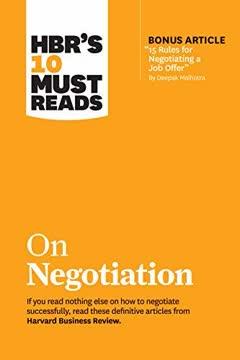
Get the complete 30-minute summary of HBR's 10 Must Reads on Negotiation
Get the complete summary in the appThe product of a negotiation is not the signed agreement. It is the value created after implementation.
Build trust before you need it. Trust is a strategic asset, not a soft skill.
Map the stakeholder landscape. The people at the table are rarely the only people who matter.
Use strategic moves to shape the negotiation. Do not just react to what the other party does.
Manage emotions deliberately. Anxiety leads to bad decisions. Calmness signals confidence.
Conduct due diligence that challenges your assumptions. Half of due diligence processes fail to uncover major problems.
"HBR's 10 Must Reads on Negotiation" is a strong fit if you want practical ideas around business, management, self help, especially themes like the product of a negotiation is not the signed agreement. it is the value created after implementation; build trust before you need it. trust is a strategic asset, not a soft skill. The MinuteRead summary distills these concepts into a focused read, whether you're deciding whether to buy the book or applying its lessons at work.
Harvard Business Review is a renowned publication focusing on management and business practices. While not a single author, it represents a collective of experts, academics, and business leaders who contribute their knowledge and experiences. The HBR brand is known for its high-quality, research-based content that offers practical insights for professionals across various industries. Their "10 Must Reads" series, including this book on negotiation, compiles essential articles on specific topics,…
View all summaries by Deepak MalhotraContinue Reading
Access the complete 30-minute summary and thousands more nonfiction books in the MinuteRead app.

Continue reading the complete summary in the MinuteRead app.






