 MinuteRead
30 min
Book summary
Premium summary · Opens in the app · 30 min read
Every company believes it puts the customer first. Walk through any corporate headquarters and you will see the evidence: mission statements framed on walls, customer journey maps taped to whiteboards, and quarterly reports celebrating customer satisfaction scores. Yet behind these polished declarations, a quieter struggle plays out in conference rooms and email threads across the world.
**Author:** Harvard Business Review
**Estimated Reading Time:** 2 hours 15 minutes
**What You'll Learn:**
- Why the relationship between marketing and sales determines business performance - How to diagnose where your organization sits on the marketing-sales alignment spectrum - Practical frameworks for integrating two departments that often work against each other - How technology, customer centricity, and adaptability create lasting competitive advantage - A 30-day plan to transform how marketing and sales collaborate in your organization
**Who This Book Is For:**
Business leaders who sense that their marketing and sales teams are working at cross purposes. Marketing professionals frustrated by sales teams that ignore carefully crafted campaigns. Sales leaders tired of marketing initiatives that fail to generate real opportunities. And anyone responsible for driving revenue growth who suspects that internal misalignment is quietly eroding performance.
Every company believes it puts the customer first. Walk through any corporate headquarters and you will see the evidence: mission statements framed on walls, customer journey maps taped to whiteboards, and quarterly reports celebrating customer satisfaction scores. Yet behind these polished declarations, a quieter struggle plays out in conference rooms and email threads across the world. Marketing and sales are fighting. The fight is rarely dramatic. There are no shouting matches in the hallway. Instead, it takes the form of subtle friction. Marketing launches a campaign that sales ignores. Sales requests materials that marketing never delivers. Marketing blames sales for failing to follow up on leads. Sales blames marketing for generating leads that go nowhere. Each department believes the other is the problem. This conflict is expensive. When marketing and sales are misaligned, sales cycles stretch longer than they should. Market-entry costs rise because campaigns miss their targets. The cost of sales climbs as representatives waste time pursuing prospects who were never properly qualified. Revenue leaks away, not because the product is weak or the market is soft, but because the two functions responsible for growth cannot work together. The problem is not new. It has existed since companies first separated marketing from sales. But it has become more urgent in recent years. Buyers are more informed than ever before. They research products online, compare options, and form opinions long before they ever speak to a salesperson. This shift has made marketing more important to the sales process, but it has also made coordination more difficult. Marketing now shapes the early stages of the buyer's journey, while sales owns the later stages. When these stages do not connect, customers feel the disconnect. Consider what happens when a potential customer downloads a white paper from a company's website. Marketing sees this as a lead. Sales sees this as a name on a list. Marketing expects sales…
Continue reading in the MinuteRead app
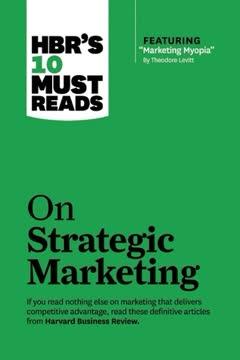
Get the complete 30-minute summary of HBR's 10 Must Reads on Strategic Marketing
Get the complete summary in the appMarketing and sales misalignment is expensive. It lengthens sales cycles, raises market-entry costs, and increases cost
The conflict between marketing and sales is structural, not personal. It stems from economic competition and cultural di
Marketing and sales relationships fall into four types: undefined, defined, aligned, and integrated.
Moving from undefined to defined requires clear roles, common language, and regular meetings.
Moving from defined to aligned requires joint planning, field exposure, and shared language.
Moving from aligned to integrated requires shared structures, shared metrics, and shared rewards.
"HBR's 10 Must Reads on Strategic Marketing" is a strong fit if you want practical ideas around business, management, leadership, especially themes like marketing and sales misalignment is expensive. it lengthens sales cycles, raises market-entry costs, and increases cost; the conflict between marketing and sales is structural, not personal. it stems from economic competition and cultural di. The MinuteRead summary distills these concepts into a focused read, whether you're deciding whether to buy the book or applying its lessons at work.
Clayton M. Christensen is a renowned business scholar and author known for his groundbreaking work in innovation and disruptive technologies. He was a professor at Harvard Business School and wrote several influential books on business strategy. Christensen's research focused on how companies can stay competitive in rapidly changing markets. His most famous concept, "disruptive innovation," has had a significant impact on business thinking and practices. Christensen's work extends beyond academi…
View all summaries by Harvard Business ReviewContinue Reading
Access the complete 30-minute summary and thousands more nonfiction books in the MinuteRead app.

Continue reading the complete summary in the MinuteRead app.






