 MinuteRead
30 min
Book summary
Premium summary · Opens in the app · 30 min read
Every year, companies around the world spend billions of dollars and countless hours crafting strategies. They hire consultants, run executive retreats, build sophisticated financial models, and produce thick planning documents that map out ambitious futures. The process feels rigorous. The presentations look impressive. The numbers add up.
**Author:** Michael E. Porter and Contributors
**Estimated Reading Time:** 45 minutes
**What You'll Learn:**
- Why most companies fail to capture the full value of their strategies - How to close the gap between strategic planning and execution - The frameworks that leading companies use to align resources with priorities - How to build a culture where strategy drives daily decisions
**Who This Book Is For:**
This book is for leaders, managers, and strategists who are tired of elegant plans that never materialize. It is for anyone who has watched a promising strategy stall, drift, or collapse under the weight of organizational complexity. If you have ever wondered why smart people with good intentions fail to deliver promised results, this book will give you the answers.
Every year, companies around the world spend billions of dollars and countless hours crafting strategies. They hire consultants, run executive retreats, build sophisticated financial models, and produce thick planning documents that map out ambitious futures. The process feels rigorous. The presentations look impressive. The numbers add up. Then reality intervenes. The strategy that promised 15 percent growth delivers 7 percent. The market expansion that was supposed to transform the business stalls after two quarters. The product launch that everyone believed in arrives late, over budget, and under-supported. Leaders look at the numbers and wonder what went wrong. They blame the market. They blame the competition. They blame execution. But rarely do they see the full picture. Research on corporate performance reveals a startling pattern. Companies on average deliver only 63 percent of the financial performance their strategies promise. In other words, nearly 40 percent of the value that leaders believe they are creating never materializes. This is not a problem confined to struggling companies or difficult industries. It is pervasive across sectors, geographies, and company sizes. It affects well-run organizations and poorly managed ones alike. The gap between strategic promise and actual performance represents one of the largest sources of unrealized value in modern business. If companies could close even half of this gap, the financial impact would be enormous. For many organizations, the improvement would be worth more than any new product, market, or acquisition they could pursue. Yet the causes of this gap remain largely invisible to top management. This is perhaps the most troubling finding of all. Leaders often cannot tell whether their shortfalls stem from flawed strategies, poor execution, or some combination of both. Without this clarity, they cannot fix the problem. They adjust the wrong things. They change the strategy when execution was the issue. They overhaul processes when the strategy itself was unrealistic. They search for scapegoats instead of solutions. The problem is not that companies lack intelligence…
Continue reading in the MinuteRead app
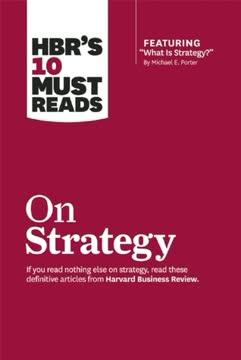
Get the complete 30-minute summary of HBR's 10 Must Reads on Strategy
Get the complete summary in the appCompanies deliver only 63 percent of their strategies' promised value on average.
The strategy-to-performance gap stems from breakdowns in communication, translation, and accountability.
Planning and execution must be integrated into a continuous cycle.
Keep strategy simple and concrete so people can translate it into daily action.
Challenge assumptions, not financial forecasts.
Use a common framework to create a shared language for strategy.
"HBR's 10 Must Reads on Strategy" is a strong fit if you want practical ideas around business, leadership, management, especially themes like companies deliver only 63 percent of their strategies' promised value on average; the strategy-to-performance gap stems from breakdowns in communication, translation, and accountability. The MinuteRead summary distills these concepts into a focused read, whether you're deciding whether to buy the book or applying its lessons at work.
Michael E. Porter is widely regarded as the "Father of Strategy" and a leading authority on competitive strategy and economic development. He is a Harvard Business School professor and founder of the Monitor Group consulting firm. Porter has authored numerous influential books and articles, consistently ranking as one of the world's most influential management thinkers. His work spans various fields, including business strategy, national competitiveness, and social issues. Porter's educational b…
View all summaries by Michael E. PorterContinue Reading
Access the complete 30-minute summary and thousands more nonfiction books in the MinuteRead app.

Continue reading the complete summary in the MinuteRead app.






