 MinuteRead
30 min
Book summary
Premium summary · Opens in the app · 30 min read
Teams are the fundamental unit of modern work. Almost nothing of consequence gets accomplished by individuals working alone. Products are built by groups. Strategies are formed in meeting rooms. Innovations emerge from clusters of people arguing, testing, and refining ideas together. Yet for all their importance, teams remain one of the most poorly understood and badly managed elements of organizational life.
**Author:** Jon R. Katzenbach and Harvard Business Review Contributors
**Estimated Reading Time:** 45 minutes
**What You'll Learn:**
- Why diverse teams outperform homogeneous ones, and how to manage the friction diversity creates - How to build teams that argue productively without destroying relationships - The difference between ordinary teams and virtuoso teams, and when you need each - Practical frameworks for decision-making, conflict resolution, and team leadership - How to balance consensus with decisive action
**Who This Book Is For:**
This book is for anyone who leads teams, works on teams, or builds teams. Whether you are a first-time manager struggling with group dynamics or a senior executive trying to squeeze breakthrough performance from talented people, the ideas here will change how you think about collaboration. It is especially valuable for leaders in complex organizations where diverse perspectives must be harnessed without letting differences tear the group apart.
Teams are the fundamental unit of modern work. Almost nothing of consequence gets accomplished by individuals working alone. Products are built by groups. Strategies are formed in meeting rooms. Innovations emerge from clusters of people arguing, testing, and refining ideas together. Yet for all their importance, teams remain one of the most poorly understood and badly managed elements of organizational life. The problem is not a lack of effort. Managers spend enormous amounts of time thinking about teams. They attend workshops on team building. They reorganize reporting structures. They invest in collaboration software. They schedule offsites and retreats. And still, most teams underperform. Why? Because most of what we believe about teams is wrong. We believe harmony is good. We believe consensus is the goal. We believe everyone should have an equal voice. We believe conflict is a sign of dysfunction. We believe teams should be stable and predictable. We believe good team players check their egos at the door. The best teams violate all of these assumptions. The highest-performing teams are often uncomfortable places. They are filled with strong personalities who disagree vigorously. They debate facts relentlessly. They challenge each other's assumptions. They do not always get along. And yet they produce results that ordinary teams cannot match. This book brings together the most important insights from decades of research on teams, published in Harvard Business Review. The articles collected here represent the best thinking on what makes teams work, what makes them fail, and what leaders can do to build teams that deliver exceptional results. The central insight running through all of this work is simple but profound: teams are not just groups of people working together. They are complex social systems with their own dynamics, their own psychology, and their own requirements for success. Managing a team well requires…
Continue reading in the MinuteRead app
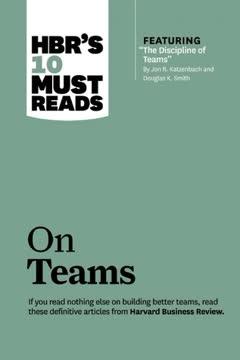
Get the complete 30-minute summary of HBR's 10 Must Reads on Teams
Get the complete summary in the appDiverse teams outperform homogeneous ones on complex tasks, but only when the friction of diversity is actively managed.
Ground debates in facts. Data depersonalizes conflict and focuses attention on issues rather than personalities.
Generate at least four alternatives for important decisions. Multiple options prevent polarization and enable creative s
Unite teams with common goals. A compelling shared purpose subordinates personal agendas to group success.
Use humor strategically. Laughter relieves tension and builds the social bonds that make collaboration possible.
Balance power so everyone can contribute. When all voices are heard, teams make better decisions.
"HBR's 10 Must Reads on Teams" is a strong fit if you want practical ideas around business, leadership, management, especially themes like diverse teams outperform homogeneous ones on complex tasks, but only when the friction of diversity is actively managed; ground debates in facts. data depersonalizes conflict and focuses attention on issues rather than personalities. The MinuteRead summary distills these concepts into a focused read, whether you're deciding whether to buy the book or applying its lessons at work.
Harvard Business Review is a renowned publication focused on management and business practices. While not an individual author, HBR is known for curating and publishing articles from leading business thinkers and researchers. The "10 Must Reads" series compiles influential articles on specific topics from HBR's extensive archives. These collections aim to provide readers with essential insights and practical advice on various aspects of business and leadership. HBR's reputation for rigorous, res…
View all summaries by Jon R. KatzenbachContinue Reading
Access the complete 30-minute summary and thousands more nonfiction books in the MinuteRead app.

Continue reading the complete summary in the MinuteRead app.






