MinuteRead
30 min
Book summary
by Joseph G. Allen
Premium summary · Opens in the app · 30 min read
Most of us rarely think about the air we breathe indoors. We walk into an office building, a school, a hospital, or our own home and assume the environment is safe. We trust that the people who designed and operate these buildings have our best interests in mind. We assume that if there were a problem, someone would have noticed and fixed it.
**Author:** Joseph G. Allen with John Macomber
**Estimated Reading Time:** 45 minutes
**What You'll Learn:**
- Why the air inside your office may be making you slower and less focused - How building managers can become unlikely heroes in the fight for better health - What the 9 Foundations of a Healthy Building are and how to apply them - Why the green building movement missed the most important metric: you - How to measure health performance in any organization - What the future holds for buildings that actively support human flourishing
**Who This Book Is For:**
Business leaders who want to understand why their office space matters more than they think. Building owners and facilities managers who want practical frameworks for improving indoor environments. Employees who suspect their workplace is affecting their health and want to know what to ask for. Anyone who spends time indoors, which is nearly everyone.
Most of us rarely think about the air we breathe indoors. We walk into an office building, a school, a hospital, or our own home and assume the environment is safe. We trust that the people who designed and operate these buildings have our best interests in mind. We assume that if there were a problem, someone would have noticed and fixed it. This assumption is wrong. The reality is that the air inside many buildings is more polluted than the air outside. The ventilation systems in most offices are designed to meet minimum standards that were never intended to optimize human health or cognitive performance. The materials used in construction and furnishing often release chemicals that we inhale every day without knowing it. The lighting, acoustics, and thermal conditions in many workplaces actively work against our ability to focus, collaborate, and perform at our best. Yet because these problems are invisible, they go unaddressed. Joseph Allen, a health scientist at Harvard University, has spent his career studying the relationship between buildings and human health. His research has produced a startling finding: the indoor environment is one of the most significant and least appreciated determinants of health, well-being, and productivity in modern life. Small changes in ventilation, filtration, and building design can produce dramatic improvements in how people think, feel, and perform. The stakes are enormous. People in developed countries spend approximately 90 percent of their time indoors. Over an 80-year lifespan, that translates to roughly 72 years spent inside buildings. We are, as Allen puts it, an indoor species. The quality of our indoor environments is not a niche concern for architects and engineers. It is a fundamental issue of public health. The green building movement of the past few decades made important progress on energy efficiency and…
Continue reading in the MinuteRead app
Get the complete 30-minute summary of Healthy Buildings
Get the complete summary in the appPeople spend 90 percent of their time indoors, making buildings a primary determinant of health.
The 3-30-300 rule: payroll costs are 100 times greater than energy costs, so focus on people.
Ventilation is the single most important factor in indoor air quality, and most buildings are under-ventilated.
The 9 Foundations provide a comprehensive framework for building health.
Most chemicals in buildings have never been adequately tested for safety.
The neighbor effect means building health is a collective concern requiring building-level solutions.
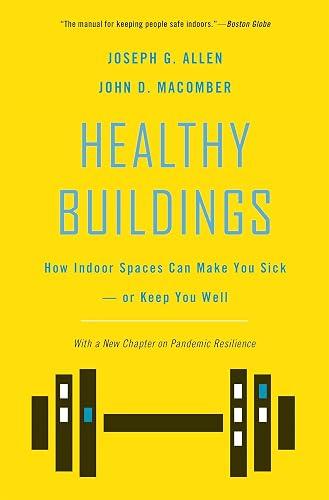
"Healthy Buildings" is a strong fit if you want practical ideas around architecture, business, health, especially themes like people spend 90 percent of their time indoors, making buildings a primary determinant of health; the 3-30-300 rule: payroll costs are 100 times greater than energy costs, so focus on people. The MinuteRead summary distills these concepts into a focused read, whether you're deciding whether to buy the book or applying its lessons at work.
Motivated to help readers with we shape our buildings and afterwards our buildings shape us, Joseph G. Allen wrote “Healthy Buildings” to package those ideas for a fast, focused read. In “Healthy Buildings”, Joseph G. Allen focuses on we shape our buildings and afterwards our buildings shape us. Through “Healthy Buildings”, Joseph G. Allen distills the core ideas on architecture into lessons readers can absorb in a single short sitting. Readers turn to this work when they want Joseph G. Allen's …
Continue Reading
Access the complete 30-minute summary and thousands more nonfiction books in the MinuteRead app.

Continue reading the complete summary in the MinuteRead app.