MinuteRead
30 min
Book summary
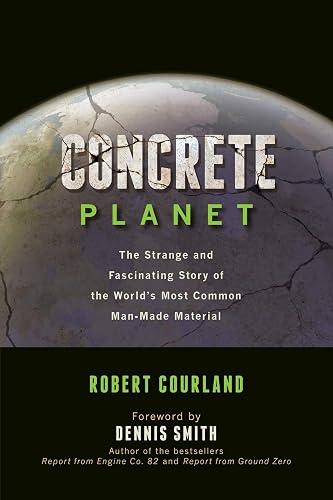
by Robert Courland
Premium summary · Opens in the app · 30 min read
Concrete is everywhere. It is the most widely used man-made material on Earth. We walk on it, drive over it, live inside it, and work within it. Every year, humanity produces billions of tons of the stuff, enough to cover the entire surface of the planet in a thin gray skin. Yet almost no one stops to think about where concrete came from, how it works, or what its future holds.
**Author:** Robert Courland
**Estimated Reading Time:** 45 minutes
**What You'll Learn:**
- How a campfire accident 12,000 years ago led to the discovery of lime, the foundation of concrete - Why the Romans became the greatest concrete engineers in history and how their structures still stand today - The controversial theory that parts of the Egyptian pyramids were cast, not carved - How reinforced concrete, the material of the modern world, carries the seeds of its own destruction - What ancient builders knew that modern engineers forgot
**Who This Book Is For:**
Anyone who has ever walked through a city and wondered how the buildings around them came to be. Anyone curious about the hidden technologies that shaped civilization. And anyone who wants to understand why the bridges, roads, and buildings we rely on every day may not be as permanent as they appear.
Concrete is everywhere. It is the most widely used man-made material on Earth. We walk on it, drive over it, live inside it, and work within it. Every year, humanity produces billions of tons of the stuff, enough to cover the entire surface of the planet in a thin gray skin. Yet almost no one stops to think about where concrete came from, how it works, or what its future holds. This is a remarkable oversight. The story of concrete is not a niche engineering tale. It is the story of civilization itself. The discovery of lime, the key ingredient in concrete, predates agriculture and the wheel. It may have been the spark that ignited the Neolithic Revolution. The Romans used concrete to build an empire, and their most famous concrete structure, the Pantheon, still stands after nearly two thousand years. The modern world is built on reinforced concrete, a material that has transformed how we live but harbors a dangerous flaw that threatens our infrastructure. Robert Courland's *Concrete Planet* pulls back the curtain on this overlooked material. He reveals a story filled with accidental discoveries, brilliant engineers, architectural triumphs, and looming disasters. The book challenges our assumptions about permanence and progress. It shows that the ancients knew things about concrete that we forgot, and that our modern version of the material may not be as durable as we assume. Why does this matter? Because the choices we make about concrete affect everything from the safety of our bridges to the stability of our climate. The production of Portland cement, the binding agent in modern concrete, releases enormous amounts of carbon dioxide into the atmosphere. The corrosion of steel reinforcement inside concrete threatens to topple our infrastructure. And the solutions to these problems may lie in the distant past, in the techniques used by Roman engineers…
Continue reading in the MinuteRead app
Get the complete 30-minute summary of Concrete Planet
Get the complete summary in the appConcrete is not a modern invention. Its roots stretch back twelve thousand years to the accidental discovery of lime by
The Romans were the greatest concrete engineers in history. Their structures have lasted two thousand years, far longer
Roman concrete was made with lime and pozzolana, not Portland cement. It was unreinforced and designed to last.
The Pantheon's dome is the largest unreinforced concrete dome in existence, a testament to Roman engineering skill.
Reinforced concrete, the material of the modern world, has a fatal flaw: the steel reinforcement is vulnerable to corros
The corrosion of steel rebar causes concrete to crack and crumble, leading to structural failure and costly repairs.
"Concrete Planet" is a strong fit if you want practical ideas around history, science, technology, especially themes like concrete is not a modern invention. its roots stretch back twelve thousand years to the accidental discovery of lime by; the romans were the greatest concrete engineers in history. their structures have lasted two thousand years, far longer. The MinuteRead summary distills these concepts into a focused read, whether you're deciding whether to buy the book or applying its lessons at work.
Motivated to help readers with in a way, Robert Courland wrote “Concrete Planet” to package those ideas for a fast, focused read. In “Concrete Planet”, Robert Courland focuses on in a way. Through “Concrete Planet”, Robert Courland distills the core ideas on history into lessons readers can absorb in a single short sitting. Readers turn to this work when they want Robert Courland's perspective on the subject without working through the entire original volume. Robert Courland wrote “Concrete Plan…
Continue Reading
Access the complete 30-minute summary and thousands more nonfiction books in the MinuteRead app.

Continue reading the complete summary in the MinuteRead app.