MinuteRead
30 min
Book summary
Premium summary · Opens in the app · 30 min read
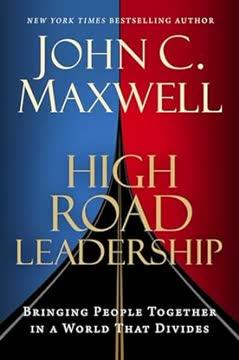
We live in a divided world. Every day brings new evidence of how quickly people separate into camps, how readily they assign blame, and how easily they dehumanize those who disagree with them. Social media rewards outrage. Politics thrives on polarization. Even families and friendships fracture under the weight of ideological differences. Into this landscape steps a question that every leader must eventually answer: Will you take the high road or the low road?
**Author:** John C. Maxwell **Estimated Reading Time:** 45 minutes
How to lead in a way that brings people together rather than driving them apart. How to value every person you lead, embrace your own humanity, and build the emotional strength required to serve others before yourself. How to live by a bigger picture that transforms both your leadership and your legacy.
Anyone who leads others, whether in business, family, community, or faith. If you influence people, you are a leader. This book is for those who want their influence to heal rather than harm, unite rather than divide, and build rather than break.
The central idea of High Road Leadership is simple to state but difficult to live: every person you lead deserves to be treated with dignity and respect, regardless of who they are, what they have done, or what they can do for you. This principle is the foundation upon which all other leadership practices rest. Without it, every technique and strategy you employ will eventually crumble. Treating people with dignity means recognizing their inherent worth as human beings. It means seeing them not as resources to be managed or obstacles to be overcome, but as individuals with their own dreams, fears, and potential. Respect means honoring their perspectives even when you disagree, listening to their concerns even when you are busy, and valuing their contributions even when they are small. This is not about being nice. It is about being just. Why does this matter so much? Because leadership is fundamentally relational. You cannot lead people you do not value. You may be able to manage them, direct them, or control them for a time, but you cannot inspire them, develop them, or earn their trust. People know when they are being used. They sense when a leader's interest in them is transactional rather than genuine. And when they sense it, they withdraw. They do the minimum. They protect themselves. They stop bringing their full selves to their work. High-road leadership changes this dynamic. When people feel genuinely valued, they open up. They take risks. They bring creativity and energy to their tasks. They trust their leader and each other. This creates a virtuous cycle: the more you value people, the more they give, and the more they give, the more you are able to accomplish together. The high road is not just morally right; it is practically effective. But this core idea requires a shift in thinking. Most leaders are trained to focus on results, efficiency, and productivity. These are important, but they are not the foundation. The foundation is people. When you get the people part right, the results follow. When you get it wrong,…
Continue reading in the MinuteRead app
Get the complete 30-minute summary of High Road Leadership
Get the complete summary in the appTreat every person with dignity and respect, regardless of who they are or what they can do for you.
Bring people together rather than dividing them. Assume positive intent and focus on shared goals.
Value people for who they are, not for what they can do for you. Express this through attention, belief, and love.
Acknowledge your humanness. You are not your gifts, and you are not your performance. Be real about your struggles.
Do the right things for the right reasons. Examine your motives and choose service over self-interest.
Give more than you take. Leave everyone you meet better than you found them.
"High Road Leadership" is a strong fit if you want practical ideas around leadership, business, personal development, especially themes like treat every person with dignity and respect, regardless of who they are or what they can do for you; bring people together rather than dividing them. assume positive intent and focus on shared goals. The MinuteRead summary distills these concepts into a focused read, whether you're deciding whether to buy the book or applying its lessons at work.
John Calvin Maxwell is a renowned American author, speaker, and pastor who has written numerous bestselling books on leadership. His works, including "The 21 Irrefutable Laws of Leadership," have garnered widespread acclaim and appeared on the New York Times Best Seller List. Maxwell's expertise in leadership development has made him a sought-after speaker and consultant. His approach combines practical insights with inspirational messages, focusing on personal growth and effective leadership st…
View all summaries by John C. MaxwellContinue Reading
Access the complete 30-minute summary and thousands more nonfiction books in the MinuteRead app.

Continue reading the complete summary in the MinuteRead app.