MinuteRead
30 min
Book summary
by Mihir Desai
Premium summary · Opens in the app · 30 min read
Finance has a reputation problem. For most people, the word conjures images of Wall Street traders shouting into phones, spreadsheets filled with incomprehensible formulas, and executives speaking a language that seems designed to exclude outsiders. The result is that many intelligent people simply opt out. They decide finance is too complex, too abstract, or too disconnected from the real work of building products, serving customers, and leading teams.
**Author:** Mihir Desai
**Estimated Reading Time:** 45 minutes
**What You'll Learn:** How to read financial statements through the eyes of a finance professional, why cash matters more than profit, how companies create or destroy value, and how to think clearly about valuation, capital allocation, and the financial ecosystem.
**Who This Book Is For:** Anyone who wants to understand finance without getting lost in jargon. Whether you are a manager, investor, entrepreneur, student, or simply a curious reader, this book will give you the mental tools to think like a CFO.
Finance has a reputation problem. For most people, the word conjures images of Wall Street traders shouting into phones, spreadsheets filled with incomprehensible formulas, and executives speaking a language that seems designed to exclude outsiders. The result is that many intelligent people simply opt out. They decide finance is too complex, too abstract, or too disconnected from the real work of building products, serving customers, and leading teams. Mihir Desai wrote this book to dismantle that assumption. His central belief is simple: finance is not a foreign language reserved for specialists. It is a way of thinking that anyone can learn. More importantly, it is a way of thinking that reveals how businesses actually work beneath the surface. The problem is not that finance is inherently difficult. The problem is that it is usually taught badly. Traditional finance education buries students in formulas before they understand why those formulas matter. It emphasizes calculation over intuition. It treats financial statements as static documents rather than living records of strategic decisions. Desai takes the opposite approach. He starts with the questions that matter: How do you know if a company is healthy? Why do some companies create value while others destroy it? What does it actually mean to say that cash is king? The answers to these questions require no advanced mathematics. They require a shift in perspective. Once you learn to see the world through the lens of finance, you begin to notice things that were previously invisible. You see how a company's strategy is embedded in its balance sheet. You understand why a profitable business can still go bankrupt. You recognize that every decision a manager makes, from pricing a product to acquiring a competitor, is ultimately a financial decision. This book is built around that shift in perspective. It begins with the basic tools of financial analysis, showing how ratios transform raw numbers into meaningful insights. It then moves to the core insight of finance: cash matters more than profit, and the future matters more than the past. From there, it explores the financial ecosystem, the sources of value creation, the art of valuation, and the critical decisions around…
Continue reading in the MinuteRead app
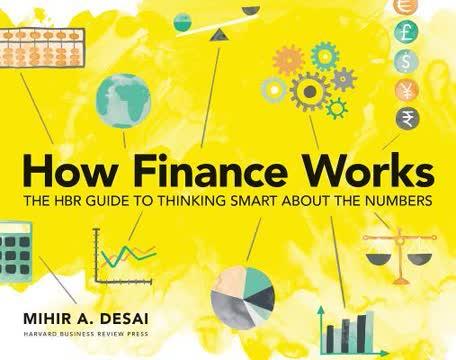
Get the complete 30-minute summary of How Finance Works
Get the complete summary in the appRatios provide context. Single numbers in isolation are meaningless.
Cash matters more than profit. Focus on free cash flow.
The future matters more than the past. Value is determined by expected future cash flows.
A dollar today is worth more than a dollar tomorrow. Start saving early.
Companies create value by beating their cost of capital.
The DuPont framework breaks ROE into profitability, productivity, and leverage.
"How Finance Works" is a strong fit if you want practical ideas around finance, business, economics, especially themes like ratios provide context. single numbers in isolation are meaningless; cash matters more than profit. focus on free cash flow. The MinuteRead summary distills these concepts into a focused read, whether you're deciding whether to buy the book or applying its lessons at work.
Mihir Desai is a respected finance expert and educator known for his ability to make complex financial concepts accessible to a wide audience. As a professor at Harvard Business School and Harvard Law School, Mihir A. Desai has extensive experience teaching finance and related subjects. His research focuses on corporate finance, international finance, and tax policy. Desai has published numerous academic articles and books, including "The Wisdom of Finance" and "How Finance Works." He is recogni…
View all summaries by Mihir DesaiContinue Reading
Access the complete 30-minute summary and thousands more nonfiction books in the MinuteRead app.

Continue reading the complete summary in the MinuteRead app.