MinuteRead
30 min
Book summary
Premium summary · Opens in the app · 30 min read
The stock market has a way of humbling almost everyone who enters it. It promises wealth and delivers confusion. It whispers secrets and then changes the rules. Most people who try to make money in stocks fail not because they are unintelligent, but because they are unprepared. They bring hope where they need discipline. They bring opinions where they need observation. They bring emotion where they need detachment.
**Author:** Nicolas Darvas
**Estimated Reading Time:** 42 minutes
**What You'll Learn:**
- How a professional dancer with no financial training turned $25,000 into $2 million - The complete Darvas Box Theory explained in practical detail - Why emotional control matters more than intelligence in trading - How to use stop-loss orders to protect capital automatically - The power of combining technical and fundamental analysis - Why distance from Wall Street can be your greatest advantage
**Who This Book Is For:**
This book is for anyone who has ever felt lost in the stock market. It is for the beginner who has been burned by hot tips and bad advice. It is for the experienced trader who suspects that discipline matters more than prediction. It is for the investor who wants to understand how one ordinary person, with no insider knowledge and no financial background, built extraordinary wealth through observation, patience, and a system that worked.
The stock market has a way of humbling almost everyone who enters it. It promises wealth and delivers confusion. It whispers secrets and then changes the rules. Most people who try to make money in stocks fail not because they are unintelligent, but because they are unprepared. They bring hope where they need discipline. They bring opinions where they need observation. They bring emotion where they need detachment. Nicolas Darvas understood this better than most because he lived it. He was not a Wall Street professional. He was not a financial analyst. He was a dancer, a Hungarian-born performer who spent his life traveling the world, performing in nightclubs and theaters. He knew nothing about balance sheets, price-to-earnings ratios, or market cycles when he first bought a stock. He knew only that he wanted to make money. His first attempts were disastrous. He bought stocks based on tips from acquaintances. He followed rumors. He made impulsive decisions and lost money repeatedly. He was, by his own admission, "the perfect pattern of the optimistic, clueless small operator who plunges repeatedly in and out of the market." But Darvas had something that many failed investors lack: the willingness to learn from his mistakes. He began to study his own behavior. He began to observe how stocks actually moved, rather than how he thought they should move. He started keeping records. He started asking questions. What he discovered changed his life. He noticed that stocks tend to move in patterns. They consolidate within price ranges. They break out of those ranges. They establish new ranges. By observing these movements and paying attention to trading volume, Darvas developed a system that allowed him to ride major trends while limiting his losses. He called it the Box Theory. It was…
Continue reading in the MinuteRead app
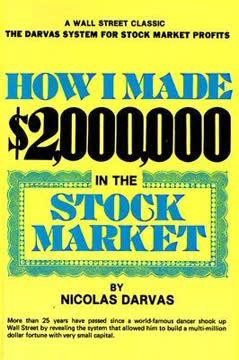
Get the complete 30-minute summary of How I Made $2 Million in the Stock Market
Get the complete summary in the appStocks move in boxes. A breakout above the top of a box on strong volume is a buying signal.
Always use stop-loss orders to limit your losses. No exceptions.
Let your winners run. Use trailing stop-loss orders to protect your gains while allowing trends to continue.
Add to winning positions as they break out of new boxes. Never average down.
Combine technical and fundamental analysis. Buy fundamentally strong stocks at technically optimal times.
Distance yourself from market noise. Price and volume contain all the information you need.
"How I Made $2 Million in the Stock Market" is a strong fit if you want practical ideas around finance, business, economics, especially themes like stocks move in boxes. a breakout above the top of a box on strong volume is a buying signal; always use stop-loss orders to limit your losses. no exceptions. The MinuteRead summary distills these concepts into a focused read, whether you're deciding whether to buy the book or applying its lessons at work.
Nicolas Darvas was a Hungarian-born dancer who gained fame as a self-taught investor and author. In the 1950s, Darvas developed a unique investment strategy while touring as a professional dancer, using telegrams to track stock prices. His method, known as the "Darvas Box Theory," combined technical and fundamental analysis to identify trending stocks. Darvas's success story, turning $25,000 into $2 million in less than two years, garnered significant attention. He documented his experiences in …
View all summaries by Nicolas DarvasContinue Reading
Access the complete 30-minute summary and thousands more nonfiction books in the MinuteRead app.

Continue reading the complete summary in the MinuteRead app.