MinuteRead
30 min
Book summary
Premium summary · Opens in the app · 30 min read
There is a quiet tragedy that unfolds in millions of lives every single day. People wake up, go to jobs they do not enjoy, interact with colleagues who irritate them, return home exhausted, and repeat the cycle for decades. They assume this is simply how life works. They believe happiness is something that happens to other people, people with better jobs, better families, better luck.
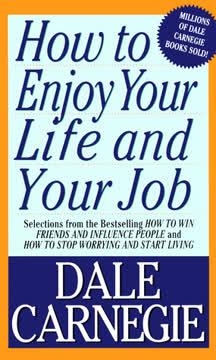
**Author:** Dale Carnegie
**Estimated Reading Time:** 45 minutes
**What You'll Learn:**
- How your thoughts directly shape your happiness and success - Practical techniques for transforming difficult relationships - The art of genuine appreciation and its power to motivate others - How to handle criticism, disagreements, and difficult conversations - A complete system for enjoying your work and your daily life
**Who This Book Is For:**
This book is for anyone who has ever dreaded Monday morning. It is for the person who feels stuck in a job that drains them, surrounded by people who frustrate them, and trapped by circumstances they cannot control. It is for those who have tried to think positively but found the advice hollow. Most of all, it is for anyone ready to discover that the key to enjoying life has been within their reach all along.
There is a quiet tragedy that unfolds in millions of lives every single day. People wake up, go to jobs they do not enjoy, interact with colleagues who irritate them, return home exhausted, and repeat the cycle for decades. They assume this is simply how life works. They believe happiness is something that happens to other people, people with better jobs, better families, better luck. Dale Carnegie spent his life proving that assumption wrong. Carnegie was not born into privilege. He grew up on a poor farm in Missouri, the son of a struggling farmer. He knew what it meant to work hard for little reward. He understood the grind of daily labor and the despair that can come from feeling trapped by circumstances. But somewhere along the way, he discovered something that changed everything: the quality of your life is not determined by your circumstances. It is determined by how you think about your circumstances. This book is built on that single, transformative insight. The material you are about to read is drawn from Carnegie's decades of teaching, his thousands of conversations with students and business leaders, and his deep study of human nature. It addresses two fundamental challenges that everyone faces. The first is learning to enjoy your life, to find genuine contentment and satisfaction regardless of your external situation. The second is learning to enjoy your job, to transform work from a necessary burden into a source of meaning and fulfillment. These are not separate challenges. They are deeply connected. The person who cannot enjoy their work will struggle to enjoy their life, since work consumes so much of our waking hours. And the person who cannot enjoy their life will find it nearly impossible to enjoy their work, since they bring their unhappiness with them wherever they go. Carnegie's approach is radically practical. He…
Continue reading in the MinuteRead app
Get the complete 30-minute summary of How to Enjoy Your Life and Your Job
Get the complete summary in the appYour thoughts create your experience of life. Change your thoughts and you change your life.
Count your blessings daily. Gratitude transforms your perspective.
Do not criticize, condemn, or complain. These habits damage relationships and rarely achieve positive results.
Give honest and sincere appreciation. It is one of the most powerful motivators available.
To influence others, talk about what they want and show them how to get it.
Become genuinely interested in other people. This is the foundation of all meaningful relationships.
"How to Enjoy Your Life and Your Job" is a strong fit if you want practical ideas around self help, personal development, business, especially themes like your thoughts create your experience of life. change your thoughts and you change your life; count your blessings daily. gratitude transforms your perspective. The MinuteRead summary distills these concepts into a focused read, whether you're deciding whether to buy the book or applying its lessons at work.
Dale Breckenridge Carnegie was an American writer, lecturer, and self-improvement pioneer born in 1888. He grew up on a farm in Missouri and later became a successful salesman. Carnegie developed courses in public speaking, salesmanship, and interpersonal skills. His most famous book, "How to Win Friends and Influence People," became a bestseller in 1936. Carnegie's work focused on improving communication, reducing anxiety, and enhancing leadership abilities. He emphasized the importance of unde…
View all summaries by Dale CarnegieContinue Reading
Access the complete 30-minute summary and thousands more nonfiction books in the MinuteRead app.

Continue reading the complete summary in the MinuteRead app.