 MinuteRead
30 min
Book summary
Premium summary · Opens in the app · 30 min read
Every year, hundreds of thousands of people start small businesses with genuine hope. They have a skill, a product, or a service they believe in. They work hard. They sacrifice. They pour their savings, their time, and their energy into building something meaningful.
**Author:** Donald Miller
**Estimated Reading Time:** 45 minutes
**What You'll Learn:** - Why most small businesses stall and how to break through the growth plateau - How to build a complete business system using the airplane framework - How to clarify your marketing message so customers actually listen - How to structure your finances so you always know where you stand - How to lead your team with clarity and purpose
**Who This Book Is For:** Small business owners who feel stuck. Entrepreneurs who are working harder than ever but seeing diminishing returns. Leaders who want to replace chaos with systems. Anyone who has built a business but now finds themselves trapped inside it, unable to scale without everything falling apart.
Every year, hundreds of thousands of people start small businesses with genuine hope. They have a skill, a product, or a service they believe in. They work hard. They sacrifice. They pour their savings, their time, and their energy into building something meaningful. And then, for far too many of them, it falls apart. The statistics are sobering. A significant percentage of small businesses fail within their first decade. Some estimates suggest that roughly half of all new businesses don't survive their first five years. By the ten-year mark, the number of survivors drops even further. These aren't just numbers. They represent dreams abandoned, families stressed, and years of effort lost. Why does this happen? The common assumption is that businesses fail because of bad ideas or insufficient capital. But the reality is more nuanced. Most small business owners are genuinely good at what they do. They're talented bakers, skilled electricians, brilliant designers, or dedicated consultants. Their problem isn't a lack of expertise in their craft. Their problem is that they've never been taught how to run a business. Think about it. When you started your business, where did you learn about cash flow management? Who taught you how to structure a marketing message that actually converts? Where did you learn to hire, lead, and retain great people? For most small business owners, the answer is nowhere. They learned by trial and error, and the errors are expensive. Large corporations have entire departments dedicated to these functions. They have CFOs managing money, marketing teams refining messages, HR departments building culture, and operations specialists optimizing systems. A small business owner has to do all of this alone, often while also doing the actual work that generates revenue. This is why so many small businesses hit what Donald Miller calls the S-curve. They experience initial growth, sometimes rapid growth, and then they plateau. The owner gets pulled away from their core strengths to manage problems. They make poor decisions about hiring…
Continue reading in the MinuteRead app
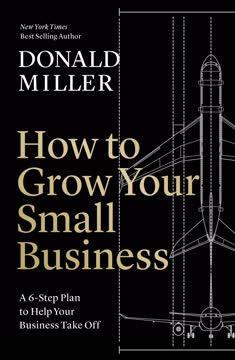
Get the complete 30-minute summary of How to Grow Your Small Business
Get the complete summary in the appYour business is an airplane with six critical systems: leadership, marketing, sales, products, overhead, and cash flow.
Define a clear mission with specific economic objectives, a deadline, and a compelling why.
Use the StoryBrand Framework to position your customer as the hero and your business as the guide.
Structure sales conversations around the customer's problem, your solution, a clear plan, and a direct call to action.
Conduct regular profitability audits and focus on products that actually make money.
Implement the Management and Productivity Playbook to align your team around economic priorities.
"How to Grow Your Small Business" is a strong fit if you want practical ideas around business, entrepreneurship, leadership, especially themes like your business is an airplane with six critical systems: leadership, marketing, sales, products, overhead, and cash flow; define a clear mission with specific economic objectives, a deadline, and a compelling why. The MinuteRead summary distills these concepts into a focused read, whether you're deciding whether to buy the book or applying its lessons at work.
Donald Miller is an author and speaker known for his work on business, marketing, and personal growth. He began his writing career with "Prayer and the Art of Volkswagen Maintenance" in 2000, but gained widespread recognition with "Blue Like Jazz" in 2003. Miller has authored several books on faith, personal development, and business strategies. He founded The Mentoring Project, a non-profit organization addressing fatherlessness in America. Miller has spoken at various events and conferences, i…
View all summaries by Donald MillerContinue Reading
Access the complete 30-minute summary and thousands more nonfiction books in the MinuteRead app.

Continue reading the complete summary in the MinuteRead app.






