MinuteRead
30 min
Book summary
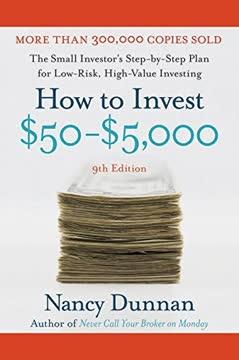
by Nancy Dunnan
Premium summary · Opens in the app · 30 min read
Most people believe that investing requires money. Real money. The kind of money that seems perpetually out of reach when you are paying rent, buying groceries, and trying to build a life. The financial industry has done little to dispel this belief. Brokers court wealthy clients. Financial media celebrates billionaires. Investment books speak of six-figure portfolios as though they were the entry point rather than the destination.
**Author:** Nancy Dunnan
**Estimated Reading Time:** 45 minutes
**What You'll Learn:** - How to build a complete investment portfolio starting with as little as $50 - The essential differences between savings vehicles, bonds, stocks, and mutual funds - How to use tax-advantaged accounts to accelerate wealth building - Practical strategies for choosing where to put your money at every stage - How to avoid common mistakes that cost small investors dearly
**Who This Book Is For:** This book is for anyone who has a small amount of money and wants to put it to work. Whether you are a student with your first $50, a young professional building an emergency fund, a parent saving for a child's education, or someone who has simply never known where to begin, this guide will show you that no amount is too small to invest wisely. If you have ever felt that the world of investing was designed for wealthy people with large portfolios, this book will change your mind completely.
Most people believe that investing requires money. Real money. The kind of money that seems perpetually out of reach when you are paying rent, buying groceries, and trying to build a life. The financial industry has done little to dispel this belief. Brokers court wealthy clients. Financial media celebrates billionaires. Investment books speak of six-figure portfolios as though they were the entry point rather than the destination. This belief is not just wrong. It is harmful. It keeps ordinary people from taking the first steps that would transform their financial lives. It convinces them that their $50 or $500 is too small to matter, so they spend it instead of saving it. They wait for a windfall that never comes, or they arrive at retirement with nothing because they never started. Nancy Dunnan wrote this book to dismantle that belief completely. Her message is simple and radical for its time: every dollar you save and invest matters, and there are practical, accessible ways to put even the smallest amounts to work immediately. The book emerged during a period of significant change in American finance. The Tax Reform Act of 1986 had just reshaped the investment landscape, eliminating many tax shelters while lowering overall tax rates. Deregulation had transformed banking, giving consumers more choices but also more complexity. Mutual funds were booming, offering ordinary people access to professional management for the first time. The old rules no longer applied, and many small investors felt lost. Dunnan recognized that this confusion created an opportunity. The same changes that made investing more complex also made it more accessible. New investment vehicles allowed people to start with tiny amounts. Tax-advantaged accounts rewarded consistent savers. Information that had…
Continue reading in the MinuteRead app
Get the complete 30-minute summary of How to Invest $50-$5,000
Get the complete summary in the appStart investing now, even if you only have $50. Time is more important than amount.
Open an IRA and contribute the maximum every year. Tax deferral is the most powerful tool available to small investors.
Establish an emergency fund in a money market fund or high-yield savings account before taking investment risks.
Choose no-load mutual funds with low expense ratios. Avoid sales charges and high fees.
Use dollar-cost averaging to invest regularly regardless of market conditions. Do not try to time the market.
Diversify across different asset classes, industries, and geographic regions. Do not put all your eggs in one basket.
"How to Invest $50-$5,000" is a strong fit if you want practical ideas around finance, business, money, especially themes like start investing now, even if you only have $50. time is more important than amount; open an ira and contribute the maximum every year. tax deferral is the most powerful tool available to small investors. The MinuteRead summary distills these concepts into a focused read, whether you're deciding whether to buy the book or applying its lessons at work.
Nancy Dunnan is a financial expert and author known for her work in personal finance and investment advice. She has written several books aimed at helping individuals make informed financial decisions, particularly those with limited capital to invest. Dunnan's writing style is often described as accessible and easy to understand, making complex financial concepts more approachable for beginners. Her expertise spans various investment vehicles, from savings accounts and CDs to stocks and mutual …
View all summaries by Nancy DunnanContinue Reading
Access the complete 30-minute summary and thousands more nonfiction books in the MinuteRead app.

Continue reading the complete summary in the MinuteRead app.