MinuteRead
30 min
Book summary
Premium summary · Opens in the app · 30 min read
For three decades, a single assumption governed nearly every investment decision made by professionals and amateurs alike. The assumption was simple: inflation is dead. Prices would remain stable. Interest rates would keep falling. Central banks would always ride to the rescue. Growth stocks would keep growing. Bonds would keep providing safety. The world would keep globalizing, and everything would keep getting cheaper.
**Author:** Lawrence G. McDonald **Estimated Reading Time:** 45 minutes
**What You'll Learn:**
- Why the economic rules that worked for thirty years have stopped working - How to identify the new inflationary regime and what it means for your money - Which assets thrive when governments spend recklessly and central banks lose control - Why passive investing may be riskier than it appears - How to construct a portfolio that survives and thrives in the coming decade
**Who This Book Is For:**
This book is for investors who sense something has changed but cannot quite articulate what. It is for people who watched the 2020s unfold with unease, noticing that the old playbook no longer matches reality. It is for anyone who wants to understand the tectonic shifts happening beneath the surface of global markets and position themselves accordingly. You do not need a finance background to benefit from this book. You need curiosity, a willingness to question conventional wisdom, and the courage to act before the crowd catches on.
For three decades, a single assumption governed nearly every investment decision made by professionals and amateurs alike. The assumption was simple: inflation is dead. Prices would remain stable. Interest rates would keep falling. Central banks would always ride to the rescue. Growth stocks would keep growing. Bonds would keep providing safety. The world would keep globalizing, and everything would keep getting cheaper. That assumption is now false. Lawrence McDonald has spent his career in the trenches of financial markets. He worked at Lehman Brothers before its spectacular collapse in 2008. He wrote a bestselling book about that collapse. He has spent years building an advisory platform that serves clients across twenty-three countries. And he has watched, with growing alarm, as the financial world continued to operate on assumptions that no longer hold. The book you are about to read is not a prediction of doom. It is a wake-up call. It argues that we have entered a new economic regime, one that rewards different assets, different strategies, and different ways of thinking. The investors who recognize this shift early will protect their wealth and prosper. Those who cling to the old playbook will suffer. The story begins with a historical turning point that most people barely noticed. In 1991, the Soviet Union collapsed. That event did more than end the Cold War. It opened the global economy to billions of new workers, vast new supplies of cheap goods, and an era of unprecedented globalization. The result was a thirty-year wave of disinflation. Prices stayed low because supply kept expanding. Wages stayed low because labor markets kept growing. Interest rates fell because inflation never threatened. That era is over. The forces…
Continue reading in the MinuteRead app
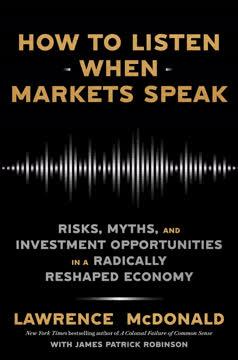
Get the complete 30-minute summary of How to Listen When Markets Speak
Get the complete summary in the appThe thirty-year deflationary era is over. A new inflationary regime has begun.
The U.S. debt burden is unsustainable and constrains future policy options.
Hard assets, including gold, silver, copper, and oil, will outperform in the new regime.
Value stocks will outperform growth stocks.
Passive investing creates hidden risks that most investors do not understand.
Bubbles follow a predictable pattern. Learn to recognize it.
"How to Listen When Markets Speak" is a strong fit if you want practical ideas around economics, finance, business, especially themes like the thirty-year deflationary era is over. a new inflationary regime has begun; the u.s. debt burden is unsustainable and constrains future policy options. The MinuteRead summary distills these concepts into a focused read, whether you're deciding whether to buy the book or applying its lessons at work.
Lawrence G. McDonald is a renowned financial expert and New York Times bestselling author. He founded The Bear Traps Report, an advisory platform serving clients across 23 countries. McDonald's expertise has led to over 1,400 media appearances, establishing him as a respected voice on Wall Street. His background includes a role as vice president of distressed debt and convertible securities trading at Lehman Brothers. McDonald's work combines financial analysis with insights into global economic…
View all summaries by Lawrence G. McDonaldContinue Reading
Access the complete 30-minute summary and thousands more nonfiction books in the MinuteRead app.

Continue reading the complete summary in the MinuteRead app.