MinuteRead
30 min
Book summary
Premium summary · Opens in the app · 30 min read
Most people live their entire lives without ever discovering what their minds can actually do. They think thoughts, of course. They make plans, entertain hopes, and occasionally feel flashes of inspiration. But between the thought and the result, something gets lost. The plan dissolves. The hope fades. The inspiration becomes a memory of something that might have been.
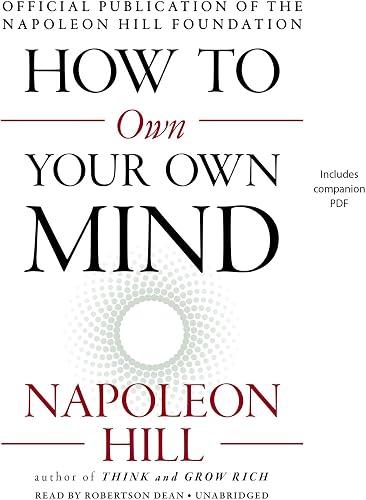
**Author:** Napoleon Hill **Estimated Reading Time:** 45 minutes
**What You'll Learn:** How to direct your mental faculties toward a single purpose, build alliances that multiply your creative power, develop persistence that outlasts every obstacle, and transform your mind into an instrument of deliberate achievement rather than a vessel of random thoughts.
**Who This Book Is For:** Anyone who has ever felt that their potential exceeds their results. Anyone who suspects that the gap between where they are and where they want to be is not a matter of circumstance but of mental discipline. Anyone ready to stop drifting and start directing.
Most people live their entire lives without ever discovering what their minds can actually do. They think thoughts, of course. They make plans, entertain hopes, and occasionally feel flashes of inspiration. But between the thought and the result, something gets lost. The plan dissolves. The hope fades. The inspiration becomes a memory of something that might have been. Napoleon Hill spent decades investigating why this happens. His question was simple: What separates the small percentage of people who consistently achieve their aims from the vast majority who do not? The answer he arrived at was not talent, not luck, not education, and not inherited advantage. The answer was a particular way of using the mind. This book is about that way of using the mind. The central problem Hill identified is that most people never learn to control their own attention. Their mental energy scatters across a thousand trivial concerns. They react to whatever appears in front of them. They think about what other people are thinking about. They worry about things they cannot change and ignore the things they can. Their minds are busy but not directed. The result is a life lived at half power. Not because the person lacks intelligence or capability, but because their mental resources are never concentrated long enough to accomplish anything significant. Hill's approach is different from the vague advice to "think positive" or "believe in yourself." He offers something more precise: a method for coordinating every faculty of the mind and aiming it at a specific objective. He calls this method Controlled Attention. The concept sounds simple. It is not easy. It requires the development of habits that most people never cultivate: definiteness of purpose, persistence in the face of failure, the ability to work in harmony with others, and the discipline to keep returning your focus to what matters. But the rewards are extraordinary. Hill argues that Controlled Attention is sufficient to remove the ordinary self-imposed limitations that bind most people throughout their lives. The limitations are not real barriers. They are habits of thought. And habits can be changed.…
Continue reading in the MinuteRead app
Get the complete 30-minute summary of How to Own Your Own Mind
Get the complete summary in the appControlled Attention is the master habit: coordinate all mental faculties and direct them toward a specific goal.
Definiteness of Purpose is the starting point: write down exactly what you want in a single, specific sentence.
The Master Mind multiplies your power: form alliances with people who share your purpose and bring complementary skills.
Attraction requires action: align your thoughts with your goals, then take consistent steps toward them.
Faith sustains effort: build belief on a foundation of evidence from your past successes.
Persistence compounds: consistent effort over time produces results that scattered effort cannot match.
"How to Own Your Own Mind" is a strong fit if you want practical ideas around self help, personal development, psychology, especially themes like controlled attention is the master habit: coordinate all mental faculties and direct them toward a specific goal; definiteness of purpose is the starting point: write down exactly what you want in a single, specific sentence. The MinuteRead summary distills these concepts into a focused read, whether you're deciding whether to buy the book or applying its lessons at work.
Napoleon Hill was an American self-help author and alleged conman, best known for his book "Think and Grow Rich" (1937). His works emphasized the power of positive thinking and expectation in achieving success. Hill claimed to have interviewed successful individuals like Andrew Carnegie, using their insights to develop principles for personal achievement. However, his credibility has been questioned by historians and critics who doubt many of his claims, including his meetings with Carnegie and …
View all summaries by Napoleon HillContinue Reading
Access the complete 30-minute summary and thousands more nonfiction books in the MinuteRead app.

Continue reading the complete summary in the MinuteRead app.