MinuteRead
30 min
Book summary
Premium summary · Opens in the app · 30 min read
Every meaningful opportunity in life begins with a conversation. The job offer comes after the interview. The friendship starts with a shared laugh. The romantic relationship grows from a first exchange of words. The business partnership emerges from a discussion over coffee. Yet for millions of people, the simple act of talking to another human being triggers anxiety, self-doubt, and avoidance.
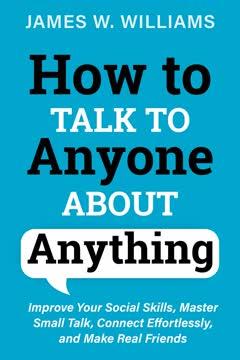
**Author:** James W. Williams **Estimated Reading Time:** 45 minutes
**What You'll Learn**
The complete framework for becoming a confident, engaging conversationalist. You will discover how self-awareness forms the foundation of authentic communication, how active listening transforms ordinary exchanges into meaningful connections, and how storytelling, body language, and adaptability can make you someone others genuinely want to talk to.
**Who This Book Is For**
Anyone who has ever felt awkward at a networking event, struggled to keep a conversation going, or wished they could express themselves more confidently. Whether you are an introvert looking for practical tools, a professional seeking stronger workplace relationships, or simply someone who wants deeper connections with friends and family, this book provides a clear path forward.
Every meaningful opportunity in life begins with a conversation. The job offer comes after the interview. The friendship starts with a shared laugh. The romantic relationship grows from a first exchange of words. The business partnership emerges from a discussion over coffee. Yet for millions of people, the simple act of talking to another human being triggers anxiety, self-doubt, and avoidance. This is not a small problem. The quality of your conversations shapes the quality of your life. When you struggle to connect with others, you miss opportunities that could have changed your trajectory. You stay quiet in meetings where your ideas deserved to be heard. You walk away from social events feeling exhausted rather than energized. You watch others build relationships effortlessly while you stand on the sidelines, rehearsing what you might say but never actually saying it. The modern world has made this challenge worse. Screens have replaced faces. Text messages have replaced phone calls. Social media has created the illusion of connection while eroding the skills required for genuine interaction. Many people have spent years curating their online personas but cannot hold a five-minute conversation with a stranger at a party. The muscles required for real-time, face-to-face communication have atrophied. James W. Williams wrote this book for exactly this moment. His central observation is both simple and profound: the ability to talk to anyone about anything is not a talent you are born with. It is a skill you can learn, practice, and master. The person who seems effortlessly charismatic at a dinner party was not born with a special gene. They have developed habits, mindsets, and techniques that anyone can adopt. What makes Williams' approach different is his starting point. Most communication books begin with techniques: what to say, how to stand, when to smile. Williams begins with something deeper. He argues that before you can connect authentically with others, you must first connect authentically with yourself. A well-developed sense of self is the foundation upon…
Continue reading in the MinuteRead app
Get the complete 30-minute summary of How to Talk to Anyone About Anything
Get the complete summary in the appKnow yourself first. Self-awareness is the foundation of authentic communication.
Listen actively. Give your full attention, paraphrase, and ask clarifying questions.
Ask open questions. Questions that begin with what, how, or why invite deeper conversation.
Start small. Overcome social anxiety through gradual exposure to uncomfortable situations.
Show genuine interest. Charisma is built on making others feel valued and heard.
Tell stories. Structured, emotional stories are more memorable than facts.
"How to Talk to Anyone About Anything" is a strong fit if you want practical ideas around self help, communication, psychology, especially themes like know yourself first. self-awareness is the foundation of authentic communication; listen actively. give your full attention, paraphrase, and ask clarifying questions. The MinuteRead summary distills these concepts into a focused read, whether you're deciding whether to buy the book or applying its lessons at work.
James W. Williams is an author who focuses on self-improvement and communication skills. While specific biographical information is limited, his writing style is described as concise and practical. Williams emphasizes the importance of active listening, storytelling, and building rapport in social interactions. He addresses common challenges in modern communication, including the impact of technology on personal connections. Williams' approach combines theoretical concepts with actionable strate…
View all summaries by James W. WilliamsContinue Reading
Access the complete 30-minute summary and thousands more nonfiction books in the MinuteRead app.

Continue reading the complete summary in the MinuteRead app.