MinuteRead
30 min
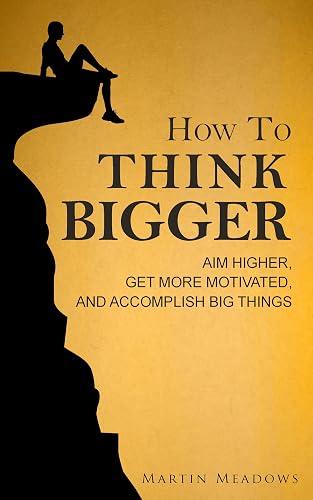
Book summary
by Martin Meadows
Premium summary · Opens in the app · 30 min read
Most people do not think small because they lack intelligence or ambition. They think small because everything around them quietly teaches them to do so.
**Author:** Martin Meadows
**Estimated Reading Time:** 45 minutes
**What You'll Learn:**
- Why your environment silently shapes your ambitions more than willpower ever could - How to build motivation that survives setbacks and doesn't depend on money - The neuroscience behind self-sabotage and how to override it - Why most people think small without realizing it, and how to break the pattern - A practical system for setting goals that feel impossible and making them inevitable
**Who This Book Is For:**
Anyone who suspects they are capable of more than they are currently achieving. If you have ever felt that your goals are too small, that your environment is holding you back, or that fear keeps winning over ambition, this book will give you the tools to think differently.
Most people do not think small because they lack intelligence or ambition. They think small because everything around them quietly teaches them to do so. Consider the environment you inhabit. The people you talk to every day. The conversations you overhear. The media you consume. The books you read or do not read. The expectations your family and friends have for you. Each of these elements sends a constant signal about what is normal, what is possible, and what is appropriate for someone like you. Martin Meadows wrote How to Think Bigger to address a simple but profound problem: the gap between what people want and what they believe they can achieve. That gap is not caused by a lack of information. Most people know they should set goals, work hard, and persist. The gap exists because their thinking has been shaped by an environment that never asked them to think bigger. The book's central argument is that ambition is not a fixed trait. It is a skill that can be developed, and it begins with understanding the forces that shape your thinking. When you understand those forces, you can change them. When you change them, your goals naturally expand. Meadows draws on research from psychology, neuroscience, and behavioral economics, but he presents it through the lens of someone who has tested these ideas in his own life. He has pushed himself through extended fasting, language learning, significant weight loss, and business ventures. He has lived abroad and deliberately sought discomfort. His writing carries the credibility of someone who has applied what he teaches. The problem this book addresses is urgent. In a world that rewards bold thinking, most people remain trapped in incremental goals. They aim for a 5 percent improvement when a 500 percent improvement is possible. They avoid risks because their brain is wired to protect them from threats, even when those threats are imaginary. They consume news…
Continue reading in the MinuteRead app
Get the complete 30-minute summary of How to Think Bigger
Get the complete summary in the appYour environment shapes your thinking more than willpower ever will.
Change your inputs: the people you spend time with and the media you consume.
Money is not a sustainable motivator. Find intrinsic and prosocial reasons for your goals.
Your primal brain, the chimp, sabotages ambitious goals. Recognize it and calm it down.
Play to win, not just to avoid losing.
Most activities produce little results. Focus on the 20 percent that matter.
"How to Think Bigger" is a strong fit if you want practical ideas around self help, personal development, psychology, especially themes like your environment shapes your thinking more than willpower ever will; change your inputs: the people you spend time with and the media you consume. The MinuteRead summary distills these concepts into a focused read, whether you're deciding whether to buy the book or applying its lessons at work.
Motivated to help readers with "Everything that surrounds you on a daily basis has an influence on you." Social modeling shapes behavior, Martin Meadows wrote “How to Think Bigger” to package those ideas for a fast, focused read. In “How to Think Bigger”, Martin Meadows focuses on "Everything that surrounds you on a daily basis has an influence on you." Social modeling shapes behavior. Through “How to Think Bigger”, Martin Meadows distills the core ideas on self help into lessons readers can abs…
Continue Reading
Access the complete 30-minute summary and thousands more nonfiction books in the MinuteRead app.

Continue reading the complete summary in the MinuteRead app.