MinuteRead
30 min
Book summary
Premium summary · Opens in the app · 30 min read
The stock market has always attracted dreamers. It promises wealth without the drudgery of building a business, freedom without the constraints of a job, and excitement that few other pursuits can match. Most people who enter the market are drawn by these promises. Most people who enter the market lose money.
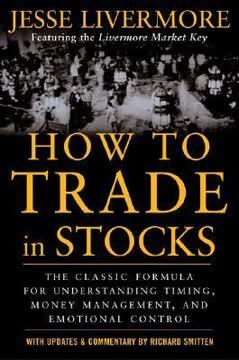
**Author:** Jesse Livermore
**Estimated Reading Time:** 45 minutes
**What You'll Learn:**
- Why speculation must be treated as a serious business, not a hobby or a gamble - How to identify pivotal points that signal major market moves - The exact record-keeping system Livermore used to anticipate trends - Why the time element matters as much as price in market analysis - How to protect capital through disciplined profit-taking and loss-cutting - The psychological traps that destroy most traders and how to avoid them
**Who This Book Is For:**
This book is for anyone who wants to understand how markets actually work from the perspective of one of history's most successful speculators. Whether you are a novice trader trying to build a foundation, an experienced investor looking to refine your approach, or simply someone fascinated by the mechanics of market speculation, Livermore's insights remain remarkably relevant. His emphasis on discipline, patience, and systematic analysis transcends the era in which he traded.
The stock market has always attracted dreamers. It promises wealth without the drudgery of building a business, freedom without the constraints of a job, and excitement that few other pursuits can match. Most people who enter the market are drawn by these promises. Most people who enter the market lose money. Jesse Livermore understood this paradox better than almost anyone. He began trading as a teenager in the bucket shops of Boston, where bets were placed on price movements without actual shares changing hands. By his early twenties, he had made and lost a fortune. By his thirties, he had made and lost several more. He shorted the market before the Panic of 1907 and made millions in a single day. He made an estimated $100 million during the Crash of 1929. And yet he also went bankrupt multiple times, each time forced to rebuild from nothing. This book, published in 1940, represents the culmination of a lifetime of trading. It is not a memoir, though Livermore's experiences inform every page. It is a manual, a systematic explanation of the methods he developed over four decades of speculation. The book is notable for what it does not contain. There are no get-rich-quick formulas. There are no promises of easy money. There is no encouragement to trade more frequently or take greater risks. Instead, Livermore offers something far more valuable: a framework for thinking about markets that emphasizes patience, discipline, and the careful study of price action. The problem Livermore addresses is timeless. Most people approach the stock market with a gambling mentality. They want action. They want tips. They want to be in the market constantly, believing that activity equals progress. They confuse motion with mastery. Livermore argues that…
Continue reading in the MinuteRead app
Get the complete 30-minute summary of How to Trade In Stocks
Get the complete summary in the appTreat speculation as a business with a clear plan and systematic approach.
Wait for pivotal points before entering trades.
Never average losses. Cut them quickly.
Keep your own records and develop your own system.
Follow the leading stocks in the leading sectors.
Ignore tips and inside information. Trust market action.
"How to Trade In Stocks" is a strong fit if you want practical ideas around finance, business, economics, especially themes like treat speculation as a business with a clear plan and systematic approach; wait for pivotal points before entering trades. The MinuteRead summary distills these concepts into a focused read, whether you're deciding whether to buy the book or applying its lessons at work.
Jesse Livermore was an early 20th-century Wall Street speculator known for his remarkable success in stock trading. He developed a unique approach to market analysis and trading, focusing on momentum and pivotal points in stock charts. Livermore experienced extreme highs and lows in his career, making and losing several fortunes. He was known for his discipline, analytical skills, and ability to read market trends. Despite his success, Livermore struggled with personal issues and depression. He …
View all summaries by Jesse LivermoreContinue Reading
Access the complete 30-minute summary and thousands more nonfiction books in the MinuteRead app.

Continue reading the complete summary in the MinuteRead app.