MinuteRead
30 min
Book summary
Premium summary · Opens in the app · 30 min read
Every day, the average person encounters thousands of advertising messages. They appear in newspapers and magazines, on billboards and buses, inside emails and social media feeds, before videos and between songs. Most of these messages are ignored. Most of them fail. Most of them represent wasted money, wasted effort, and wasted opportunity.
**Author:** Victor O. Schwab **Estimated Reading Time:** 42 minutes
**What You'll Learn:**
The fundamental principles that make advertisements work, why headlines determine success or failure, how to present benefits that resonate with human desires, the art of proving your claims, and the disciplined mindset required to create advertising that actually produces profit.
**Who This Book Is For:**
Business owners who want their advertising to generate measurable results, copywriters seeking to master the craft, marketing professionals tired of vague creative theories, entrepreneurs who need to sell products or services, and anyone who wants to understand why some advertisements succeed while most fail.
Every day, the average person encounters thousands of advertising messages. They appear in newspapers and magazines, on billboards and buses, inside emails and social media feeds, before videos and between songs. Most of these messages are ignored. Most of them fail. Most of them represent wasted money, wasted effort, and wasted opportunity. This book exists because advertising failure is not inevitable. It exists because there are principles, tested and proven over decades, that separate advertisements that produce profit from those that merely produce noise. Victor Schwab spent his career discovering and refining these principles. He worked in an era when advertising was measured ruthlessly. Every ad had to justify its existence by generating responses, inquiries, and sales. There was no room for vague theories about brand awareness or creative expression. There was only one question that mattered: did the ad work? The problem most advertisers face is not a lack of creativity. It is a lack of understanding. They do not understand how readers actually respond to advertising. They do not understand what makes a person stop and pay attention. They do not understand what motivates a human being to take action. They do not understand why some messages persuade while others repel. Schwab's approach was different because he treated advertising as a science as much as an art. He tested headlines against headlines, offers against offers, and layouts against layouts. He tracked results with precision. He learned what worked by observing what actually happened in the marketplace, not by relying on opinions or theories. This book distills those lessons into practical principles that remain as relevant today as when they were first written. The challenge of advertising has not changed fundamentally. Human nature has not changed. People still want to gain certain things and avoid certain things. People still respond to clear promises, credible proof, and specific calls to action. People still skim before they read, judge before they evaluate, and decide based on emotion before justifying with logic. What has changed is the environment. The competition for attention is more intense. The skepticism of audiences is more…
Continue reading in the MinuteRead app
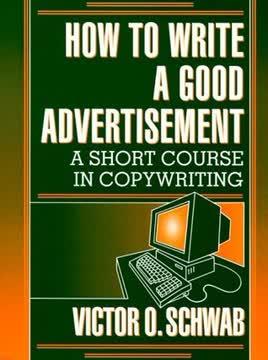
Get the complete 30-minute summary of How to Write a Good Advertisement
Get the complete summary in the appThe headline determines whether your advertisement gets read. Make it specific, benefit-focused, and reader-centered.
People buy benefits, not features. Show what your product does for the customer.
The more facts you tell, the more you sell. Provide concrete proof for your claims.
To get action, you must ask for it. Include a clear, specific call to action.
The purpose of advertising is to produce profit. Focus relentlessly on results.
Test everything. Split-run tests reveal what actually works.
"How to Write a Good Advertisement" is a strong fit if you want practical ideas around business, writing, education, especially themes like the headline determines whether your advertisement gets read. make it specific, benefit-focused, and reader-centered; people buy benefits, not features. show what your product does for the customer. The MinuteRead summary distills these concepts into a focused read, whether you're deciding whether to buy the book or applying its lessons at work.
Victor Opper Schwab was born in 1898 in New Jersey. He began his career as a secretary for Max Sackheim at Ruthrauff & Ryan, a mail order ad agency. Schwab's contributions to successful ad campaigns, particularly for Dale Carnegie's book, led to his promotion to copywriter. He pioneered research techniques in advertising, using coded coupon ads to test various elements. In 1926, Schwab and Robert Beatty bought the agency, renaming it Schwab and Beatty. They achieved significant success with the …
View all summaries by Victor O. SchwabContinue Reading
Access the complete 30-minute summary and thousands more nonfiction books in the MinuteRead app.

Continue reading the complete summary in the MinuteRead app.