MinuteRead
30 min
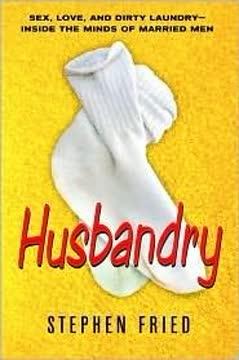
Most books about marriage are written by women, for women, and about women's experiences. Walk through any bookstore's relationship section and you will find countless volumes examining female desire, female dissatisfaction, female strategies for improving communication. Men appear in these books mostly as problems to be solved, obstacles to be managed, or simple creatures whose needs are assumed to be straightforward.
### By Stephen Fried
**Estimated Reading Time:** 48 minutes
**What You'll Learn**
The inner emotional life of married men remains one of the least examined territories in modern relationships. This condensed edition of Stephen Fried's candid exploration reveals what husbands actually think about love, sex, jealousy, money, family, and the daily negotiations that keep long-term partnerships alive. You will discover why men struggle to express vulnerability, how trust operates differently for husbands than wives, and what genuinely sustains commitment over decades.
**Who This Book Is For**
This book is for anyone who has ever wondered what goes on inside the mind of a married man. It is for wives seeking to understand their husbands better, for husbands who recognize themselves in these pages but have never had the words to describe their experience, and for anyone contemplating marriage who wants an honest preview of what lies ahead. It is not a prescriptive guide. It is a mirror.
Most books about marriage are written by women, for women, and about women's experiences. Walk through any bookstore's relationship section and you will find countless volumes examining female desire, female dissatisfaction, female strategies for improving communication. Men appear in these books mostly as problems to be solved, obstacles to be managed, or simple creatures whose needs are assumed to be straightforward. Stephen Fried noticed this absence. As a journalist who had spent decades investigating complex subjects, he realized that the inner lives of married men remained remarkably unexplored territory. Men rarely talk about their marriages with the same depth and honesty that women do. They do not gather in groups to dissect their emotional struggles. They do not seek out books about understanding their wives. They often lack even the vocabulary to describe what they feel. This silence creates a profound asymmetry in how we understand marriage. Women develop sophisticated frameworks for discussing relationships. Men develop avoidance strategies. The result is that husbands become mysterious not because they are complicated, but because they are unexamined. Fried set out to change this. Drawing on his own marriage of more than three decades to author Diane Ayres, along with extensive conversations with other married men, he wrote a book that attempts to articulate what husbands actually think and feel. The result is neither a defense of men nor an apology for their shortcomings. It is an honest accounting of the compromises, frustrations, joys, and quiet negotiations that define long-term partnership from the male perspective. The title itself carries deliberate weight. Husbandry is an old word that originally meant the careful management of resources, the stewardship of a household, the practice of cultivation. Fried reclaims it to describe the ongoing work of being a husband: the…
Continue reading in the MinuteRead app
Get the complete 30-minute summary of Husbandry
Get the complete summary in the appMarriage is a practice, not a state. You do it daily through small actions and decisions.
Compromise is the most important skill in marriage. The goal is sustainability, not fairness.
Trust is built through consistent small actions. Financial trust matters as much as emotional trust.
Jealousy is about your own insecurities, not your partner's behavior. Examine the fear before reacting.
Shared experiences create the memories and references that bind couples together. Prioritize them.
Money represents values. Discuss what money means to each of you, not just how to manage it.
"Husbandry" is a strong fit if you want practical ideas around humor, marriage, sexuality, especially themes like marriage is a practice, not a state. you do it daily through small actions and decisions; compromise is the most important skill in marriage. the goal is sustainability, not fairness. The MinuteRead summary distills these concepts into a focused read, whether you're deciding whether to buy the book or applying its lessons at work.
Stephen Fried is an acclaimed journalist, bestselling author, and educator. He has written several nonfiction books, including biographies and works on mental health. Fried's writing spans various subjects, from historical figures to contemporary issues. He has received multiple National Magazine Awards and contributes to prominent publications like Vanity Fair and The Washington Post Magazine. Fried teaches at Columbia University and the University of Pennsylvania. His works include "RUSH: Revo…
View all summaries by Stephen FriedContinue Reading
Access the complete 30-minute summary and thousands more nonfiction books in the MinuteRead app.

Continue reading the complete summary in the MinuteRead app.