MinuteRead
30 min
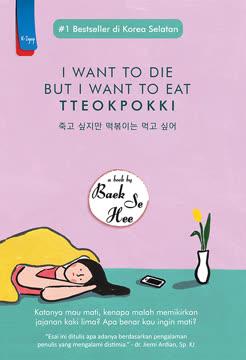
Book summary
by Baek Se-hee
Premium summary · Opens in the app · 30 min read
There is a particular kind of exhaustion that comes from living inside a mind that never stops criticizing you. You wake up tired. You go through the day performing normalcy while an internal monologue narrates every perceived failure. You look at other people and assume they have figured out something you have not. You want to be loved but cannot fathom why anyone would. You want to feel better but do not believe you deserve to.
**Author:** Baek Se-hee **Estimated Reading Time:** 48 minutes
This book takes you inside the therapy sessions and private reflections of a young woman navigating persistent depression, anxiety, and low self-worth. You will learn how black-and-white thinking distorts reality, why self-acceptance is a practice rather than a destination, how childhood patterns shape adult relationships, and what it actually looks like to seek professional help for mental health struggles. You will also discover how creative expression and honest self-reflection can become tools for healing.
This book is for anyone who has ever felt they are not enough. It is for people who oscillate between wanting to disappear and wanting to enjoy something as simple as a bowl of tteokbokki. It is for those exhausted by their own inner critic, those struggling to accept love from others, and those who suspect their thinking patterns might be the source of their suffering. It is also for anyone curious about what therapy actually looks like, told not through clinical frameworks but through raw, unfiltered conversation.
There is a particular kind of exhaustion that comes from living inside a mind that never stops criticizing you. You wake up tired. You go through the day performing normalcy while an internal monologue narrates every perceived failure. You look at other people and assume they have figured out something you have not. You want to be loved but cannot fathom why anyone would. You want to feel better but do not believe you deserve to. Baek Se-hee knows this exhaustion intimately. For years, she lived with dysthymia, a persistent low-grade depression that colored everything without announcing itself dramatically. She was functional enough to work, to maintain relationships, to appear fine. But underneath, she was constantly negotiating with a voice that told her she was ugly, unworthy, and fundamentally broken. What makes this book different from other accounts of mental health is its form. It is not a memoir written from the safe distance of recovery. It is not a self-help book dispensing advice from a position of authority. Instead, it is a transcript of conversations, edited and shaped but fundamentally honest. We sit with Baek and her psychiatrist as they work through the knots of her thinking. We hear her describe her obsessions, her relationship anxieties, her childhood memories, and her small victories. We watch her resist insights that feel too uncomfortable and slowly accept truths she has been avoiding. The book's title captures its central tension perfectly. "I want to die" expresses the weight of depression, the desire to escape a mind that torments itself. "But I want to eat tteokbokki" expresses the stubborn pull of life, the small pleasures that keep us tethered to existence. This is…
Continue reading in the MinuteRead app
Get the complete 30-minute summary of I Want to Die but I Want to Eat Tteokbokki
Get the complete summary in the appBlack-and-white thinking amplifies suffering. Practice both/and thinking instead.
The inner critic is a learned pattern, not an objective assessment. Label it without believing it.
You cannot accept love you do not believe you deserve. The work starts with self-relation.
Appearance obsession is usually about something deeper. The mirror is not the real problem.
Childhood patterns can be updated. Understanding their origins reduces shame and opens possibilities.
Therapy works through honest collaboration over time, not dramatic breakthroughs in single sessions.
"I Want to Die but I Want to Eat Tteokbokki" is a strong fit if you want practical ideas around memoir, mental health, self help, especially themes like black-and-white thinking amplifies suffering. practice both/and thinking instead; the inner critic is a learned pattern, not an objective assessment. label it without believing it. The MinuteRead summary distills these concepts into a focused read, whether you're deciding whether to buy the book or applying its lessons at work.
Baek Sehee is a South Korean author who gained international attention with her debut book, "I Want to Die but I Want to Eat Tteokbokki." The book, which blends memoir and self-help, is based on transcripts from her therapy sessions and personal reflections on her struggles with dysthymia, a persistent mild depression. Baek's candid approach to discussing mental health has been particularly impactful in South Korea, where mental health issues are often stigmatized. Her work has been praised for …
View all summaries by Baek Se-heeContinue Reading
Access the complete 30-minute summary and thousands more nonfiction books in the MinuteRead app.

Continue reading the complete summary in the MinuteRead app.