MinuteRead
5 min
Book summary
Premium summary · Opens in the app · 5 min read
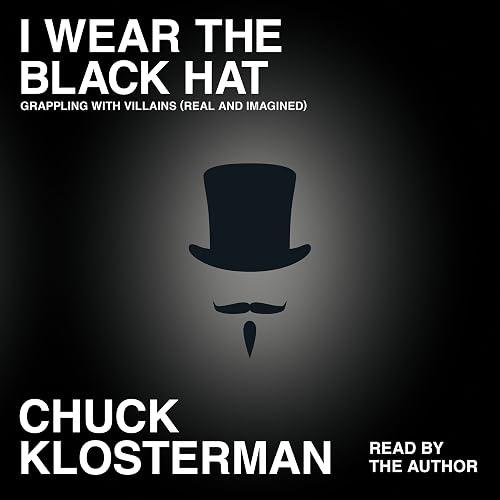
I Wear The Black Hat shows you that determining if a person is good or bad isn’t as straightforward as you might think, by uncovering some of the biases that make us see people in a different light, regardless of their true intentions.
I Wear The Black Hat shows you that determining if a person is good or bad isn’t as straightforward as you might think, by uncovering some of the biases that make us see people in a different light, regardless of their true intentions.
Depending on where you’re born and raised, you’ll have a much different definition of what’s good and what’s bad than people in other parts of the world – or even just your own city.
The son from the privileged family might think it’s evil to cheat on a test, while the kid on the street thinks stealing to feed her brother is a noble cause. Your view of good and bad depends a lot on your environment.
To remind yourself of just how much, philosopher John Rawls came up with a great exercise: the veil of ignorance.
Here’s how it works: Imagine someone gives you a chance to play god. You can form and create an entirely new world and society. From scratch. You can make all the rules, social conventions and laws you wish. But there’s a catch: once you’re done, you’ll be dropped into this society as a brand new person with no influence on your position whatsoever.
You could end up being a doctor or a homeless person, a celebrity or a cancer patient, a refugee or the mayor.
Given this “veil of ignorance,” what kind of society would you try to create? Probably one that’s as fair as possible for everyone, where most people will want to be “good.”
You’ll quickly see that it’s really hard to pull off, probably even impossible to create such a society. That’s why we all have different definitions of good and bad at different times – so think twice before you label something and put it in a box.
Have you ever heard of Kim Dotcom? This German guy’s an internet pioneer. He launched one of the most popular online file sharing services in 2005, Megaupload. Because many people used the site to illegally share and spread movies, music and software, it was shut down in 2012 by the US government, following a raid at Kim’s New Zealand mansion (he’s known for a crazy lifestyle). As controversial and questionable as his personality might be, there’s no specific case where Kim used his skills for explicitly evil activities. For example in spite of being able to hack many government systems (allegedly), he never used them to help bad causes, instead actively fighting against terrorism with a group called Young Intelligent Hackers Against Terrorism and placing a reward for evidence against Bin Laden after 2001. The main reason people see him as a villain is that he changed the…
Continue reading in the MinuteRead app
Get the complete 5-minute summary of I Wear The Black Hat
Get the complete summary in the appDo the “veil of ignorance” exercise to show yourself that what you think is good and bad is entirely made up.
Humans don’t like change, so they hate those who force it upon the world.
The more human a villain seems, the more evil you think they are, even if others might be worse.
"I Wear The Black Hat" is a strong fit if you want practical ideas around communication skills, culture, psychology, especially themes like do the “veil of ignorance” exercise to show yourself that what you think is good and bad is entirely made up; humans don’t like change, so they hate those who force it upon the world. The MinuteRead summary distills these concepts into a focused read, whether you're deciding whether to buy the book or applying its lessons at work.
Chuck Klosterman is a New York Times bestselling author and a featured columnist for Esquire, a contributor to The New York Times Magazine, and has also written for Spin, The Washington Post, The Guardian, The Believer, and ESPN.
View all summaries by Chuck KlostermanContinue Reading
Access the complete 5-minute summary and thousands more nonfiction books in the MinuteRead app.

Continue reading the complete summary in the MinuteRead app.