MinuteRead
30 min
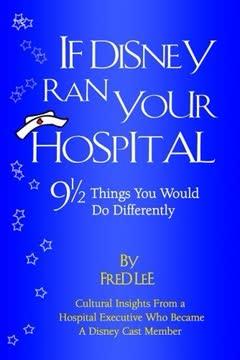
Fred Lee spent years working inside hospitals before he ever set foot in a Disney theme park. He understood the rhythms of hospital life: the shift changes, the pressure to do more with less, the constant tension between clinical excellence and operational efficiency. He also understood something else. Hospitals were losing something essential, and most leaders did not even have language for what it was.
By Fred Lee
**Estimated Reading Time:** 45 minutes
**What You'll Learn:**
- Why patient satisfaction scores are misleading and what to measure instead - How to build a culture where courtesy outranks efficiency - Why competitive rewards undermine teamwork in hospitals - How to turn ordinary patient interactions into memorable experiences - What Disney knows about loyalty that healthcare has ignored
**Who This Book Is For:**
Healthcare leaders frustrated by stagnant patient satisfaction scores. Nurses and physicians who feel caught between compassion and productivity demands. Hospital administrators seeking a fundamentally different approach to organizational culture. Anyone who has ever wondered why hospitals cannot feel more like places that care.
Fred Lee spent years working inside hospitals before he ever set foot in a Disney theme park. He understood the rhythms of hospital life: the shift changes, the pressure to do more with less, the constant tension between clinical excellence and operational efficiency. He also understood something else. Hospitals were losing something essential, and most leaders did not even have language for what it was. Then Lee took an unusual detour. He went to work at Disney. What he discovered there unsettled him. Disney was not doing anything magical. The company was not staffed by supernatural beings. The people who worked at Disney were ordinary humans with ordinary skills. Yet they consistently created experiences that guests remembered for years, talked about with friends, and returned to experience again. Hospitals, by contrast, were staffed by extraordinarily skilled professionals who consistently created experiences people wanted to forget. The difference, Lee realized, was not talent. It was not resources. It was not even the nature of the work. The difference was in how the organization thought about its purpose, its people, and its competition. This book emerged from that realization. Lee spent years studying what Disney did differently and translating those lessons into the language of healthcare. The result is not a collection of theme park tricks. It is a fundamental challenge to the assumptions that govern modern hospital management. The core problem Lee identified is simple but profound. Hospitals have learned to measure the wrong things. They measure clinical outcomes, which matter enormously. They measure efficiency, which matters for sustainability. They measure patient satisfaction, which seems like it should capture the human dimension of care. But none of these measurements capture what actually creates loyalty, trust, and healing. Consider a patient who receives technically perfect care from a surgeon who never makes eye contact. The surgery succeeds. The patient goes home. But the patient remembers feeling like a case number, not a person. When a friend asks for a hospital recommendation, this patient hesitates. The clinical outcome was excellent. The human experience was…
Continue reading in the MinuteRead app
Get the complete 30-minute summary of If Disney Ran Your Hospital
Get the complete summary in the appPatients compare hospitals to the best service experience they have ever had, not just to other hospitals.
Courtesy must be more important than efficiency, or it is not important at all.
Patient satisfaction is fool's gold. Pursue loyalty instead.
Measure to improve, not to impress. Ask for stories, not just scores.
Empower frontline staff to solve problems without asking permission.
Treat healthcare as theater. Every interaction is a performance.
"If Disney Ran Your Hospital" is a strong fit if you want practical ideas around business, health care, leadership, especially themes like patients compare hospitals to the best service experience they have ever had, not just to other hospitals; courtesy must be more important than efficiency, or it is not important at all. The MinuteRead summary distills these concepts into a focused read, whether you're deciding whether to buy the book or applying its lessons at work.
Fred Lee was a healthcare executive and consultant who drew upon his experiences working with both hospitals and Disney to develop innovative approaches to patient care and hospital management. Born in 1939, Lee had a diverse career that spanned healthcare administration, consulting, and even a stint at Disney. His unique perspective allowed him to bridge the gap between hospitality and healthcare, applying Disney's customer service principles to improve patient experiences. Fred Lee became know…
View all summaries by Fred LeeContinue Reading
Access the complete 30-minute summary and thousands more nonfiction books in the MinuteRead app.

Continue reading the complete summary in the MinuteRead app.