MinuteRead
30 min
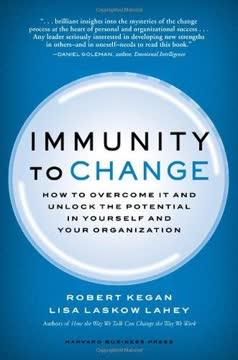
Book summary
by Robert Kegan
Premium summary · Opens in the app · 30 min read
Most of us carry around a private list of changes we would like to make. We want to be more decisive. We want to stop procrastinating. We want to listen better. We want to delegate more. We want to be less reactive under stress. We want to take better care of our health. We want to speak up in meetings. We want to stop avoiding difficult conversations.
**Author:** Robert Kegan
**Estimated Reading Time:** 45 minutes
**What You'll Learn:**
- Why genuine, lasting change is so difficult even when the stakes are high - How to uncover the hidden psychological mechanisms that sabotage your goals - The three stages of adult mental development and why they matter - A practical framework for overcoming resistance in yourself and your organization - How to test the assumptions that keep you stuck
**Who This Book Is For:**
This book is for anyone who has ever set a meaningful goal and found themselves inexplicably working against it. It is for leaders who want to understand why their teams resist necessary change. It is for professionals who feel stuck despite knowing what they should do differently. And it is for anyone curious about why human beings so often fail to follow through on their own deepest intentions.
Most of us carry around a private list of changes we would like to make. We want to be more decisive. We want to stop procrastinating. We want to listen better. We want to delegate more. We want to be less reactive under stress. We want to take better care of our health. We want to speak up in meetings. We want to stop avoiding difficult conversations. These are not trivial desires. They matter to us. They affect our relationships, our careers, our health, and our sense of who we are. And yet, year after year, many of these changes remain stubbornly out of reach. The standard explanations for this failure are familiar. We lack willpower. We lack motivation. We need better habits. We need more accountability. We need to try harder. But what if these explanations are wrong? What if the problem is not that we lack commitment, but that we are committed to something else entirely, something hidden from our own awareness? Robert Kegan, a developmental psychologist who taught at Harvard for four decades, has spent his career studying how adults grow and change. His research led him to a startling conclusion. When people fail to change, it is rarely because they are lazy or unmotivated. It is because they are caught in a hidden psychological system that actively protects them from the very change they seek. Kegan calls this system the immunity to change. The concept is simple but profound. Just as our physical immune system protects us from threats to our bodies, we each develop a psychological immune system that protects us from threats to our identity, our sense of safety, and our way of making meaning in the world. This psychological immune system is powerful and largely unconscious. It operates beneath the surface of our awareness, quietly sabotaging our efforts to…
Continue reading in the MinuteRead app
Get the complete 30-minute summary of Immunity to Change
Get the complete summary in the appYour resistance to change is not a lack of willpower. It is a hidden psychological system protecting you from perceived
The immunity map is a four-column tool that reveals your improvement goal, obstructive behaviors, hidden competing commi
Obstructive behaviors are not random. They serve hidden commitments that protect you from fears you may not be aware of.
Big assumptions are the deeply held beliefs that make your competing commitments seem necessary. They are often overgene
Testing big assumptions through small, safe experiments is the key to loosening their grip on your behavior.
Adult mental development continues beyond adolescence. You can grow into more complex ways of making meaning throughout
"Immunity to Change" is a strong fit if you want practical ideas around leadership, business, psychology, especially themes like your resistance to change is not a lack of willpower. it is a hidden psychological system protecting you from perceived; the immunity map is a four-column tool that reveals your improvement goal, obstructive behaviors, hidden competing commi. The MinuteRead summary distills these concepts into a focused read, whether you're deciding whether to buy the book or applying its lessons at work.
Robert Kegan is a renowned developmental psychologist who taught at Harvard University for 40 years until 2016. His research focuses on adult development, learning, and professional growth. Kegan's work has significantly contributed to the understanding that psychological development continues beyond adolescence and is crucial for navigating modern life's complexities. He has authored several influential books, including "The Evolving Self" and "In Over Our Heads," which have been translated int…
View all summaries by Robert KeganContinue Reading
Access the complete 30-minute summary and thousands more nonfiction books in the MinuteRead app.

Continue reading the complete summary in the MinuteRead app.