 MinuteRead
30 min
Book summary
Premium summary · Opens in the app · 30 min read
John D. Rockefeller was not born into wealth or privilege. He was born in 1839 in Richford, New York, the son of a traveling salesman whose absences and schemes left the family in constant financial uncertainty. His mother instilled in him the values of thrift, hard work, and religious faith. From these humble and unstable beginnings, Rockefeller would go on to build Standard Oil, a company that at its peak controlled approximately 90 percent of the refined oil in the United States. He became th
**Author:** John D. Rockefeller **Estimated Reading Time:** 42 minutes
**What You'll Learn:** The foundational principles that guided one of history's greatest business minds, from building unshakeable integrity to creating lasting wealth through service, and why true success demands responsibility to something larger than yourself.
**Who This Book Is For:** Anyone who wants to understand the mindset and methods behind extraordinary business success, and anyone seeking a deeper philosophy of wealth that goes beyond accumulation to meaning and impact.
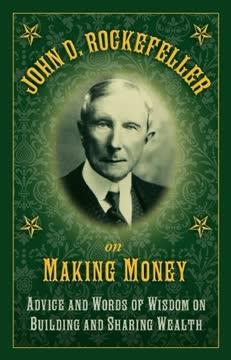
John D. Rockefeller was not born into wealth or privilege. He was born in 1839 in Richford, New York, the son of a traveling salesman whose absences and schemes left the family in constant financial uncertainty. His mother instilled in him the values of thrift, hard work, and religious faith. From these humble and unstable beginnings, Rockefeller would go on to build Standard Oil, a company that at its peak controlled approximately 90 percent of the refined oil in the United States. He became the richest man in the world, with a fortune that, adjusted for inflation, remains among the largest ever accumulated by a private individual. But this book is not really about how Rockefeller made his money. It is about the principles that made the money worth having. Rockefeller wrote down his thoughts on business, wealth, character, and giving in a series of reflections and interviews later in his life. These writings, collected and published, reveal a man far more thoughtful and principled than the caricature of the ruthless robber baron would suggest. He was a deeply religious man who saw his wealth as a divine trust. He was a disciplined businessman who believed that integrity was not just morally right but commercially essential. He was a father who agonized over how to raise children who would not be ruined by inheritance. He was a philanthropist who approached giving with the same analytical rigor he brought to building an oil empire. The problem this book addresses is timeless. How do you succeed in business without losing your soul? How do you accumulate wealth without being consumed by it? How do you build something lasting in a world that constantly changes? How do you raise children who understand the value of work when they have never known want? How do you give money away in ways that actually solve problems rather than merely salving consciences? These questions are as urgent today as they were when Rockefeller first grappled with them. In an era of startup culture that glorifies disruption at any cost, of wealth worship that treats net worth as a measure of human value, and of philanthropy that often generates more publicity than progress, Rockefeller's voice offers a sobering counterpoint.…
Continue reading in the MinuteRead app
Get the complete 30-minute summary of John D. Rockefeller on Making Money
Get the complete summary in the appIntegrity is the foundation of all lasting success. Build your reputation on honest dealing and keep your word.
Wealth comes from creating value for others. Focus on solving problems and improving lives.
Money is a tool, not an end. Use it wisely and generously.
Approach philanthropy strategically. Seek to cure causes, not just treat symptoms.
Never stop learning. The world changes, and you must change with it.
Make family a priority. No professional success can compensate for failure at home.
"John D. Rockefeller on Making Money" is a strong fit if you want practical ideas around business, biography, finance, especially themes like integrity is the foundation of all lasting success. build your reputation on honest dealing and keep your word; wealth comes from creating value for others. focus on solving problems and improving lives. The MinuteRead summary distills these concepts into a focused read, whether you're deciding whether to buy the book or applying its lessons at work.
John Davison Rockefeller Sr. was a prominent American industrialist and philanthropist who revolutionized the oil industry and became the world's richest man. Born in 1839, he co-founded Standard Oil in 1870, which dominated the U.S. oil market. Rockefeller's business acumen and strategic acquisitions led to immense wealth. In his later years, he focused on philanthropy, establishing influential foundations and universities. He funded medical research, education, and scientific endeavors. Rockef…
View all summaries by John D. RockefellerContinue Reading
Access the complete 30-minute summary and thousands more nonfiction books in the MinuteRead app.

Continue reading the complete summary in the MinuteRead app.






