MinuteRead
30 min
Book summary
Premium summary · Opens in the app · 30 min read
Most of us go through life with a working assumption about who we are. We believe we are the voice in our head, the chooser of our actions, the one who decides what to do and how to feel. We assume that our conscious mind, our ego, is the entirety of our psychological being. Carl Jung spent his entire career demonstrating that this assumption is not merely incomplete. It is fundamentally misleading.
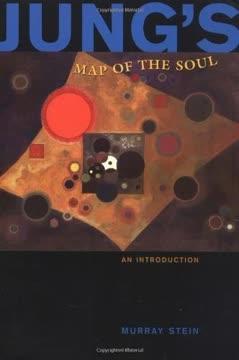
**Author:** Murray B. Stein
**Estimated Reading Time:** 45 minutes
**What You'll Learn:** - How Carl Jung mapped the architecture of the human psyche - Why your conscious identity is only a small part of who you are - What the shadow, persona, and inner contrasexual figures reveal about your hidden depths - How the process of individuation leads to psychological wholeness - Why meaningful coincidences may reveal a deeper order connecting mind and world
**Who This Book Is For:** Anyone who has ever felt that there is more to their inner life than meets the eye. If you have wondered why you sometimes act in ways that surprise you, why certain people trigger strong reactions, or why you feel drawn toward a deeper sense of purpose, this book offers a map for understanding those experiences. It is for readers curious about the unconscious, for those seeking self-knowledge beyond surface-level psychology, and for anyone who wants to understand the profound ideas of Carl Jung as explained by one of his most respected interpreters.
Most of us go through life with a working assumption about who we are. We believe we are the voice in our head, the chooser of our actions, the one who decides what to do and how to feel. We assume that our conscious mind, our ego, is the entirety of our psychological being. Carl Jung spent his entire career demonstrating that this assumption is not merely incomplete. It is fundamentally misleading. Jung proposed that the human psyche is far larger, stranger, and more layered than the conscious mind can grasp. Beneath the surface of everyday awareness lies a vast interior world populated by figures, patterns, and forces that shape our lives in ways we rarely recognize. These unconscious elements influence whom we love, what we fear, how we work, and what we ultimately become. To ignore them is not to escape their influence. It is simply to be driven by them without understanding why. Murray Stein, a Jungian psychoanalyst with decades of clinical and scholarly experience, wrote *Jung's Map of the Soul* to provide what Jung himself never fully assembled: a clear, systematic guide to the architecture of the psyche as Jung understood it. Jung's writings are notoriously difficult. They sprawl across decades, shift in terminology, and often read more like mystical poetry than scientific psychology. Stein's achievement is to bring order to this complexity without sacrificing depth. He presents Jung's ideas as a coherent map, one that readers can use to navigate their own inner terrain. The problem Jung addressed was not new in his time, and it has not disappeared in ours. Human beings have always struggled to understand themselves. Ancient myths, religious traditions, and…
Continue reading in the MinuteRead app
Get the complete 30-minute summary of Jung's Map of the Soul
Get the complete summary in the appThe ego is only the center of consciousness. The Self is the center and totality of the psyche.
The shadow contains everything you have rejected about yourself. It operates through projection.
The persona is a mask. Do not mistake it for your true identity.
The anima and animus are inner contrasexual figures that shape your relationships and your inner life.
Individuation is the lifelong process of becoming whole. It begins with confronting the shadow.
The collective unconscious is the shared psychological heritage of humanity. It contains the archetypes.
"Jung's Map of the Soul" is a strong fit if you want practical ideas around inspiration, psychology, philosophy, especially themes like the ego is only the center of consciousness. the self is the center and totality of the psyche; the shadow contains everything you have rejected about yourself. it operates through projection. The MinuteRead summary distills these concepts into a focused read, whether you're deciding whether to buy the book or applying its lessons at work.
Murray Stein, Ph.D. is a prominent Jungian psychoanalyst and author based in Zurich, Switzerland. He has extensively studied and written about Carl Jung's theories, with "Jung's Map of the Soul" being one of his notable works. Stein's academic background includes degrees from Yale University and the University of Chicago, as well as training at the C.G. Jung Institut-Zurich. He has held leadership positions in various Jungian organizations, including presidency of the International Association f…
View all summaries by Murray B. SteinContinue Reading
Access the complete 30-minute summary and thousands more nonfiction books in the MinuteRead app.

Continue reading the complete summary in the MinuteRead app.