MinuteRead
30 min
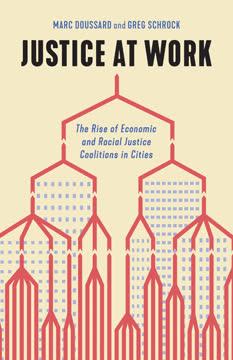
The fight for economic justice in America has a geography problem. For decades, the most powerful tools for addressing inequality sat in Washington, while the people most affected by inequality lived in cities. Federal labor law, national minimum wage standards, and large-scale social programs all operated at a scale far removed from the neighborhoods where workers struggled to pay rent, where families faced displacement, and where communities of color bore the weight of disinvestment.
**Author:** Marc Doussard
**Estimated Reading Time:** 45 minutes
**What You'll Learn:**
- Why cities have become the central battleground for economic and racial justice - How urban workers and communities are building new forms of power - The strategies behind successful campaigns like the Fight for $15 - Why some progressive policies succeed while others stall - How policy entrepreneurs are reshaping what is politically possible
**Who This Book Is For:**
This book is for anyone who wants to understand how economic justice movements actually work in modern American cities. It is for organizers and activists seeking strategic insight, for policymakers looking to understand the forces shaping urban governance, for students of urban studies and labor relations, and for engaged citizens who want to see beyond headlines about minimum wage fights and gentrification battles. If you have ever wondered why some progressive campaigns win while others fail, or how local activism connects to broader struggles against inequality, this book provides the answers.
The fight for economic justice in America has a geography problem. For decades, the most powerful tools for addressing inequality sat in Washington, while the people most affected by inequality lived in cities. Federal labor law, national minimum wage standards, and large-scale social programs all operated at a scale far removed from the neighborhoods where workers struggled to pay rent, where families faced displacement, and where communities of color bore the weight of disinvestment. Then something shifted. Beginning in the 1990s and accelerating dramatically after the 2008 financial crisis, American cities emerged as the most dynamic sites of progressive policy innovation. The Fight for $15, which started with a few hundred fast-food workers walking off the job in New York City, became a national movement that has raised wages for tens of millions of workers. Paid sick leave laws, once considered politically impossible, now cover workers in dozens of cities and states. Fair scheduling ordinances, local hiring requirements, and community benefits agreements have transformed how urban development operates. This book explains how that transformation happened and what it means for the future of economic justice. The story begins with a fundamental insight about how globalization has reshaped urban economies. As manufacturing fled American cities, it took with it the traditional bases of worker power: large factories, stable employment, and the unions that organized them. But globalization did not empty cities. It transformed them. Finance, technology, healthcare, and hospitality replaced manufacturing as the engines of urban growth. These new industries created wealth, but they also created a profound dependence on low-wage workers who could not be outsourced. A hospital cannot move its nursing assistants to another country. A hotel cannot relocate its housekeepers. A restaurant cannot offshore its dishwashers.…
Continue reading in the MinuteRead app
Get the complete 30-minute summary of Justice at Work
Get the complete summary in the appCities have become the most important sites for advancing economic and racial justice because the structure of the moder
Place-based industries like healthcare, hospitality, and retail give workers bargaining power because these jobs cannot
Leverage is a potential that must be organized and deployed strategically to become power.
Economic and racial justice coalitions link workplace organizing with community organizing, recognizing that economic an
Urban policy entrepreneurs work across three streams: problem definition, policy development, and political mobilization
The Fight for $15 developed a replicable template that has spread across the country, producing minimum wage increases i
"Justice at Work" is a strong fit if you want practical ideas around nonfiction, especially themes like cities have become the most important sites for advancing economic and racial justice because the structure of the moder; place-based industries like healthcare, hospitality, and retail give workers bargaining power because these jobs cannot. The MinuteRead summary distills these concepts into a focused read, whether you're deciding whether to buy the book or applying its lessons at work.
Marc Doussard is an author and scholar focusing on urban policy, labor issues, and social justice. His work examines the intersection of progressive policies and city governance, exploring how these policies gain traction and are implemented in urban environments. Doussard's research contributes to the understanding of political processes in cities and their impact on social equity. His writing style appears to be accessible to both academic and general audiences, making complex policy issues mo…
View all summaries by Marc DoussardContinue Reading
Access the complete 30-minute summary and thousands more nonfiction books in the MinuteRead app.

Continue reading the complete summary in the MinuteRead app.