MinuteRead
30 min
Book summary
Premium summary · Opens in the app · 30 min read
Imagine teaching a child to ride a bicycle. You do not hand them a manual describing every possible combination of handlebar angles, pedal pressures, and body positions. You do not label thousands of photographs with the correct action for each scenario. Instead, you let them try. They wobble, they fall, they correct, and eventually they ride. The learning happens through interaction, through a continuous loop of action, consequence, and adjustment.
**Author:** Giuseppe Ciaburro
**Estimated Reading Time:** 45 minutes
**What You'll Learn**
How to build intelligent agents that learn through interaction with their environment. You will understand the foundational algorithms of reinforcement learning, from dynamic programming to deep Q-learning, and see how these methods solve real problems in robotics, game playing, finance, and beyond. You will learn the practical implementation of these algorithms using Keras and OpenAI Gym, gaining the skills to design, train, and evaluate your own reinforcement learning systems.
**Who This Book Is For**
Software developers and data scientists who want to move beyond supervised learning and into the world of autonomous decision-making. If you understand the basics of Python and neural networks and you are ready to build systems that learn from experience rather than labeled data, this book is your guide. It is also for anyone fascinated by the technology behind AlphaGo and self-driving cars who wants to understand how machines learn to solve problems through trial and error.
Imagine teaching a child to ride a bicycle. You do not hand them a manual describing every possible combination of handlebar angles, pedal pressures, and body positions. You do not label thousands of photographs with the correct action for each scenario. Instead, you let them try. They wobble, they fall, they correct, and eventually they ride. The learning happens through interaction, through a continuous loop of action, consequence, and adjustment. This is the essence of reinforcement learning. For decades, machine learning focused primarily on pattern recognition. We built systems that could identify objects in images, transcribe speech into text, and translate between languages. These systems learned from massive datasets of labeled examples. They were powerful, but they were fundamentally passive. They observed the world and made predictions, but they did not act within it. Reinforcement learning changes this. It is a paradigm where an agent learns to make decisions by interacting with an environment. The agent tries something, observes what happens, receives a reward or penalty, and adjusts its behavior accordingly. Over time, through thousands or millions of such interactions, the agent discovers strategies that achieve its goals. It learns not from a teacher but from experience. The problem this book addresses is both practical and conceptual. Practically, many important problems cannot be solved with supervised learning. How do you train a robot to walk when every possible terrain and situation cannot be labeled in advance? How do you build a trading system that adapts to changing market conditions? How do you create a game-playing agent that can handle situations its programmers never anticipated? These problems require systems that learn through interaction, that explore and exploit, that balance short-term and long-term rewards. Conceptually, reinforcement learning represents a different…
Continue reading in the MinuteRead app
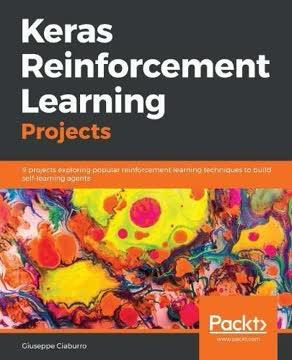
Get the complete 30-minute summary of Keras Reinforcement Learning Projects
Get the complete summary in the appReinforcement learning is learning through interaction. An agent takes actions, observes outcomes, and adjusts its behav
The policy is the agent's strategy. The value function predicts future rewards. Together, they are the core concepts of
Exploration discovers new possibilities. Exploitation uses known information. Balancing them is the central challenge of
Dynamic programming finds optimal policies when you have a perfect model of the environment but is limited to small stat
Monte Carlo methods learn from complete episodes of experience and do not require a model, making them simple and widely
Temporal difference learning combines the best of Monte Carlo and dynamic programming, learning from incomplete sequence
"Keras Reinforcement Learning Projects" is a strong fit if you want practical ideas around nonfiction, especially themes like reinforcement learning is learning through interaction. an agent takes actions, observes outcomes, and adjusts its behav; the policy is the agent's strategy. the value function predicts future rewards. together, they are the core concepts of. The MinuteRead summary distills these concepts into a focused read, whether you're deciding whether to buy the book or applying its lessons at work.
Motivated to help readers with imagine teaching a child to ride a bicycle. You do not hand them a manual describing every possible, Giuseppe Ciaburro wrote “Keras Reinforcement Learning Projects” to package those ideas for a fast, focused read. In “Keras Reinforcement Learning Projects”, Giuseppe Ciaburro focuses on imagine teaching a child to ride a bicycle. You do not hand them a manual describing every possible. Through “Keras Reinforcement Learning Projects”, Giuseppe Ciaburro distills the c…
View all summaries by Giuseppe CiaburroContinue Reading
Access the complete 30-minute summary and thousands more nonfiction books in the MinuteRead app.

Continue reading the complete summary in the MinuteRead app.