 MinuteRead
30 min
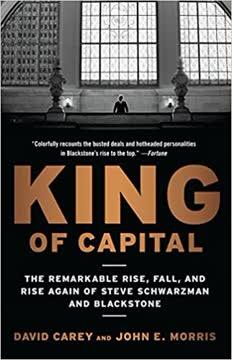
Book summary
by David Carey
Premium summary · Opens in the app · 30 min read
In the autumn of 2006, Stephen Schwarzman stood before a crowd of Wall Street's most powerful figures at the Pierre Hotel in Manhattan. The occasion was his sixtieth birthday party, an event so lavish that it would become legendary. Rod Stewart performed. Patti LaBelle sang. Marvin Hamlisch played piano. The guest list included titans of finance, media, and politics. Some estimated the celebration cost three million dollars.
**Author:** David Carey and John E. Morris
**Estimated Reading Time:** 45 minutes
**What You'll Learn:**
- How two men built the world's largest private equity firm from a $400,000 investment - The mechanics of leveraged buyouts and why they transformed corporate America - How Blackstone navigated market crashes, ethical controversies, and industry upheaval - The leadership principles and deal-making strategies behind the firm's extraordinary success - Why private equity remains one of the most powerful and misunderstood forces in global finance
**Who This Book Is For:**
This book is for anyone who wants to understand how modern finance actually works. It is for investors, entrepreneurs, executives, and students of business who want to see beyond the headlines about private equity. It is for readers curious about how a small firm founded in a Manhattan office grew into a global powerhouse managing hundreds of billions of dollars. And it is for anyone who has ever wondered whether the titans of Wall Street are geniuses, gamblers, or something in between.
In the autumn of 2006, Stephen Schwarzman stood before a crowd of Wall Street's most powerful figures at the Pierre Hotel in Manhattan. The occasion was his sixtieth birthday party, an event so lavish that it would become legendary. Rod Stewart performed. Patti LaBelle sang. Marvin Hamlisch played piano. The guest list included titans of finance, media, and politics. Some estimated the celebration cost three million dollars. The party became a symbol. To critics, it represented everything wrong with Wall Street: excess, arrogance, and a tone-deaf display of wealth. To admirers, it was a fitting tribute to a man who had built something extraordinary from nothing. Either way, it cemented Schwarzman's place in the public imagination as the face of private equity. But the story behind that party, and behind the firm Schwarzman co-founded, is far more complex than any single evening could capture. It is a story of ambition, discipline, risk, and reinvention. It is the story of how two men with very different personalities built a partnership that would reshape the financial world. Peter Peterson was the elder statesman, a former Nixon administration commerce secretary and CEO of Lehman Brothers. He brought gravitas, connections, and a deep understanding of how power worked in Washington and on Wall Street. Stephen Schwarzman was the younger, more aggressive partner, a deal-maker with relentless drive and an almost obsessive focus on winning. When they founded Blackstone in 1985, they had no guarantee of success. They started with $400,000 of their own money and a shared belief that they could build a different kind of financial firm. Their first office was modest. Their first attempts to raise money were met with rejection. For months, they…
Continue reading in the MinuteRead app
Get the complete 30-minute summary of King of Capital
Get the complete summary in the appLeverage amplifies both gains and losses. Use it wisely.
Discipline during booms provides resilience during busts.
Your reputation is your most valuable asset. Protect it.
The ability to say no is as important as the ability to say yes.
Markets are cyclical. Booms always end.
Complementary partnerships create stronger results than individual brilliance.
"King of Capital" is a strong fit if you want practical ideas around business, finance, biography, especially themes like leverage amplifies both gains and losses. use it wisely; discipline during booms provides resilience during busts. The MinuteRead summary distills these concepts into a focused read, whether you're deciding whether to buy the book or applying its lessons at work.
David Carey is a seasoned business journalist and author known for his expertise in finance and private equity. He has written extensively for publications such as The Deal and Bloomberg News, covering major financial stories and industry trends. Carey's background in financial reporting likely contributed to his ability to present complex business concepts in an accessible manner in David Carey and John E. Morris's "King of Capital." His co-author, John E. Morris, also brings substantial experi…
View all summaries by David CareyContinue Reading
Access the complete 30-minute summary and thousands more nonfiction books in the MinuteRead app.

Continue reading the complete summary in the MinuteRead app.






