MinuteRead
30 min
Every person influences someone. Every person leads in some arena of life, whether they recognize it or not. The question is never whether you lead. The question is how well you lead.
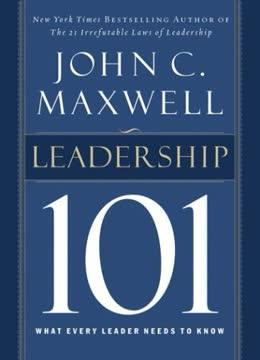
**Author:** John C. Maxwell
**Estimated Reading Time:** 45 minutes
**What You'll Learn**
The fundamental principles that separate genuine leaders from mere position holders. You will discover why leadership determines the ceiling of your effectiveness, how influence works at every level of life, and what specific actions build lasting leadership capacity.
**Who This Book Is For**
Anyone who wants to understand leadership as a learnable skill rather than a birthright. Whether you lead a team, a family, a community, or simply want to lead yourself better, this condensed edition distills Maxwell's foundational teachings into a practical guide for increasing your influence and impact.
Every person influences someone. Every person leads in some arena of life, whether they recognize it or not. The question is never whether you lead. The question is how well you lead. John Maxwell wrote Leadership 101 to address a fundamental misunderstanding that pervades organizations, families, and communities. Most people believe leadership is reserved for those with titles, corner offices, or formal authority. They assume that leadership ability is something you either possess at birth or never acquire. This assumption creates a dangerous passivity. People wait to be given permission to lead instead of developing the capacity to influence others right where they are. The problem is not limited to those who avoid leadership. Many people who hold leadership positions fail to understand what leadership actually requires. They confuse management with leadership, activity with effectiveness, and authority with influence. They work hard, produce results, and yet never develop the deeper capacity that creates lasting organizational health. They hit a ceiling they cannot see and wonder why progress stalls. Maxwell's approach differs from most leadership literature because it begins with a simple premise: leadership is influence, nothing more and nothing less. This definition strips away the mystique and makes leadership accessible to everyone. If leadership is influence, then leadership can be learned. If leadership can be learned, then anyone willing to grow can increase their capacity to lead. The stakes are high. Leadership ability determines the trajectory of organizations. It shapes the culture of families. It influences the health of communities. When leadership is weak, everything suffers. When leadership grows, everything improves. Maxwell argues that leadership development is not one priority among many. It is the priority that unlocks all others. This book distills Maxwell's foundational teachings into a coherent framework for understanding and developing leadership. It explains why leadership matters, how it develops, and what specific practices create lasting influence. It addresses the internal work of self-discipline and the external work of empowering others. It connects personal growth to organizational impact. The material is not theoretical. Maxwell spent decades observing leaders in business, ministry, sports, and government. He…
Continue reading in the MinuteRead app
Get the complete 30-minute summary of Leadership 101
Get the complete summary in the appLeadership is influence, not position. Anyone can develop influence regardless of title.
Your leadership ability is the lid on your effectiveness. Raising your leadership raises your potential.
Leadership develops daily through consistent learning, application, and reflection.
Lead yourself first. Self-discipline is the foundation of leading others.
Trust is built on competence, character, and connection. It is the currency of leadership.
Prioritize high-impact activities. The 80/20 rule applies to leadership.
"Leadership 101" is a strong fit if you want practical ideas around leadership, business, self help, especially themes like leadership is influence, not position. anyone can develop influence regardless of title; your leadership ability is the lid on your effectiveness. raising your leadership raises your potential. The MinuteRead summary distills these concepts into a focused read, whether you're deciding whether to buy the book or applying its lessons at work.
John C. Maxwell is a renowned American author, speaker, and pastor who has significantly impacted the field of leadership. He has written numerous bestselling books, including "The 21 Irrefutable Laws of Leadership" and "The 21 Indispensable Qualities of a Leader." Maxwell's works have been featured on the New York Times Best Seller List, reflecting their popularity and influence. His expertise in leadership has made him a sought-after speaker and coach, with his organizations having trained mil…
View all summaries by John C. MaxwellContinue Reading
Access the complete 30-minute summary and thousands more nonfiction books in the MinuteRead app.

Continue reading the complete summary in the MinuteRead app.