MinuteRead
30 min
Book summary
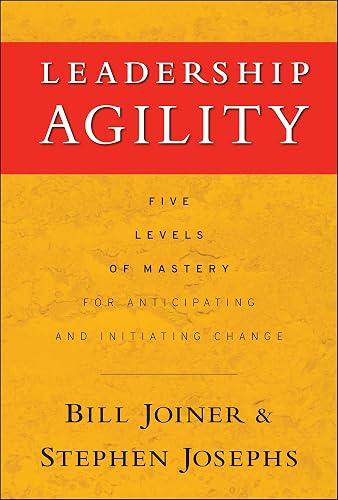
by William B. Joiner
Premium summary · Opens in the app · 30 min read
Every era produces its own definition of what makes a great leader. In the industrial age, leadership meant command and control. In the information age, it meant strategic vision and execution. But we have entered a new period, one defined by accelerating change, deep interconnectedness, and problems that refuse to stay solved. The old models are breaking down. The question is no longer whether you can manage a team or hit a quarterly target. The question is whether you can lead wisely and effec
**Author:** William B. Joiner
**Estimated Reading Time:** 45 minutes
**What You'll Learn:** - Why agility has become the defining competency for leaders in a turbulent world - The five developmental levels of leadership agility and how to recognize them - The four core competencies that make up the Leadership Agility Compass - How to cultivate agility through both inner development and outer skill-building - Practical ways to apply these ideas in your own leadership journey
**Who This Book Is For:** Leaders at any level who feel the gap between traditional management approaches and the demands of today's complex, fast-changing environment. Whether you are a new manager struggling to think beyond tactical problem-solving or a senior executive sensing that your current leadership style has hit its limits, this book offers a developmental path forward.
Every era produces its own definition of what makes a great leader. In the industrial age, leadership meant command and control. In the information age, it meant strategic vision and execution. But we have entered a new period, one defined by accelerating change, deep interconnectedness, and problems that refuse to stay solved. The old models are breaking down. The question is no longer whether you can manage a team or hit a quarterly target. The question is whether you can lead wisely and effectively when the ground keeps shifting beneath your feet. William B. Joiner and his colleagues spent years studying this question. They collected data from more than six hundred managers across industries and levels. They conducted in-depth interviews, observed leaders in action, and tracked how different leadership styles performed under pressure. What they discovered was both sobering and hopeful. The sobering finding was that most leaders are not equipped for the complexity they now face. Roughly 80 percent of managers operate at levels of leadership agility that were designed for a more stable, predictable world. They can solve problems, hit targets, and manage teams. But when the environment becomes volatile, ambiguous, and fast-moving, they struggle. They default to old habits. They rely too heavily on their own expertise or their positional authority. They push harder on approaches that worked in the past, even as those approaches produce diminishing returns. The hopeful finding was that leadership agility is not a fixed trait. It is a developmental capacity that can be cultivated. Leaders can grow. They can move from one level of agility to the next. They can learn to see more, understand more deeply, and act more wisely. But this growth does not happen automatically. It requires a deliberate commitment to inner development as well as outer skill-building. This book is about that journey. It maps the territory of leadership agility, identifies the levels through which…
Continue reading in the MinuteRead app
Get the complete 30-minute summary of Leadership Agility
Get the complete summary in the appLeadership agility is the ability to take wise and effective action amid complex, rapidly changing conditions. It is the
Agility is not just flexibility. It is a proactive, intentional capacity to anticipate change and shape the future.
Leadership agility develops through five levels: Expert, Achiever, Catalyst, Co-Creator, and Synergist.
Most leaders operate at the Expert or Achiever level, which is inadequate for the complexity they now face.
The Catalyst level is the first level capable of sustained success in complexity. It is where leaders learn to create pa
The Leadership Agility Compass identifies four competencies: context-setting agility, stakeholder agility, creative agil
"Leadership Agility" is a strong fit if you want practical ideas around leadership, business, management, especially themes like leadership agility is the ability to take wise and effective action amid complex, rapidly changing conditions. it is the; agility is not just flexibility. it is a proactive, intentional capacity to anticipate change and shape the future. The MinuteRead summary distills these concepts into a focused read, whether you're deciding whether to buy the book or applying its lessons at work.
Motivated to help readers with leadership agility isn’t just another tool for your toolkit, William B. Joiner wrote “Leadership Agility” to package those ideas for a fast, focused read. In “Leadership Agility”, William B. Joiner focuses on leadership agility isn’t just another tool for your toolkit. Through “Leadership Agility”, William B. Joiner distills the core ideas on leadership into lessons readers can absorb in a single short sitting. Readers turn to this work when they want William B. Jo…
Continue Reading
Access the complete 30-minute summary and thousands more nonfiction books in the MinuteRead app.

Continue reading the complete summary in the MinuteRead app.