MinuteRead
30 min
Book summary
Premium summary · Opens in the app · 30 min read
There is a problem in organizations that almost nobody talks about. It is not a problem of strategy. It is not a problem of talent. It is not even a problem of execution, though it undermines all three.
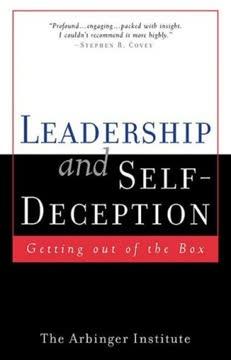
**By The Arbinger Institute**
**Estimated Reading Time:** 45 minutes
**What You'll Learn**
Why most leadership problems have nothing to do with strategy, talent, or execution. Why the single greatest barrier to your effectiveness is invisible to you. How to recognize the moment you start treating people as objects rather than human beings. And how one simple shift in awareness can transform your relationships, your career, and your organization.
**Who This Book Is For**
Anyone who has ever wondered why certain relationships feel stuck. Leaders who sense something is wrong but cannot identify the source. Professionals who want to understand why some teams thrive while others collapse into blame. And anyone ready to confront the uncomfortable truth that the problem they keep seeing in others might actually live closer to home.
There is a problem in organizations that almost nobody talks about. It is not a problem of strategy. It is not a problem of talent. It is not even a problem of execution, though it undermines all three. The problem is self-deception. Most of us go through life with a distorted picture of reality. We believe we see situations clearly. We believe we see other people accurately. We believe our frustrations are justified, our judgments are fair, and our actions are reasonable responses to the difficult people around us. We are wrong. Self-deception is not the same as ignorance. An ignorant person lacks information. A self-deceived person has plenty of information but cannot see it clearly because they are trapped in a way of seeing that distorts everything. The self-deceived person does not know they have a problem. That is what makes self-deception so dangerous. It hides itself. This book exists because self-deception is the hidden driver of nearly every leadership failure, every broken relationship, and every organizational dysfunction you have ever experienced. When you are self-deceived, you cannot see your own role in problems. You blame others. You justify yourself. You resist feedback. You provoke the very behavior you complain about. And you do all of this while feeling completely justified. The tragedy is that self-deceived people usually have good intentions. They want to be effective leaders. They want to have strong relationships. They want to contribute. But their way of seeing prevents them from doing any of these things well. The Arbinger Institute discovered this pattern through decades of work with organizations around the world. They found that the most successful leaders shared something surprising. It was not charisma. It was not intelligence. It was not even experience. It was a way of seeing other people as people. The least effective leaders, regardless of their other qualities, shared the opposite: they saw others as objects. This book tells…
Continue reading in the MinuteRead app
Get the complete 30-minute summary of Leadership and Self-Deception
Get the complete summary in the appSelf-deception is the problem beneath every problem. It blinds you to your role in the situations you complain about.
The box is a state of seeing others as objects rather than as people. You enter it through self-betrayal.
Self-betrayal happens when you ignore your impulse to help another person. That moment triggers the justifications that
Once in the box, you inflate others' faults and your own virtues. You see a distorted version of reality that feels comp
Collusion is the cycle of mutual blame that keeps relationships stuck. You cannot break it by demanding the other person
Getting out of the box happens in a moment of ceasing to resist another person's humanity. It is a shift in seeing, not
"Leadership and Self-Deception" is a strong fit if you want practical ideas around leadership, business, self help—especially themes like self-deception is the problem beneath every problem. it blinds you to your role in the situations you complain about; the box is a state of seeing others as objects rather than as people. you enter it through self-betrayal. The MinuteRead summary distills these concepts into a focused read, whether you're deciding whether to buy the book or applying its lessons at work.
The Arbinger Institute is a management consulting firm founded by C. Terry Warner, a philosophy professor at Brigham Young University. While not directly credited, Warner's ideas form the foundation of the book. The Institute uses a collaborative approach to authorship, eschewing individual attribution. Their work focuses on applying philosophical and psychological concepts to organizational performance and leadership development. The Institute's writing style typically employs narrative framewo…
View all summaries by The Arbinger InstituteContinue Reading
Access the complete 30-minute summary and thousands more nonfiction books in the MinuteRead app.

Continue reading the complete summary in the MinuteRead app.