MinuteRead
30 min
Book summary
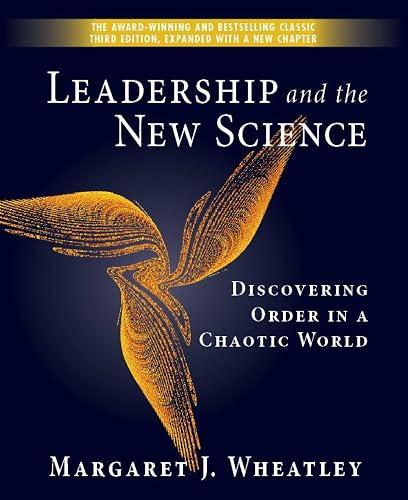
by Margaret J. Wheatley
Premium summary · Opens in the app · 30 min read
For most of the twentieth century, we managed organizations as if they were machines. We drew organizational charts with neat boxes and lines. We wrote detailed job descriptions. We believed that if we could just break work down into small enough pieces, measure each piece precisely, and control every variable, we could predict outcomes with confidence. This approach came from Newtonian physics, which described a universe of separate objects interacting according to fixed laws. It worked, to a d
**Author:** Margaret J. Wheatley
**Estimated Reading Time:** 45 minutes
**What You'll Learn:** How discoveries in quantum physics, biology, and chaos theory fundamentally change our understanding of organizations, leadership, and change. You will learn why the old mechanistic models of management fail, and what principles from living systems can replace them.
**Who This Book Is For:** Leaders, managers, consultants, and anyone who senses that traditional approaches to organizing work no longer fit the world we live in. If you have ever felt that your organization behaves more like a living organism than a machine, this book will give you language and frameworks to understand why.
For most of the twentieth century, we managed organizations as if they were machines. We drew organizational charts with neat boxes and lines. We wrote detailed job descriptions. We believed that if we could just break work down into small enough pieces, measure each piece precisely, and control every variable, we could predict outcomes with confidence. This approach came from Newtonian physics, which described a universe of separate objects interacting according to fixed laws. It worked, to a degree, in a world that changed slowly. But that world no longer exists. Margaret Wheatley wrote *Leadership and the New Science* because she noticed something profound happening in the sciences. Physicists, biologists, and chemists were abandoning the old mechanistic worldview. They were discovering that the universe is not a collection of separate parts but an intricate web of relationships. They found that order emerges from chaos without anyone imposing it. They learned that the act of observation changes what is observed. They discovered that living systems self-organize, adapt, and evolve in ways that no machine ever could. These discoveries were not just academic curiosities. They carried enormous implications for how we think about organizations, leadership, and change. Yet most leaders remained trapped in outdated assumptions. They continued to treat their organizations as machines to be controlled rather than living systems to be nurtured. They continued to seek certainty in a world that is fundamentally uncertain. They continued to hoard information when information needed to flow freely. Wheatley's central insight is simple but radical: organizations are living systems, not machines. Once we accept this, everything about how we lead must change. The problem is that most of us were trained to see the world in fragments. We learned to break problems into pieces, to specialize, to focus on parts rather than wholes. This analytical approach has produced remarkable achievements, but it has also blinded us to the interconnected nature of reality. We try to solve organizational problems by fixing isolated parts, only to discover that our fixes create new problems elsewhere. We attempt to impose order through rules and…
Continue reading in the MinuteRead app
Get the complete 30-minute summary of Leadership and the New Science
Get the complete summary in the appOrganizations are living systems, not machines. Lead them accordingly.
Everything is interconnected. Focus on relationships, not just parts.
Chaos is the source of new order. Work with it, not against it.
We create our reality through participation. Engage people in shaping change.
Information is the lifeblood of organizations. Let it flow freely.
Living systems self-organize. Create conditions for order to emerge.
"Leadership and the New Science" is a strong fit if you want practical ideas around leadership, business, science, especially themes like organizations are living systems, not machines. lead them accordingly; everything is interconnected. focus on relationships, not just parts. The MinuteRead summary distills these concepts into a focused read, whether you're deciding whether to buy the book or applying its lessons at work.
Motivated to help readers with we live in a world of exquisite interconnectedness, Margaret J. Wheatley wrote “Leadership and the New Science” to package those ideas for a fast, focused read. In “Leadership and the New Science”, Margaret J. Wheatley focuses on we live in a world of exquisite interconnectedness. Through “Leadership and the New Science”, Margaret J. Wheatley distills the core ideas on leadership into lessons readers can absorb in a single short sitting. Readers turn to this work w…
Continue Reading
Access the complete 30-minute summary and thousands more nonfiction books in the MinuteRead app.

Continue reading the complete summary in the MinuteRead app.