MinuteRead
30 min
Book summary
Premium summary · Opens in the app · 30 min read
Most managers believe they have a leadership style. They describe themselves as hands-on or hands-off, collaborative or directive, supportive or demanding. They wear these descriptions like badges of identity, as if leadership were a personality trait rather than a set of choices.
**Author:** Kenneth H. Blanchard
**Estimated Reading Time:** 45 minutes
**What You'll Learn:** - How to adapt your leadership style to fit each person and situation - The four development levels every employee moves through - The four leadership styles and when to use each one - How to set goals, diagnose needs, and match your approach accordingly - The power of One Minute Praisings and Redirections - How to develop people from dependence to independence
**Who This Book Is For:** Managers who feel stretched between being too hands-off and too controlling. New leaders who want a practical framework for developing people. Experienced executives who sense that treating everyone the same is holding their teams back. Anyone who believes that leadership is not about having one style, but about having the right style for the right moment.
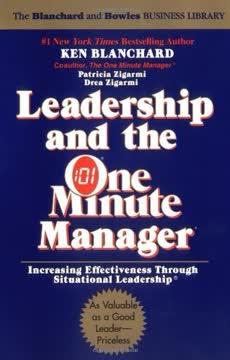
Most managers believe they have a leadership style. They describe themselves as hands-on or hands-off, collaborative or directive, supportive or demanding. They wear these descriptions like badges of identity, as if leadership were a personality trait rather than a set of choices. This belief creates a quiet tragedy in organizations everywhere. A manager with a naturally directive style pushes capable employees away by micromanaging them. A manager with a naturally supportive style fails to give struggling employees the structure they desperately need. Both managers are sincere. Both are working hard. Both are failing their people in different ways. The problem is not effort. The problem is a fundamental misunderstanding of what leadership requires. Kenneth Blanchard spent decades observing this pattern. He watched talented managers undermine their own teams by applying the same approach to every person and every situation. He saw enthusiastic new hires crushed by leaders who delegated too much too soon. He saw experienced professionals insulted by leaders who directed every move. And he noticed something crucial: the best leaders did not have a single style. They had many styles, and they knew when to use each one. This insight became the foundation of Situational Leadership, a framework Blanchard developed and refined over years of research and practice. The core idea is deceptively simple: there is no one best way to lead. The best way depends on the person you are leading and the task they are trying to accomplish. This book tells the story of that idea through a fictional conversation between an entrepreneur and a One Minute Manager. The entrepreneur is struggling. His company is growing, but his people are not. He works harder than anyone else, yet results disappoint him. He feels like he is doing everything himself because, in many ways, he is. His employees wait for his instructions, hesitate to make decisions, and fail to take ownership…
Continue reading in the MinuteRead app
Get the complete 30-minute summary of Leadership and the One Minute Manager
Get the complete summary in the appThere is no one best leadership style. The best style depends on the person and the task.
Diagnose development level by assessing competence and commitment for each specific task.
Match your leadership style to the development level: Directing for beginners, Coaching for disillusioned learners, Supp
Set clear One Minute Goals so everyone knows what success looks like.
Deliver One Minute Praisings to reinforce good work and build confidence.
Deliver One Minute Redirections to correct problems while preserving dignity.
"Leadership and the One Minute Manager" is a strong fit if you want practical ideas around leadership, business, management, especially themes like there is no one best leadership style. the best style depends on the person and the task; diagnose development level by assessing competence and commitment for each specific task. The MinuteRead summary distills these concepts into a focused read, whether you're deciding whether to buy the book or applying its lessons at work.
Ken Blanchard is a renowned leadership expert and bestselling author. He co-wrote The One Minute Manager and has authored or co-authored over 60 books, selling more than 21 million copies worldwide. His works have been translated into over 27 languages, and he was inducted into Amazon's Hall of Fame as a top 25 bestselling author. Blanchard co-founded The Ken Blanchard Companies, an international management training and consulting firm, with his wife Margie in 1979. He also teaches at the Univer…
View all summaries by Kenneth H. BlanchardContinue Reading
Access the complete 30-minute summary and thousands more nonfiction books in the MinuteRead app.

Continue reading the complete summary in the MinuteRead app.