 MinuteRead
30 min
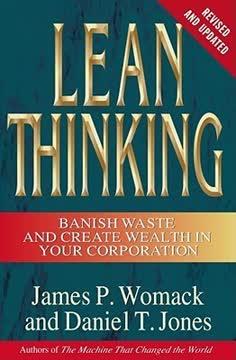
In 1990, James Womack and Daniel Jones published The Machine That Changed the World, a landmark study of the global automobile industry. That book introduced the term "lean production" to describe the Toyota Production System and demonstrated why Japanese manufacturers were outperforming their Western counterparts by dramatic margins. But the book left a critical question unanswered: How could organizations outside the automotive industry apply these ideas?
**Author:** James P. Womack
**Estimated Reading Time:** 45 minutes
**What You'll Learn:** How to identify and eliminate waste in any organization, create seamless flow of value to customers, build pull systems that respond to actual demand, and pursue continuous improvement as a strategic advantage. You will understand why lean thinking transforms not just manufacturing but every type of work.
**Who This Book Is For:** Leaders, managers, and change agents who want to fundamentally rethink how their organizations create value. Whether you work in manufacturing, healthcare, software, government, or any other field, the principles in this book apply to you.
In 1990, James Womack and Daniel Jones published The Machine That Changed the World, a landmark study of the global automobile industry. That book introduced the term "lean production" to describe the Toyota Production System and demonstrated why Japanese manufacturers were outperforming their Western counterparts by dramatic margins. But the book left a critical question unanswered: How could organizations outside the automotive industry apply these ideas? Lean Thinking answers that question. It distills the principles behind Toyota's success into a framework that any organization can use. Womack and Jones spent years studying companies that had successfully implemented lean practices across diverse industries, from aerospace to healthcare to retail. What they found was both encouraging and sobering. The encouraging news is that lean principles work everywhere. The sobering news is that most organizations fail to implement them correctly because they treat lean as a set of tools rather than a fundamentally different way of thinking about work. The problem this book addresses is waste. Not the obvious waste of discarded materials or idle workers, but the hidden waste embedded in every process. The waste of waiting, of unnecessary movement, of overproduction, of defects, of unused human creativity. This waste is so pervasive and so deeply embedded in organizational habits that most people simply cannot see it. They have accepted it as normal. They have built careers around managing it. They have designed entire departments to accommodate it. Consider a simple question: How long does it take to process a purchase order in your organization? The actual work of reviewing the request, checking the budget, and approving the purchase might take fifteen minutes. But in most organizations, the order sits in inboxes, queues, and approval chains for days or weeks. The value-creating work is a tiny fraction of the total elapsed time. The rest is waste. Now multiply that waste across every process in your organization. That is the opportunity lean thinking addresses. Why do people struggle with this challenge? Because the waste is invisible to those who live inside the system. When you work in a functional department, you see only your…
Continue reading in the MinuteRead app
Get the complete 30-minute summary of Lean Thinking
Get the complete summary in the appValue is defined by the customer, not by the producer. Anything that does not create customer value is waste.
Map the value stream to see the entire process, not just your piece of it. Most of what you see will be waste.
Create flow by organizing work around value streams, not functions. Break down silos and eliminate queues.
Implement pull by producing only what customers demand, when they demand it. Eliminate overproduction.
Pursue perfection through continuous improvement. The journey never ends.
Lean is a cultural transformation, not just a set of tools. Leadership commitment is essential.
"Lean Thinking" is a strong fit if you want practical ideas around business, management, leadership, especially themes like value is defined by the customer, not by the producer. anything that does not create customer value is waste; map the value stream to see the entire process, not just your piece of it. most of what you see will be waste. The MinuteRead summary distills these concepts into a focused read, whether you're deciding whether to buy the book or applying its lessons at work.
James P. Womack is a renowned author and expert in lean management principles. He co-founded the Lean Enterprise Institute and has written extensively on the subject of lean thinking and its application in various industries. Womack's work, particularly Lean Thinking: Banish Waste and Create Wealth in Your Corporation , has been influential in popularizing lean concepts beyond manufacturing. His research and writing focus on how organizations can improve efficiency, reduce waste, and create valu…
View all summaries by James P. WomackContinue Reading
Access the complete 30-minute summary and thousands more nonfiction books in the MinuteRead app.

Continue reading the complete summary in the MinuteRead app.






