MinuteRead
30 min
Book summary
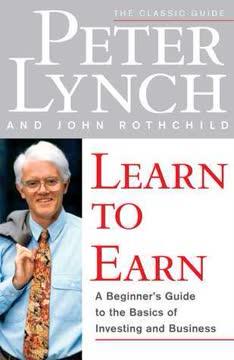
by Peter Lynch
Premium summary · Opens in the app · 30 min read
Most people spend more time planning a vacation than they spend planning their financial future. They will research hotels, compare flight prices, and read restaurant reviews for weeks, yet they will go their entire lives without ever learning the basic principles of investing. This is not because they are lazy or unintelligent. It is because nobody ever taught them. Schools teach algebra, history, and chemistry, but they rarely teach students how companies work, what a stock actually represents
### By Peter Lynch
**Estimated Reading Time:** 45 minutes
**What You'll Learn:**
- Why starting to invest early is the single most powerful financial decision you can make - How companies work, why they matter, and how they create wealth - The fundamental relationship between economic growth and stock market returns - How to think about risk, volatility, and long-term investing - The role of mutual funds, small companies, and corporate innovation in building wealth
**Who This Book Is For:**
This book is for anyone who has ever wondered how the stock market works but felt intimidated by the jargon. It is for students, young professionals, parents who want to teach their children about money, and anyone who suspects that understanding investing might be important but has never known where to start. Peter Lynch, one of the most successful investors in history, wrote this book with a simple conviction: investing is not reserved for the wealthy or the highly educated. It is a skill that anyone can learn, and the earlier you learn it, the better your life will be.
Most people spend more time planning a vacation than they spend planning their financial future. They will research hotels, compare flight prices, and read restaurant reviews for weeks, yet they will go their entire lives without ever learning the basic principles of investing. This is not because they are lazy or unintelligent. It is because nobody ever taught them. Schools teach algebra, history, and chemistry, but they rarely teach students how companies work, what a stock actually represents, or why the stock market exists in the first place. Peter Lynch wrote *Learn to Earn* to fill that gap. He believed that financial literacy is not a luxury. It is a necessity. And he believed that the best time to learn about investing is not when you are forty-five and panicking about retirement. It is when you are young, curious, and have decades of compounding ahead of you. Lynch was uniquely qualified to write this book. As the manager of Fidelity's Magellan Fund from 1977 to 1990, he achieved the best twenty-year performance of any mutual fund in history. He grew the fund from $18 million to $14 billion in assets, averaging a 29.2 percent annual return. But unlike many Wall Street insiders, Lynch never believed that investing required a finance degree or access to secret information. He believed that ordinary people, using their everyday observations and common sense, could become successful investors. The problem, as Lynch saw it, was not that investing is too complicated. The problem was that most people never learned the basics. They did not understand what a share of stock actually represents. They did not know…
Continue reading in the MinuteRead app
Get the complete 30-minute summary of Learn to Earn
Get the complete summary in the appStart investing now, no matter how small the amount.
Compound interest is the most powerful force in investing. Time is your greatest asset.
A stock is ownership in a real business. Understand the business before you invest.
Stock prices follow earnings over the long term. Focus on fundamentals.
Market downturns are normal and temporary. Stay invested.
Do not try to time the market. Consistency beats timing.
"Learn to Earn" is a strong fit if you want practical ideas around finance, business, money, especially themes like start investing now, no matter how small the amount; compound interest is the most powerful force in investing. time is your greatest asset. The MinuteRead summary distills these concepts into a focused read, whether you're deciding whether to buy the book or applying its lessons at work.
Peter Lynch is a renowned American investor and businessman. He graduated from Boston College and earned an MBA from Wharton. At Fidelity Investments, Lynch managed the Magellan Fund, growing it from $18 million to $14 billion in assets over 13 years. Under his leadership, the fund averaged a 29.2% annual return, the best 20-year performance of any mutual fund. After retiring as a fund manager in 1990, Lynch remains involved with Fidelity part-time, mentoring young analysts. He now dedicates sig…
View all summaries by Peter LynchContinue Reading
Access the complete 30-minute summary and thousands more nonfiction books in the MinuteRead app.

Continue reading the complete summary in the MinuteRead app.