MinuteRead
5 min
Book summary
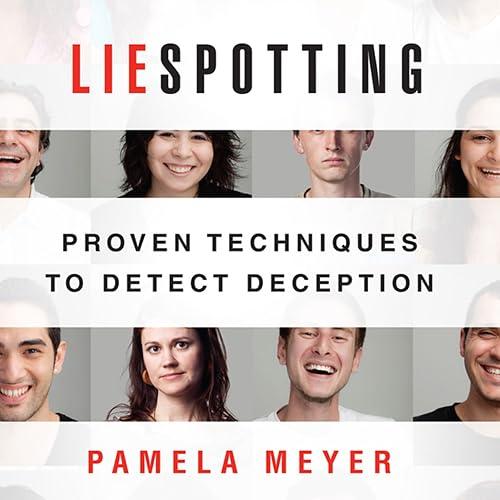
by Pamela Meyer
Premium summary · Opens in the app · 5 min read
Liespotting teaches you how to identify deceptive behavior with practical advice and foster a culture of trust, truth, and honesty in your immediate environment.
Liespotting teaches you how to identify deceptive behavior with practical advice and foster a culture of trust, truth, and honesty in your immediate environment.
Common sense suggests that how a person expresses their emotions is largely based on their culture. Yet, over the past two centuries, scientists have proven the opposite. They discovered that all basic human emotions have universal facial expressions attached to them.
The first hint that emotional expression is innate and biological comes from the work of Charles Darwin. As he traveled the world, Darwin discovered that people from various cultures were able to correctly interpret the feelings behind facial expressions on pictures he showed to them.
Later studies confirmed his hypothesis: human expression of feelings is a product of evolution and, therefore, physiological. Culture merely dictates our efforts to control this display of our emotions.
The implications of these findings are huge for anyone willing to train their deception-spotting skills. Because emotional facial expressions are physiological reactions, it is extremely hard to exert total control over them. This means that, no matter how convincing a story someone is telling you may sound, if they are lying, their face will most certainly give them away.
Facial expressions, however, are just one of three areas of communication where you are able to spot deceit. The others are body language and speech characteristics. Interpreting people’s faces, however, is a great way to start!
An average adult can distinguish truth from falsehood 54% of the time. That’s hardly better than a blind guess. Therefore, at least once in a while, you are lied to without ever realizing it. Actually…it’s not just once in a while. Some studies indicate that you are being lied to anywhere from 10 to 200 times a day. But how is this possible? Aren’t your friends, family, and co-workers trustworthy? A big part of the lies we hear (and tell!) are so-called “white lies” – the ones we utter in good faith. This is the kind of deceit that helps us maintain relationships and fit into societal norms. When a colleague at work asks whether you like her jacket, you’re likely to say: “Yes, it’s gorgeous!” Even if you don’t mean it. You realize that, in this case, telling the truth would probably do more harm than good. We also lie for a number of other reasons: to protect ourselves or others, to increase our odds of getting a job, or simply to bridge the gap between who we are and who we would like to be. But do we lie more nowadays than we did was centuries ago? I mean, surely human nature won’t have changed all that much, right? Well… Since we nowadays rely…
Continue reading in the MinuteRead app
Get the complete 5-minute summary of Liespotting
Get the complete summary in the appOur bodies express our emotions physiologically.
Lying is more prevalent in everyday life than you would imagine.
Most people prefer to tell the truth. Your job is to make it as easy for them as possible.
"Liespotting" is a strong fit if you want practical ideas around communication skills, culture, psychology, especially themes like our bodies express our emotions physiologically; lying is more prevalent in everyday life than you would imagine. The MinuteRead summary distills these concepts into a focused read, whether you're deciding whether to buy the book or applying its lessons at work.
Pamela Meyer is on a mission to help people take back the truth. Pamela’s TED talk, “How to Spot a Liar,” is a worldwide sensation. With over 17 million views and translated into more than 40 languages it is the 13th most-watched TED talk of all time. The talk is based on her bestselling book, Liespotting: Proven Techniques to Detect Deception. The stunning popularity of Pamela’s TED talk and book are solid testimony to the relevance and timeliness of her valuable work. There’s a deception epid…
View all summaries by Pamela MeyerContinue Reading
Access the complete 5-minute summary and thousands more nonfiction books in the MinuteRead app.

Continue reading the complete summary in the MinuteRead app.