MinuteRead
30 min
Book summary
Premium summary · Opens in the app · 30 min read
Leadership is often discussed in abstractions. We speak of vision, integrity, and courage as though they were qualities that exist independently of circumstance. But real leadership is never abstract. It is forged in specific moments, under specific pressures, by specific human beings who must make decisions with incomplete information and live with the consequences.
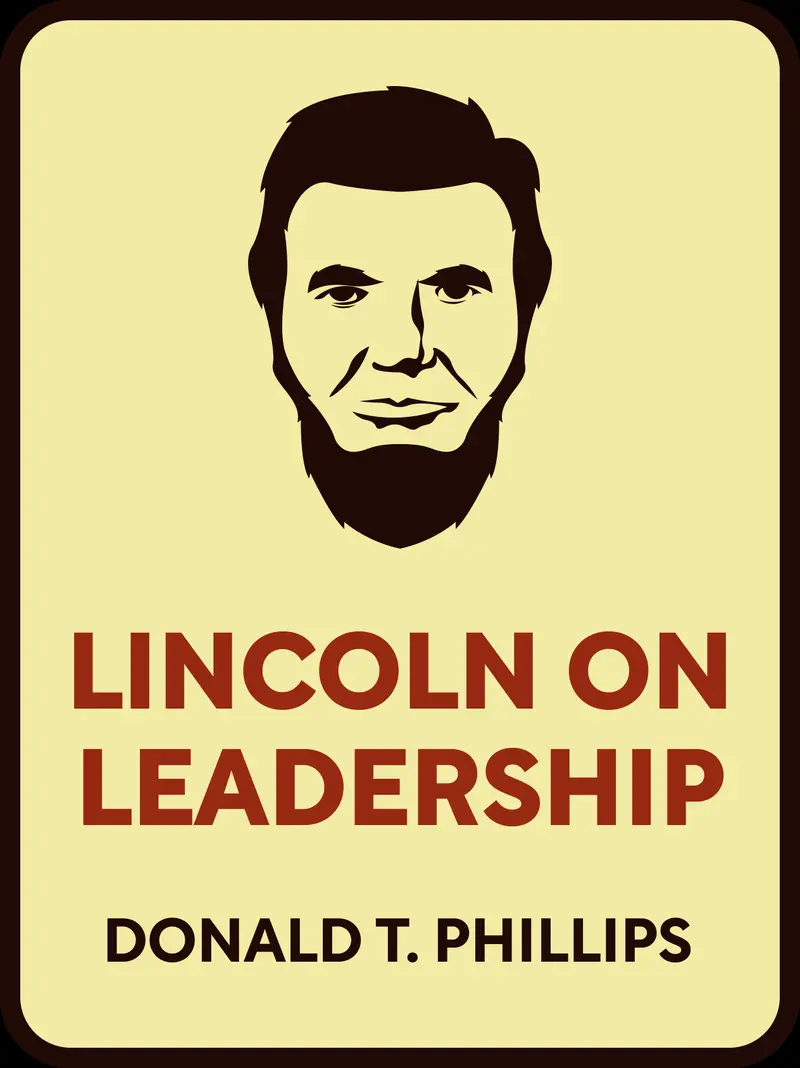
**Author:** Donald T. Phillips
**Estimated Reading Time:** 45 minutes
**What You'll Learn:**
- How Abraham Lincoln's humble origins forged one of history's greatest leaders - The specific strategies Lincoln used to manage conflict, build coalitions, and communicate vision - Why Lincoln's approach to leadership remains urgently relevant in modern organizations - Practical methods for applying Lincoln's principles to your own leadership challenges - How compassion and decisiveness can coexist in effective leadership
**Who This Book Is For:**
This book is for anyone who leads or aspires to lead. Whether you manage a small team, run a corporation, serve in public office, or simply want to influence others more effectively, Lincoln's example offers timeless guidance. It is especially valuable for leaders navigating crisis, division, or uncertainty, and for those who believe that character and results are not mutually exclusive.
Leadership is often discussed in abstractions. We speak of vision, integrity, and courage as though they were qualities that exist independently of circumstance. But real leadership is never abstract. It is forged in specific moments, under specific pressures, by specific human beings who must make decisions with incomplete information and live with the consequences. Few leaders in history have faced circumstances as dire as those confronting Abraham Lincoln. When he took the oath of office in March 1861, seven Southern states had already seceded from the Union. The nation was fracturing. The federal government he inherited was small, underfunded, and ill-prepared for the crisis ahead. Within weeks, war would begin. Lincoln had no executive experience. He had served a single term in Congress more than a decade earlier. He had lost more elections than he had won. His formal education amounted to less than a year of schooling. Critics called him a backwoods lawyer, a buffoon, a man utterly unqualified for the presidency. Yet this same man would go on to preserve the Union, issue the Emancipation Proclamation, and articulate a vision of national reconciliation that still moves readers more than a century and a half later. He would manage a cabinet of rivals who initially disdained him and earn their respect and affection. He would navigate the bloodiest conflict in American history while maintaining democratic institutions and the rule of law. How did he do it? Donald T. Phillips spent years studying Lincoln's life, letters, speeches, and decisions to answer that question. What he found was not a collection of abstract virtues but a coherent, practical approach to leadership that can be studied and applied. Lincoln was not born a great leader. He became one through deliberate effort, self-education, and a willingness to learn from his mistakes. This book distills Lincoln's approach into actionable principles. It examines how he communicated with…
Continue reading in the MinuteRead app
Get the complete 30-minute summary of Lincoln on Leadership
Get the complete summary in the app**Get out of the office and circulate among the troops.** Direct contact with reality is essential for effective leaders
**Build strong alliances.** No leader can succeed alone. Surround yourself with capable people, even if they disagree wi
**Persuade rather than coerce.** Convincing people through argument creates commitment. Forcing compliance creates resen
**Lead by being led.** Listen actively, seek diverse perspectives, and be genuinely open to changing your mind.
**Set goals and be results-oriented.** Focus on outcomes, not activity. Hold people accountable and make changes when re
**Master the art of communication.** Use simple language, stories, and metaphors. Clarity is more powerful than complexi
"Lincoln on Leadership" is a strong fit if you want practical ideas around leadership, business, history, especially themes like **get out of the office and circulate among the troops.** direct contact with reality is essential for effective leaders; **build strong alliances.** no leader can succeed alone. surround yourself with capable people, even if they disagree wi. The MinuteRead summary distills these concepts into a focused read, whether you're deciding whether to buy the book or applying its lessons at work.
Donald T. Phillips is a prolific nonfiction author who has written or co-authored 20 books, specializing in leadership and biographical works. His most notable contribution is a trilogy on American leadership, focusing on Lincoln, the Founding Fathers, and Martin Luther King Jr. Phillips has also collaborated with various celebrities and public figures on their books, including sports personalities and military leaders. His writing style often combines historical analysis with practical leadersh…
View all summaries by Donald T. PhillipsContinue Reading
Access the complete 30-minute summary and thousands more nonfiction books in the MinuteRead app.

Continue reading the complete summary in the MinuteRead app.