MinuteRead
30 min
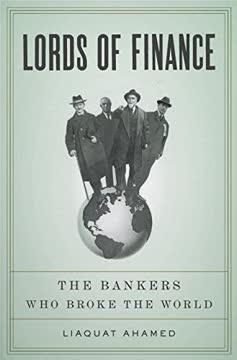
The Great Depression was not an act of God. It was not an inevitable correction of the business cycle. It was, to a remarkable degree, the result of decisions made by a small group of men who gathered in wood-paneled offices in London, New York, Paris, and Berlin, convinced they were saving the world.
**Author:** Liaquat Ahamed
**Estimated Reading Time:** 45 minutes
**What You'll Learn:**
How four central bankers, each brilliant and deeply flawed, steered the world economy into the greatest financial catastrophe in modern history. You will understand the mechanics of the gold standard, the crushing weight of war debts, the psychology of speculative manias, and the dangerous consequences of concentrating immense power in a handful of unelected men.
**Who This Book Is For:**
Readers who want to understand the real causes of the Great Depression, anyone curious about how central banking actually works, and those who suspect that economic crises are never purely economic. This book is for people who appreciate history told through the lives of complicated individuals making decisions under impossible pressure.
The Great Depression was not an act of God. It was not an inevitable correction of the business cycle. It was, to a remarkable degree, the result of decisions made by a small group of men who gathered in wood-paneled offices in London, New York, Paris, and Berlin, convinced they were saving the world. Liaquat Ahamed's Pulitzer Prize-winning book tells the story of four central bankers who dominated global finance in the years between the two world wars. Montagu Norman of the Bank of England, Benjamin Strong of the Federal Reserve Bank of New York, Hjalmar Schacht of the Reichsbank, and Émile Moreau of the Banque de France were, in Ahamed's telling, the most powerful men in the world. They controlled the money supply, set interest rates, and managed the international gold standard. They believed they were applying scientific principles to the management of economies. Instead, they presided over the worst economic collapse in modern history. The book opens with a striking image. In 1931, as the global economy sank deeper into depression, Montagu Norman, the governor of the Bank of England, suffered a nervous breakdown. He was sent on a sea voyage to recover, leaving his deputy to manage the crisis. The world's most important central banker had been broken by the weight of his responsibilities. This image captures the central theme of the book: the immense power concentrated in the hands of a few men, and the profound human limitations of those who wielded it. The story begins in the aftermath of World War I. The war had shattered the international financial system. Before 1914, the world had operated on the gold standard, a system in which currencies were pegged to gold at fixed rates. This system had provided remarkable stability for decades. Trade flowed freely, capital moved across borders, and prices remained stable. The war destroyed all of that. Governments printed money to finance the fighting, inflation soared, and the gold standard collapsed. After the…
Continue reading in the MinuteRead app
Get the complete 30-minute summary of Lords of Finance
Get the complete summary in the appThe Great Depression was largely caused by the decisions of a small group of central bankers operating under a flawed ec
The gold standard limited economic flexibility and transmitted the Depression from one country to another.
War debts and reparations poisoned international relations and destabilized the global economy.
The hyperinflation of 1923 destroyed German savings and fueled the rise of extremism.
Easy credit in the late 1920s fueled a stock market bubble that crashed in 1929.
The failure of international cooperation prolonged the Depression and made it worse.
"Lords of Finance" is a strong fit if you want practical ideas around history, economics, finance, especially themes like the great depression was largely caused by the decisions of a small group of central bankers operating under a flawed ec; the gold standard limited economic flexibility and transmitted the depression from one country to another. The MinuteRead summary distills these concepts into a focused read, whether you're deciding whether to buy the book or applying its lessons at work.
Liaquat Ahamed is an experienced investment manager with a 25-year career in finance. He has worked at prestigious institutions such as the World Bank and Fischer Francis Trees and Watts, where he served as Chief Executive. Ahamed currently advises hedge fund groups and holds board positions at Aspen Insurance Co. and the Brookings Institution. His educational background includes economics degrees from Harvard and Cambridge Universities. Ahamed's expertise in finance and economics, combined with…
View all summaries by Liaquat AhamedContinue Reading
Access the complete 30-minute summary and thousands more nonfiction books in the MinuteRead app.

Continue reading the complete summary in the MinuteRead app.