MinuteRead
30 min
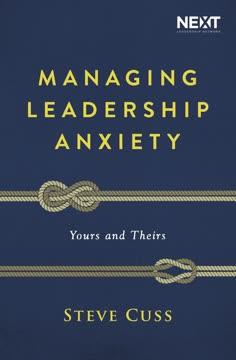
Book summary
by Steve Cuss
Premium summary · Opens in the app · 30 min read
Leadership has always carried a certain mystique. We imagine great leaders as calm, decisive, and unshakable. We picture them standing at the helm, confident in the storm, never doubting their course. This image is seductive. It is also false.
**Author:** Steve Cuss
**Estimated Reading Time:** 45 minutes
**What You'll Learn:**
- Why anxiety is not your enemy but a signal worth understanding - How to lead effectively when you don't have all the answers - The hidden patterns from your past that shape your leadership - Practical tools for staying calm and connected under pressure - How to build teams and cultures where people can be fully human
**Who This Book Is For:**
This book is for anyone who leads, whether in a boardroom, a congregation, a classroom, or a family. It is for leaders who feel the weight of responsibility pressing on their chest at night. It is for pastors who smile through Sunday services while carrying unseen burdens. It is for executives who wonder why the same team conflicts keep resurfacing. It is for parents who want to lead their households with wisdom instead of reactivity. If you have ever felt anxious, stuck, or overwhelmed in a leadership role, this book offers a path forward.
Leadership has always carried a certain mystique. We imagine great leaders as calm, decisive, and unshakable. We picture them standing at the helm, confident in the storm, never doubting their course. This image is seductive. It is also false. The reality of leadership is far messier. Real leaders wake up at 3 a.m. with racing thoughts. They replay difficult conversations in their minds, wondering what they should have said. They feel the weight of decisions that affect other people's lives, livelihoods, and futures. They carry the expectations of boards, congregations, employees, and families. And beneath all of this, they often feel something they are reluctant to name: anxiety. Steve Cuss knows this territory intimately. As a former emergency room chaplain and longtime pastor, he has spent decades sitting with people in their most anxious moments. He has watched families unravel in hospital waiting rooms. He has guided congregations through conflicts that threatened to split communities. He has coached leaders who looked confident on the outside while crumbling on the inside. Through all of this, he discovered something counterintuitive: the problem is rarely the anxiety itself. The problem is what we do with it. Most leaders treat anxiety as an enemy to be defeated. They suppress it, deny it, or medicate it. They pretend it does not exist, hoping it will simply go away. But anxiety does not disappear when ignored. It goes underground. It shows up as irritability with a spouse. It manifests as a short temper with employees. It emerges as chronic indecision, or its opposite, impulsive choices made just to escape the discomfort of uncertainty. Unmanaged anxiety leaks into every relationship and every decision. Cuss offers a different approach. Drawing…
Continue reading in the MinuteRead app
Get the complete 30-minute summary of Managing Leadership Anxiety
Get the complete summary in the appAnxiety is a signal to investigate, not an enemy to defeat.
The leadership gap between not knowing and needing to act is normal. Learn to sit in it.
Identify your idols: the things you believe you must have to be okay.
Recognize your childhood vows: the promises you made to yourself that still drive you.
Pay attention to process, not just content. Patterns reveal what words hide.
Practice differentiation: stay connected to others while remaining true to yourself.
"Managing Leadership Anxiety" is a strong fit if you want practical ideas around leadership, christian, psychology, especially themes like anxiety is a signal to investigate, not an enemy to defeat; the leadership gap between not knowing and needing to act is normal. learn to sit in it. The MinuteRead summary distills these concepts into a focused read, whether you're deciding whether to buy the book or applying its lessons at work.
Steve Cuss is an author and pastor with extensive experience in leadership and anxiety management. His background as an ER chaplain significantly informs his work, providing practical insights into handling stress and relational dynamics. Cuss draws on family systems theory and Christian principles to offer guidance on becoming a more effective, less anxious leader. His writing style is praised for its clarity and accessibility, making complex concepts understandable. Cuss's approach combines pe…
View all summaries by Steve CussContinue Reading
Access the complete 30-minute summary and thousands more nonfiction books in the MinuteRead app.

Continue reading the complete summary in the MinuteRead app.