MinuteRead
30 min
Book summary
Premium summary · Opens in the app · 30 min read
In 1636, Dutch citizens traded single tulip bulbs for sums that could purchase a grand house on the finest canal in Amsterdam. In 1720, British investors poured their life savings into companies promising to extract silver from lead, build perpetual motion machines, and drain the Irish bogs. In 1929, shoe-shine boys gave stock tips to Wall Street bankers. In 2008, homeowners with no income and no assets received mortgages they could never repay.
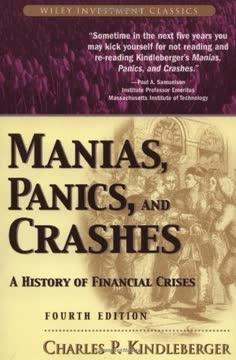
**Author:** Charles P. Kindleberger
**Estimated Reading Time:** 45 minutes
**What You'll Learn:**
- Why financial bubbles follow a remarkably consistent psychological pattern across centuries - How credit expansion transforms rational optimism into dangerous euphoria - Why financial crises spread across borders like contagious diseases - What role fraud, moral hazard, and government intervention play in market cycles - How to recognize the warning signs of speculative manias before they collapse
**Who This Book Is For:**
Anyone who wants to understand why financial markets repeatedly swing between euphoria and despair. Whether you are an investor trying to protect your portfolio, a student of economics seeking historical perspective, or simply a curious reader wondering why we never seem to learn from past crises, this book provides the essential framework for understanding the recurring drama of financial manias and their aftermath.
In 1636, Dutch citizens traded single tulip bulbs for sums that could purchase a grand house on the finest canal in Amsterdam. In 1720, British investors poured their life savings into companies promising to extract silver from lead, build perpetual motion machines, and drain the Irish bogs. In 1929, shoe-shine boys gave stock tips to Wall Street bankers. In 2008, homeowners with no income and no assets received mortgages they could never repay. The names change. The assets change. The countries change. But the story remains the same. Charles Kindleberger spent his career studying this story. As an economic historian who served at the US Treasury, the Federal Reserve, and the Bank for International Settlements before spending three decades teaching at MIT, he possessed a rare combination of practical experience and scholarly depth. He watched financial crises unfold from inside government institutions and studied them from the archives of four centuries of economic history. What he discovered was both simple and profound: financial manias are not random accidents. They follow a pattern. They emerge from predictable conditions. They unfold through recognizable stages. And they end in ways that are painfully familiar to anyone who has studied the historical record. The problem is that most people do not study the historical record. Each generation believes it has discovered something new. Each boom feels different from the last. Each crash catches the majority by surprise. Kindleberger wrote "Manias, Panics, and Crashes" to correct this collective amnesia. The book, first published in 1978 and revised through multiple editions, surveys financial crises from the Dutch Tulip Mania of the 1630s through the emerging markets crises of the late twentieth century. It draws on economic theory, historical documentation, and psychological insight to explain why rational individuals collectively create irrational markets. The central challenge Kindleberger addresses is the failure of conventional economic theory to explain what actually happens…
Continue reading in the MinuteRead app
Get the complete 30-minute summary of Manias, Panics, and Crashes
Get the complete summary in the appFinancial crises follow a recognizable pattern: displacement, boom, mania, distress, panic, and recovery.
Credit expansion is the essential fuel for speculative manias. Without easy credit, booms cannot reach the scale require
The transition from boom to mania occurs when investors focus on price appreciation rather than underlying value.
Individual rationality can produce collective irrationality when many people make the same decisions.
Financial crises spread across borders through trade, capital flows, and psychological contagion. No country is immune.
Financial booms create conditions that are conducive to fraud. The supply of corruption increases in a procyclical way.
"Manias, Panics, and Crashes" is a strong fit if you want practical ideas around economics, finance, history, especially themes like financial crises follow a recognizable pattern: displacement, boom, mania, distress, panic, and recovery; credit expansion is the essential fuel for speculative manias. without easy credit, booms cannot reach the scale require. The MinuteRead summary distills these concepts into a focused read, whether you're deciding whether to buy the book or applying its lessons at work.
Charles P. Kindleberger was an influential economic historian and author of over thirty books. He held senior positions at the US Treasury, Federal Reserve, and Bank for International Settlements before becoming a professor at MIT for more than three decades. Kindleberger's work focused on international economics and financial history, with "Manias, Panics, and Crashes" being his most famous publication. He analyzed patterns in financial crises across centuries, emphasizing the role of credit ex…
View all summaries by Charles P. KindlebergerContinue Reading
Access the complete 30-minute summary and thousands more nonfiction books in the MinuteRead app.

Continue reading the complete summary in the MinuteRead app.