MinuteRead
30 min
Book summary
Premium summary · Opens in the app · 30 min read
“ When you start, you ought to be as bad a trader as you are ever going to be.
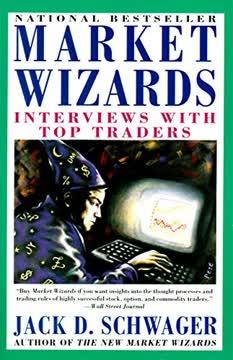
**Author:** Jack D. Schwager **Estimated Reading Time:** 45 minutes
**What You'll Learn:** The timeless principles that separate the world's greatest traders from everyone else. Not a system or a secret formula, but the mental frameworks, risk disciplines, and psychological truths that allowed ordinary people to generate extraordinary returns across radically different markets and methods.
**Who This Book Is For:** Anyone who has ever placed a trade, managed a portfolio, or made a decision under uncertainty. The lessons here apply far beyond finance. If you face risk, uncertainty, and the constant temptation to let emotion override reason, this book was written for you.
Most books about trading promise a system. A method. A set of rules that, if followed, will unlock consistent profits. Jack Schwager set out to write something different. He wanted to know what actually works, not in theory, but in the real world where fortunes are made and lost in minutes. So he did something simple and radical: he asked the people who had already won the game. Over several years, Schwager interviewed the most successful traders of the era. Futures traders, stock pickers, options specialists, macro investors. People who had turned thousands into millions, and millions into hundreds of millions. People who had survived market crashes that destroyed everyone around them. People who had generated returns that seemed mathematically impossible. He expected to find common methods. He found the opposite. These traders used fundamentally incompatible approaches. Some relied entirely on charts and technical patterns. Others never looked at a chart in their lives, building positions purely from economic fundamentals. Some held trades for seconds. Others held for years. Some traded dozens of markets simultaneously. Others specialized in a single commodity. Some used rigid mechanical systems. Others trusted gut intuition refined over decades. The methods could not have been more different. But the mindsets were identical. Every single Market Wizard shared the same relationship with risk. The same discipline about cutting losses. The same humility about being wrong. The same patience to wait for the right opportunity. The same emotional control under pressure. The same understanding that trading is not about being right. It is about managing the inevitable experience of being wrong. This book does not give you a trading system. It gives you something more valuable: the operating system that allows any trading method to work. The psychological foundation upon which all successful speculation is built. The traders in these pages are not geniuses in the conventional sense. Many failed repeatedly before they succeeded. Some lost everything, more than once. What separates them is not IQ or insider information or secret algorithms. It is a set of learned behaviors and mental habits that anyone can adopt,…
Continue reading in the MinuteRead app
Get the complete 30-minute summary of Market Wizards
Get the complete summary in the appAlmost every market wizard first blew up their account
Cap risk at 1 – 2% per trade — the one rule every wizard shares
Any method works if you have the discipline to follow it
When a market shrugs off huge news, that is the real news
On some level, every losing trader is getting what they want
Reset your entry price to last night's close every morning
"Market Wizards" is a strong fit if you want practical ideas around money & finance, business, economics, especially themes like almost every market wizard first blew up their account; cap risk at 1 – 2% per trade — the one rule every wizard shares. The MinuteRead summary distills these concepts into a focused read, whether you're deciding whether to buy the book or applying its lessons at work.
Jack D. Schwager is a renowned expert in futures and hedge funds, known for his acclaimed financial books, particularly the Market Wizards series. He has extensive experience in the financial industry, including roles as a portfolio manager, futures research director, and CTA. Schwager has authored numerous books on trading, including technical and fundamental analysis guides. He is a frequent seminar speaker, lecturing on topics such as trader characteristics and investment fallacies. With degr…
View all summaries by Jack D. SchwagerContinue Reading
Access the complete 30-minute summary and thousands more nonfiction books in the MinuteRead app.

Continue reading the complete summary in the MinuteRead app.