MinuteRead
30 min
Book summary
Premium summary · Opens in the app · 30 min read
Most people enter the financial markets with a dangerous assumption. They believe that if they can just learn enough about the markets, if they can find the right indicator or the perfect system, they will succeed. They spend years chasing this phantom, buying courses, testing strategies, and switching approaches every time they hit a losing streak. Yet the vast majority of them fail.
**Author:** John F. Carter **Estimated Reading Time:** 45 minutes
The real mechanics behind market movements, the psychological traps that destroy most traders, the specific setups professionals use to find high-probability trades, and the risk management framework that separates consistent winners from chronic losers.
Anyone who has ever placed a trade, watched a position move against them, and wondered what invisible force was controlling the market. Whether you are a novice trying to survive your first year or an experienced trader struggling to break through to consistency, this book addresses the gap between knowing about trading and actually making money at it.
Most people enter the financial markets with a dangerous assumption. They believe that if they can just learn enough about the markets, if they can find the right indicator or the perfect system, they will succeed. They spend years chasing this phantom, buying courses, testing strategies, and switching approaches every time they hit a losing streak. Yet the vast majority of them fail. John F. Carter was one of those people. In his early years as a trader, he lost money consistently. He blew up accounts. He made every mistake that a trader can make. He chased markets, held losing positions too long, and let his emotions dictate his decisions. At one point, he was trading from a cramped apartment, watching his account dwindle while he tried to figure out what he was doing wrong. The turning point came when he realized that his problem was not a lack of knowledge. It was a lack of understanding about how markets actually function and how his own psychology was sabotaging his decisions. He had been treating trading like a hobby when it needed to be treated like a business. He had been trading his opinions when he should have been trading what the market was actually telling him. This book exists because most trading education gets the problem backwards. It teaches people what to buy and sell before teaching them how to think about buying and selling. It provides strategies without providing the context for when those strategies work and when they fail. It ignores the uncomfortable truth that trading success is primarily a function of discipline, risk management, and emotional control rather than technical brilliance. The problem this book addresses is not a lack of information. There is more trading information available today than at any point in history. The problem is a lack of structure. Traders drown in data while starving for wisdom. They know dozens of indicators but cannot explain why the market is moving right now. They have memorized chart patterns but cannot execute a trade without their heart racing and their judgment clouding. Carter's approach…
Continue reading in the MinuteRead app
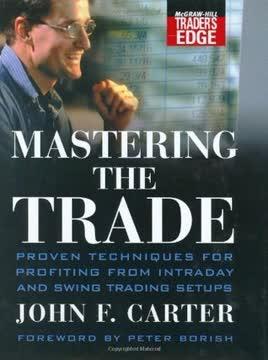
Get the complete 30-minute summary of Mastering the Trade
Get the complete summary in the appMarkets move because of supply and demand imbalances, not because of opinions or predictions.
Emotional control is the most important trading skill. Without it, no strategy can succeed.
Risk management is the foundation of everything. Never risk more than 1-2% of your account on a single trade.
Define your risk before entering every trade and place your stop loss immediately.
A written trading plan is essential. Without it, you are gambling, not trading.
Market internals like the TICK, TRIN, and Put/Call ratio reveal the underlying forces driving price moves.
"Mastering the Trade" is a strong fit if you want practical ideas around finance, business, economics, especially themes like markets move because of supply and demand imbalances, not because of opinions or predictions; emotional control is the most important trading skill. without it, no strategy can succeed. The MinuteRead summary distills these concepts into a focused read, whether you're deciding whether to buy the book or applying its lessons at work.
John F. Carter is an experienced trader and author who has gained both praise and criticism for his book Mastering the Trade . He is known for developing trading strategies and indicators, some of which are available through his website, Simpler Trading. Carter's approach combines technical analysis with psychological insights, drawing from his own experiences in the market. He emphasizes the importance of risk management and adapting to market changes. While some readers appreciate his straight…
View all summaries by John F. CarterContinue Reading
Access the complete 30-minute summary and thousands more nonfiction books in the MinuteRead app.

Continue reading the complete summary in the MinuteRead app.